
Best String Light Poles: 5 Models Compared by Fit

NSHWF 10-Foot Adjustable Poles, 6-Pack is the best string light pole choice for most people because it combines a 10-foot height, adjustable poles, and options for grass, decks, or fences. Choose AILBTON 10-Foot Poles, 4-Pack or Zoegi 10-Foot Poles, 4-Pack instead if you need a four-pole set for a smaller layout; choose NUERPO 10-Foot Poles, 7-Pack if seven poles better match your plan.
Outdoor string light poles support a suspended light run where trees or existing structures are unavailable. Before choosing a mounting style, match it to the surface and confirm that the attachment point and light strand can be secured safely.
We earn a commission if you buy through links on this page. As an Amazon Associate I earn from qualifying purchases. Products are compared on manufacturer specifications, not hands-on testing.
- Best overall: NSHWF 10-Foot Adjustable Poles, 6-Pack – Six adjustable 10-foot poles offer fork, deck, and fence mounting options.
- Best for fence mounting: AILBTON 10-Foot Poles, 4-Pack – Four 10-foot poles include fence brackets and are designed to avoid taking up floor space.
- Best for seven-point layouts: NUERPO 10-Foot Poles, 7-Pack – The seven-pole set is adjustable and gives more support points to plan around.
| Product | Best for | Pack count | Pole height | Mounting options | Shop |
|---|---|---|---|---|---|
| NSHWF 10-Foot Adjustable Poles, 6-Pack | Flexible mounting | 6 poles | Up to 10 ft | Fork, deck, fence | Check Price on Amazon |
| AILBTON 10-Foot Poles, 4-Pack | Fence layouts | 4 poles | 10 ft | Fence brackets | Check Price on Amazon |
| Zoegi 10-Foot Poles, 4-Pack | Forked pole setup | 4 poles | 10 ft | Fork, brackets | Check Price on Amazon |
| AHRLHR 10-Foot Forked Poles, 6-Pack | Six ground points | 6 poles | 10 ft | Forked | Check Price on Amazon |
| NUERPO 10-Foot Poles, 7-Pack | More support points | 7 poles | 10 ft | — | Check Price on Amazon |
Best String Light Poles
Compare the pole count, height, and mounting approach to find a set that suits your outdoor layout.
NSHWF 10-Foot Adjustable Poles, 6-Pack

NSHWF 10-Foot Adjustable Poles, 6-Pack stands out for installation flexibility: the six adjustable poles can be pushed into grass or soil with the included forks, or attached to a deck or fence with brackets and screws. Each pole reaches up to 10 feet, which gives you room to adapt the layout to different outdoor spaces. This set suits buyers who want multiple mounting options in one kit. The limitation is that you must choose and prepare a suitable attachment surface; the included hardware does not make every fence or deck structurally suitable for a suspended light run.
Bottom line: Pick this set if you want adjustable height and more than one mounting method.
AILBTON 10-Foot Poles, 4-Pack
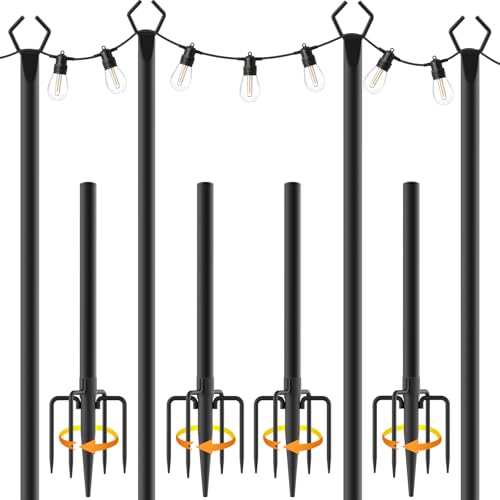
AILBTON 10-Foot Poles, 4-Pack is the four-pole option focused on fence or wall mounting, with brackets for hanging lights and a design intended not to use floor space. The 10-foot poles suit a compact run where attachment points are available along a fence or wall. The maker also describes uses for banners, lanterns, and wind chimes, so the poles can support more than one kind of decoration. The specifications do not establish a safe load limit; buyers planning heavier decorations or long, tensioned spans should confirm the allowable load before installation.
Bottom line: Choose it for a four-pole layout attached to a suitable fence or wall.
Zoegi 10-Foot Poles, 4-Pack

Zoegi 10-Foot Poles, 4-Pack combines four 10-foot poles with both forks and outdoor brackets, making it a fit for buyers who want a choice between ground placement and a bracketed installation. Its uses include decks, patios, backyards, weddings, and parties. The specifications do not give a pole adjustment range, so plan around the full 10-foot pole height rather than assuming it can be shortened. As with any bracket-mounted setup, the attachment surface and fasteners need to suit the suspended load and outdoor conditions.
Bottom line: Pick this set when four poles and a choice of fork or bracket mounting fit your plan.
AHRLHR 10-Foot Forked Poles, 6-Pack

AHRLHR 10-Foot Forked Poles, 6-Pack offers six 10-foot forked metal poles with hooks, a useful combination for a yard or garden layout where the poles can be set in soil. The six-point arrangement gives you more positions to plan a light run around than a four-pole set. This set is therefore a less direct fit if your installation needs brackets rather than forked ground support.
Bottom line: Choose it for a six-pole arrangement using forked ground placement.
NUERPO 10-Foot Poles, 7-Pack

NUERPO 10-Foot Poles, 7-Pack supplies seven 10-foot metal poles, the largest pack in this group, and the maker describes adjustable height for different hanging styles. That extra pole count can help when a layout needs more support positions or turns than a four- or six-pole arrangement. Wind can increase the force on both poles and light strands, making secure installation especially important in exposed locations.
Bottom line: Pick it if your planned layout needs seven poles and you can confirm a compatible mounting method.
How to Choose String Light Poles
Start with the mounting surface, then choose pole count and height. Forked poles are meant for soil or lawn; bracketed poles need a deck, fence, or wall that can accept fasteners. For a straight run, sketch the route and count its ends, corners, and any intermediate points that need support. A longer span can sag more under the strand’s own weight, so adding support points is often more useful than choosing a taller pole. Keep the light strand’s manufacturer limits in view: pole capacity and strand support are separate questions. If a layout will be exposed to strong wind or carry heavy decorations, confirm the allowable load and mounting requirements before installation.
Planning Pole Spacing and Height
Plan the span before setting poles; do not assume a 10-foot pole creates a 10-foot-high light run, since the hook position and strand sag affect the finished height. As a practical starting point, lay out supports about 8 to 10 feet apart for common patio string-light runs, then adjust to the strand length, attachment points, and intended drape. Keep the lowest part of the strand clear of walkways and doorways, and avoid placing a pole where it can become a trip hazard. Mark the ground or bracket positions first, then check that the cable reaches without being pulled tight. Tensioned strands transfer force to poles and anchors, especially in wind.
Ground Forks Versus Brackets
Choose ground forks when the layout sits in soil and the ground can hold them securely; choose brackets when poles need to mount to a deck, fence, or wall. The table shows the broad tradeoff: ground placement avoids fasteners in structures, while brackets can keep the floor area open. A fork may not hold well in loose, saturated, or shallow soil, and a bracket can fail if the surface or fasteners are unsuitable. Avoid treating either mounting method as a universal fix for wind or strand tension. For a deck or fence, use an attachment point capable of handling the load, and keep fasteners away from edges or damaged material.
| Mounting method | Works best when | Check before setup |
|---|---|---|
| Ground fork | Poles can be inserted into soil | Soil is firm and deep enough to hold securely |
| Bracket | A fence, deck, or wall can accept fasteners | Surface and fasteners suit the suspended load |
Safe Installation for Outdoor Light Runs
Outdoor light runs need secure supports, weather-rated electrical equipment, and clearance from people and hazards. Use only strands and connections rated for outdoor use, and keep plug connections protected as their instructions require. Do not overload an electrical circuit or connect more strands than the light maker permits. Before hanging lights, inspect poles, hooks, brackets, and fasteners for damage; replace bent or corroded hardware rather than relying on it under tension. Keep the strand away from sharp edges, hot surfaces, and locations where doors or gates can catch it. If wind can move the run substantially, reduce the exposed span or take the lights down during severe weather.
Frequently Asked Questions
How far apart should string light poles be?
For a typical patio run, start around 8 to 10 feet between supports, then adjust for strand length and the amount of sag you want. Longer, more exposed spans can place greater force on the supports, so add support points rather than pulling the cable taut.
How tall should outdoor string light poles be?
A 10-foot pole is a common option for outdoor runs, but the finished light height will be lower than the pole’s full height because the hook and strand sag take up some clearance. Keep the lowest point well clear of walkways and doorways.
Can string light poles go in concrete?
Forked poles are intended for soil or grass, not direct insertion into concrete. For a hard surface, use a bracketed mounting method designed for that surface or a purpose-built base, and confirm the support is secure before hanging lights.
How do you stop string light poles from leaning?
Set ground forks in firm soil and use compatible brackets and fasteners on hard surfaces; loose soil and weak attachment points can let poles move. Reduce span tension and add support points if the strand pulls the poles inward.
Can outdoor string lights stay up in winter?
Outdoor-rated lights can generally be used outside within their maker’s weather and temperature limits, but wind, snow, and ice can add load to strands and supports. Remove or secure the setup when severe weather could strain the poles or electrical connections.