
Best Fishing Pole Shipping Tubes for Safer Transport

For most people, DEWEL Telescoping Tube, 30–51 in is the best fishing pole shipping tube because it adjusts from 30 to 51 inches and has a 4.5-inch diameter. Choose a longer soft case for rods beyond 51 inches, or a cardboard box when mailing and disposable outer packaging matter more than repeated carrying.
We earn a commission if you buy through links on this page. As an Amazon Associate I earn from qualifying purchases. Products are compared on manufacturer specifications, not hands-on testing.
- Best overall: DEWEL Telescoping Tube, 30–51 in – Telescopes from 30 to 51 inches and locks at ten lengths.
- Best for mailing: 4-Pack Corrugated Rod Shipping Boxes – Includes four 51-inch corrugated boxes and a roll of bubble wrap.
- Best for long rods: Booms Fishing PB3 75–84 in Rod Case – Expands to 84 inches for rods stored without reels.
- Best for rods with reels: Lewtemi Foldable Case, 52.4 in – Measures 52.4 inches and is designed to hold two rods with reels attached.
| Product | Best for | Length | Diameter or capacity | Construction | Shop |
|---|---|---|---|---|---|
| DEWEL Telescoping Tube, 30–51 in | Adjustable transport | 30–51 in | 4.5 in diameter | Waterproof plastic | Check Price on Amazon |
| 4-Pack Corrugated Rod Shipping Boxes | Mailing rods | 51 in | 4 × 4 in box | Corrugated cardboard | Check Price on Amazon |
| Booms Fishing PB3 75–84 in Rod Case | Long reel-free rods | 75–84 in | Up to 2–3 rods | Padded nylon | Check Price on Amazon |
| Lewtemi Foldable Case, 52.4 in | Rods with reels | 52.4 in | 2 rods with reels | Waterproof PU | Check Price on Amazon |
| Booms Fishing PB3 52–60 in Rod Case | Medium reel-free rods | 52–60 in | Up to 2–3 rods | Padded nylon | Check Price on Amazon |
Fishing Pole Shipping Tubes and Cases
Match the carrier to your rod length, reel setup, and whether it is for mailing or repeat transport.
DEWEL Telescoping Tube, 30–51 in
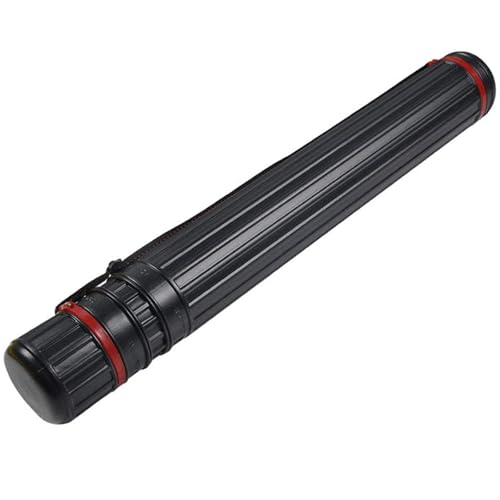
For a rigid tube that adjusts to different rod lengths, DEWEL Telescoping Tube, 30–51 in telescopes from 30 to 51 inches and locks at ten lengths. Its 4.5-inch diameter gives room for rods under that diameter, and a twist-lock sets the chosen length. The maker says the waterproof plastic protects documents and artwork; the tube can also carry fishing rods within its size limits. Choose it for a rod no longer than 51 inches that fits inside the tube. Rods longer than 51 inches will not fit with the lid on, so this is not the choice for standard longer rods.
Bottom line: Choose this for a rod under 51 inches that needs a rigid, adjustable carrier.
4-Pack Corrugated Rod Shipping Boxes

For mailing rather than repeated carry, 4-Pack Corrugated Rod Shipping Boxes is a four-box kit with 51-inch-long, 4-by-4-inch corrugated boxes and one roll of bubble cushion wrap. The square profile helps create a protective outer package for rods, rod blanks, or other long items, and the kit also suits golf clubs and posters. Pick it when a rod fits within a 4-inch square interior and you need multiple packages. Cardboard is not a reusable rigid carrying tube, and the fixed 51-inch length rules it out for longer rods; measure the rod and any protective wrapping before packing.
Bottom line: Choose this kit for mailing multiple rods no longer than 51 inches.
Booms Fishing PB3 75–84 in Rod Case

For long rods stored without reels, Booms Fishing PB3 75–84 in Rod Case covers a longer range than the rigid tube or 51-inch box, expanding from 75 to 84 inches. Its padded foam interior, waterproof nylon fabric, two-way zippers, and adjustable shoulder strap suit repeat travel and storage. It can hold up to two or three poles, but it is explicitly rod-only: remove reels before packing. That restriction matters if you want a ready-to-fish setup or need reel compartments. Choose it for long rods that fit its adjustable range and can be carried in a soft bag.
Bottom line: Choose this for rods from 75 to 84 inches when reels can be removed.
Lewtemi Foldable Case, 52.4 in

For rods that stay rigged with reels attached, Lewtemi Foldable Case, 52.4 in is a 52.4-inch foldable case designed to hold two such setups. The waterproof, abrasion-resistant PU shell has padded reel pockets, a shoulder strap, and two tackle pockets; folded storage measures 13.78 by 9 inches. This makes it a more practical repeat-carry option than a mailing box when reel clearance is important. Its fixed length is the limitation: rods longer than 52.4 inches will not suit it. Measure the rods with reels attached before choosing this compact carrier.
Bottom line: Choose this for up to two rods with reels attached that fit within 52.4 inches.
Booms Fishing PB3 52–60 in Rod Case
For medium-length rods carried without reels, Booms Fishing PB3 52–60 in Rod Case spans 52 to 60 inches and can store up to two or three poles. Its nylon outer fabric, cushioning foam, rod-retaining straps, and two-way zippers are suited to organizing rods for storage or travel. The folded extension gives it more length than a fixed 52-inch case, but the maker does not recommend it for surf or ocean rods. It is not the right fit for attached reels, and rods longer than 60 inches need a longer carrier. Measure each rod before choosing this soft case.
Bottom line: Choose this for reel-free rods up to 60 inches, excluding surf or ocean rods.
How to choose a fishing pole shipping tube
Start with the rod’s packed length and whether its reel stays attached; those two measurements determine the carrier type. Rigid tubes protect against bending and crushing better than soft sleeves, while padded fabric cases fold for storage and often accommodate reels. Mailing boxes are useful as outer packaging but are not the same as reusable transport cases. Measure from the butt to the tip with any protective wrap in place, then allow clearance for the lid or closure. For a rod under 51 inches and under 4.5 inches across, an adjustable tube can work; for a rod from 75 to 84 inches without a reel, use a longer case. Never force a rod into a tube or ship a loose rod that can slide and strike the ends.
| Need | Carrier type |
|---|---|
| Rigid protection for a rod up to 51 in | Telescoping plastic tube |
| Outer package for mailing | Corrugated shipping box |
| Long rod with reel removed | Expandable padded case |
| Rod carried with reel attached | Case with reel clearance |
Measure rod length and clearance before packing
Measure the full rod in its transport configuration, not just the blank: a two-piece rod separated into sections may fit where the assembled rod will not. Rigid tubes need room for both the rod and protective caps, while soft bags need enough length to close without bending the tip. Diameter matters too: a 4.5-inch tube cannot accept a bundle wider than that. For a cardboard box with a 4-by-4-inch profile, confirm that rod sections and padding fit inside the square. Leave a little internal clearance at each end and immobilize the rod with padding so it cannot shift during transit. A snug package protects better than an oversized tube with a freely moving rod.
Rigid tubes, mailing boxes, and soft rod cases
Rigid plastic tubes, corrugated boxes, and padded fabric cases solve different transport problems. A tube is reusable and shields its contents from impacts, but the opening and length constrain what fits. Corrugated cardboard is suited to shipping as an outer package; reinforcement and cushioning help resist crushing, but a box can be damaged by moisture or repeated handling. A soft case is easier to carry and store, and padded pockets may keep reels attached, but fabric does not provide the same hard shell against crushing. For frequent air or freight travel, use a rigid outer container around a padded rod case and secure the rod against movement. Keep fragile tips away from the ends of the package.
Pack fishing rods to limit impact damage
Protect rod tips and keep each section from rubbing against another; those are common breakage points in transit. Remove hooks and lures before packing, loosen line, and detach reels if the case is designed for rods only. Use bubble wrap or foam around the rod, then fill empty space so the bundle cannot slide end to end. A rigid tube should have padded end clearance rather than a rod tip resting directly against its cap. For mailing, close and seal the corrugated box securely and consider placing the wrapped rod in a second layer of protection. Do not treat a waterproof shell as proof that seams, caps, or closures are watertight; keep the package dry and inspect closures before carrying it.
Frequently Asked Questions
How long should a fishing rod shipping tube be?
Choose a tube longer than the rod in the exact configuration you will ship, with extra space for end padding. Measure from tip to butt; a 51-inch tube cannot hold a rod longer than 51 inches with its lid in place.
Can I ship a fishing rod with the reel attached?
Only use a carrier with enough width and clearance for the reel, and protect the reel separately from impact. Rod-only cases require reel removal; confirm the assembled setup fits before packing.
Are cardboard fishing rod boxes reusable?
Corrugated boxes can be reused if their panels, corners, and closures remain sound. Replace a box with crushed or damp sections, since weakened cardboard loses resistance to compression.
How do I stop a fishing rod from moving inside a tube?
Wrap the rod and cushion both ends so it cannot slide or touch the tube caps. Fill remaining gaps with padding, but avoid pressure that bends the rod tip.
Should fishing rods be packed in one piece or separated?
Separate a multi-piece rod when its sections can be safely disconnected; shorter sections are easier to cushion and fit. Keep ferrules clean and protect each section so they cannot knock together.