
Best Knife for Cutting Insulation: 5 Options Compared

YKPIW 11-Inch Insulation Knife suits most insulation projects because its 11-inch blade combines two serration patterns with etched SAE measuring marks. Choose an 8-inch blade instead for shorter cuts or a two-knife set when you need separate lengths for broad cuts and detail trimming.
Insulation knives use serrated edges to saw through fibrous or foam materials; the right blade length and tooth pattern depend on the material thickness and cut.
We earn a commission if you buy through links on this page. As an Amazon Associate I earn from qualifying purchases. Products are compared on manufacturer specifications, not hands-on testing.
- Best overall: YKPIW 11-Inch Insulation Knife – An 11-inch double-serrated blade has etched SAE measuring marks for measuring and cutting.
- Best for two blade lengths: Konvixon 11-Inch and 8-Inch Set – The set pairs an 11-inch knife for larger cuts with an 8-inch knife for detail trimming.
- Best for sharpening: Red Devil 4609 8-Inch Batting Knife – Its 8-inch high-carbon steel blade is described as easy to resharpen.
| Product | Best for | Blade length | Blade material | Measuring marks | Shop |
|---|---|---|---|---|---|
| YKPIW 11-Inch Insulation Knife | Measured long cuts | 11 in | Stainless steel | SAE scale | Check Price on Amazon |
| Goldblatt 8-Inch Rockwool Knife | Shorter controlled cuts | 8 in | Stainless steel | — | Check Price on Amazon |
| Red Devil 4609 8-Inch Batting Knife | Resharpenable edge | 8 in | High-carbon steel | — | Check Price on Amazon |
| PINOZE 11-Inch Insulation Knife | Scale-marked blade | 11 in | Stainless steel | Laser scale | Check Price on Amazon |
| Konvixon 11-Inch and 8-Inch Set | Mixed cut sizes | 11 in and 8 in | Stainless steel | Inch and metric | Check Price on Amazon |
Insulation knives for cutting foam, fiberglass, and rockwool
Match blade length and edge style to the insulation thickness and cut you need to make.
YKPIW 11-Inch Insulation Knife

The etched SAE scale sets this 11-inch knife apart for cuts that need a measured length. Its stainless steel blade has two serration patterns, with one side aimed at softer materials and the other at tougher insulation such as rockwool. The included nylon sheath provides a way to cover the blade between tasks. The long edge suits broad cuts through insulation, but can be harder to control than an 8-inch blade for short, precise trimming.
Bottom line: Choose this when measured cuts and a longer blade matter more than compact handling.
Goldblatt 8-Inch Rockwool Knife

The 8-inch blade makes this a more compact choice than the 11-inch knives, particularly for shorter cuts and trimming around duct insulation. Goldblatt pairs stainless steel with two serration patterns; its wave teeth are intended to reduce tearing while cutting materials such as rockwool and fiberglass. A shorter blade gives less reach through wide or thick sections, so this option is better suited to controlled, localized work than long uninterrupted cuts. The product name also identifies a hammer-end grip, though no grip material is given.
Bottom line: Pick this for shorter cuts where a compact 8-inch blade is easier to manage.
Red Devil 4609 8-Inch Batting Knife
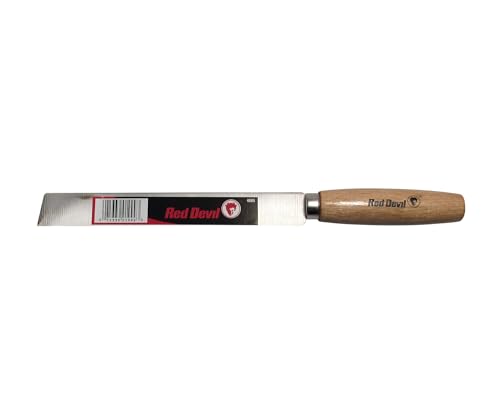
The 8-inch blade is made for a shorter cutting reach, while its high-carbon steel construction distinguishes it from the stainless-steel options. The maker describes the edge as easy to resharpen, a useful characteristic for buyers prepared to maintain a blade rather than replace it. Its hardwood handle provides a different grip material from the other knives here. The shorter length is a limitation when cutting through broad sections in one pass, and the conflicting steel claims in its product wording make the exact blade composition worth confirming before purchase.
Bottom line: Choose it if you prefer an 8-inch knife and a blade intended for resharpening.
PINOZE 11-Inch Insulation Knife
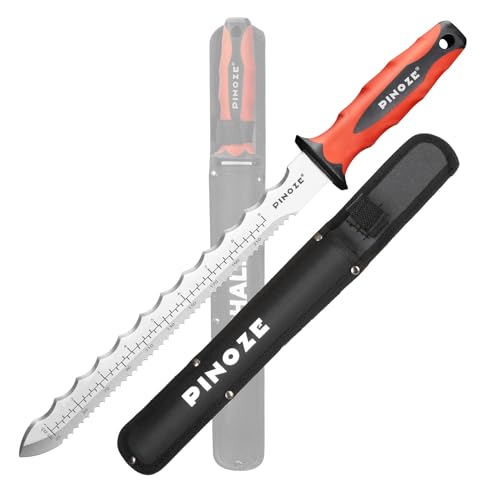
The PINOZE gives you an 11-inch stainless steel blade with a laser scale and double-sided serrations, a combination suited to marking and cutting insulation in one workflow. Its longer edge can reach farther through larger sections than an 8-inch knife, and it is intended for foam, Styrofoam, rockwool, and fiberglass. A sheath is included.
Bottom line: Select this for longer cuts when a built-in scale and sheath are useful.
Konvixon 11-Inch and 8-Inch Set

The two-blade set is the only option here that supplies separate lengths: an 11-inch knife for larger-area cuts and an 8-inch knife for detail trimming. Both use stainless steel and double-sided serrations, with larger teeth for thicker insulation and finer teeth for smoother trimming. Inch and metric scales support measuring in either system, and the set includes a belt carry feature. Two knives mean more gear to carry and store than a single-blade option, so the set makes most sense when both cutting lengths will be used.
Bottom line: Choose the set when your work routinely alternates between broad cuts and detail trimming.
How to choose an insulation knife
Choose an insulation knife by matching blade length and serration to the material and cut length. An 8-inch blade is easier to position for short cuts, while an 11-inch blade reaches farther across a section and can reduce repeated sawing. Fine serrations generally suit softer fiberglass and foam; coarser teeth help bite into denser mineral wool. A two-sided edge can put both tooth styles on one blade. For cuts longer than 8 inches, an 11-inch blade offers more working length; for frequent detail trimming, prioritize the shorter blade or a set with both lengths.
Measure the insulation thickness as well as the cut line: a blade must reach through the material without forcing the handle into it. Keep the material supported and cut away from your body, hands, and other people; serrated knives can snag and jump as they break through.
Insulation knife blade lengths and scales
Blade length affects reach and control, not just the maximum cut: 8-inch knives favor shorter, localized work, while 11-inch knives cover more distance per stroke. A scale etched into the blade can help mark a cut without switching tools, but markings only help if their unit system matches the measurement plan. SAE markings use inches; metric markings use millimeters or centimeters. Some options provide a scale, and one set includes both inch and metric markings.
Check how far the blade extends beyond the handle and allow room for the full stroke. For a crosscut through a large batt, lay the material flat on a stable surface and use a straightedge as a guide; avoid holding the insulation in your hand while sawing.
Serrated knife or utility knife for insulation
Serrated insulation knives and utility knives suit different cutting tasks. Serrations saw through fluffy fiberglass, mineral wool, and some foam without relying on a razor-thin edge; a utility knife can make clean shallow scores in rigid foam when its blade is long enough. The comparison below is a practical starting point, not a substitute for matching the tool to the material.
| Need | Tool choice | Why |
|---|---|---|
| Fiberglass batt or mineral wool | Serrated insulation knife | Teeth engage fibrous material through a sawing motion |
| Short, shallow score in rigid foam | Utility knife | A sharp edge can score a controlled line |
| Both broad cuts and detail trimming | 8-inch and 11-inch set | Separate lengths suit different reach needs |
Do not force a short blade through material thicker than its cutting edge can reach. For rigid foam, multiple controlled passes are safer than pushing hard through the full thickness.
Safe cutting and care for insulation knives
Wear gloves, long sleeves, and eye protection when cutting fiberglass or mineral wool; airborne fibers can irritate skin and eyes. Work with ventilation, keep the blade pointed away from your body, and use a stable surface rather than holding insulation against your leg or hand. A sheath helps cover an exposed edge during storage, but it does not make a knife safe to carry loose.
Clean fibers and residue from serrations after each job, dry the blade before storage, and inspect the edge and handle for damage. Stainless steel resists corrosion but still benefits from drying, while a high-carbon steel edge needs particular attention to moisture. Sharpen serrations with a suitable tapered sharpener, maintaining the existing tooth shape instead of grinding the edge flat.
Frequently Asked Questions
What knife length works for thick insulation?
An 11-inch blade provides more reach than an 8-inch blade, but the usable cutting depth depends on the exposed blade length and material thickness. For a batt thicker than the exposed blade, cut from both sides rather than forcing the knife through.
Can I use an insulation knife on fiberglass?
Yes, serrated insulation knives are used for fiberglass batts. Wear gloves, long sleeves, and eye protection because fibers can irritate skin and eyes.
Are serrated knives better for foam board?
Serrated knives work on many foam materials, but a utility knife can make a clean shallow score in rigid foam. For thick board, make multiple controlled passes instead of forcing one deep cut.
How do I cut insulation to a straight line?
Mark the cut first and use a straightedge to guide the blade. Support the insulation on a stable surface and use steady sawing strokes rather than pulling the material toward your body.
How should I store an insulation knife?
Cover the blade with a sheath or other secure blade cover and store it dry, out of reach of children. Remove trapped fibers and residue after use, since debris in the serrations can interfere with the next cut.