
Best Low Cut Socks for Men: 4 Picks by Fit

PUMA Low Cut Running Socks, 8-Pack suits most men who want low cut socks for varied activity because its cushioned footbed and arch support pair with a stretch polyester blend. Choose SHNN Thin Breathable Ankle Socks, 14-Pair instead for a thin, lightweight feel or men’s shoe sizes 13–16; choose adidas Cushioned Low Cut Ankle Socks, 6-Pair or Saucony Mesh Ventilating No-Show Socks, 6-Pair when you prefer an ankle-height or no-show profile, respectively.
We earn a commission if you buy through links on this page. As an Amazon Associate I earn from qualifying purchases. Products are compared on manufacturer specifications, not hands-on testing.
- Best overall: PUMA Low Cut Running Socks, 8-Pack – A cushioned footbed, arch support and stretch blend make it versatile for running and everyday activity.
- Best for ankle coverage: adidas Cushioned Low Cut Ankle Socks, 6-Pair – Its low cut ankle profile combines targeted cushioning with reinforced heel and toe areas.
- Best for larger sizes: SHNN Thin Breathable Ankle Socks, 14-Pair – The L/XL option fits men’s shoe sizes 13–16, with a heel tab and mesh ventilation.
- Best for no-show fit: Saucony Mesh Ventilating No-Show Socks, 6-Pair – The no-show profile and light cushioning suit low-profile shoes and running.
| Product | Best for | Cut | Cushioning | Men’s shoe size | Shop |
|---|---|---|---|---|---|
| PUMA Low Cut Running Socks, 8-Pack | Everyday activity | Low cut | Cushioned footbed | 10–13 US | Check Price on Amazon |
| adidas Cushioned Low Cut Ankle Socks, 6-Pair | Ankle coverage | Low cut ankle | Targeted cushioning | Large | Check Price on Amazon |
| SHNN Thin Breathable Ankle Socks, 14-Pair | Larger shoe sizes | Ankle with heel tab | Thin | 6–12; 13–16 L/XL | Check Price on Amazon |
| Saucony Mesh Ventilating No-Show Socks, 6-Pair | No-show profile | No-show | Light cushioning | 8–12 US | Check Price on Amazon |
Men’s low cut socks compared
Compare the cut, cushioning and size range to match socks to your shoes and activity.
PUMA Low Cut Running Socks, 8-Pack
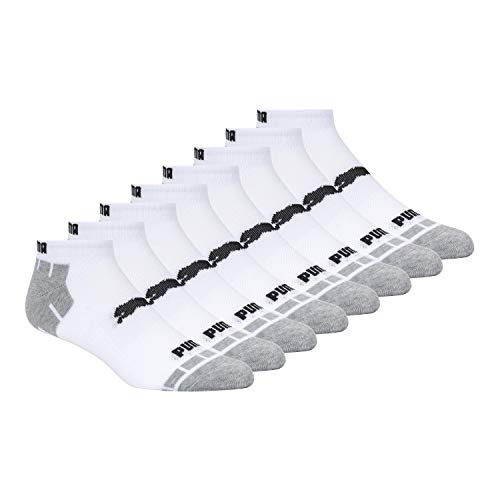
For a mix of running and everyday movement, this pair combines a cushioned footbed with arch support in a low cut profile. The polyester-spandex blend adds stretch, while seamless toe construction is intended to reduce irritation. The maker says the socks have a snug fit and can be machine-washed warm and tumble-dried low. The size shown is US 10–13, so men outside that range should choose a different fit rather than assume the fabric stretches enough.
Bottom line: Choose this pair for a cushioned low cut with arch support in sizes 10–13.
adidas Cushioned Low Cut Ankle Socks, 6-Pair

Unlike a no-show cut, this sock sits at the ankle line, providing a more visible edge beneath low cut sneakers. The maker describes targeted cushioning, arch compression, moisture-wicking fabric and reinforced heel and toe areas. That combination suits athletic rotation when a more secure-feeling fit and extra wear zones matter. The size is Large, so buyers should verify that size against their usual sock sizing before choosing; the input gives no shoe-size range to compare directly with the other pairs.
Bottom line: Choose this if you want ankle-line coverage and reinforced heel and toe zones.
SHNN Thin Breathable Ankle Socks, 14-Pair

This is the thin option in the group, with a 14-pair pack and two size ranges, including L/XL for men’s shoe sizes 13–16. The maker describes a mesh ventilation structure, arch support and an elastic heel tab intended to help the socks stay in place. Its lightweight build makes it a fit for buyers who prefer less cushioning inside close-fitting shoes. It is not the pick for someone seeking a padded footbed; choose a cushioned option for that feel.
Bottom line: Choose this pair for a thin feel or the men’s 13–16 size range.
Saucony Mesh Ventilating No-Show Socks, 6-Pair

This pair is explicitly a no-show style, unlike the ankle-height options, and its light cushioning leaves more room inside a snug shoe than a thicker footbed. The maker says its moisture-management fibers, air-mesh construction and targeted arch compression support airflow and help limit bunching or slipping. Its shoe-size range is US 8–12. Buyers who want coverage above the shoe line or a more cushioned sole should consider another cut or cushioning level.
Bottom line: Choose this for a no-show profile with light cushioning in sizes 8–12.
How to choose men’s low cut socks
Start with the shoe opening and the amount of cushioning you want inside the shoe. No-show socks sit below the shoe collar, while low cut or ankle socks may show at the ankle; product naming is not perfectly standardized, so compare the actual cut description. For running or long walks, arch compression and a heel tab can help reduce shifting, while reinforced heel and toe zones target common wear points. Choose a cushioned footbed if impact padding matters, and a thin sock if a close fit leaves little room. Match the size range to your shoe size rather than relying on stretch alone.
Most athletic socks use synthetic fibers such as polyester or nylon because they dry faster than cotton; elastane adds stretch. Fiber content and sock thickness both affect shoe fit, so leave enough toe room and avoid sizing up solely to accommodate bulk.
Low cut, ankle and no-show sock profiles
Cut determines how much sock shows above a shoe, but labels can overlap between brands. Use the heel and collar positions rather than the name alone: a no-show sock is intended to sit below the shoe edge, while an ankle sock usually reaches the ankle line. A heel tab can help protect the back of the heel from rubbing, but it may be visible above a low shoe. This table links common needs to the profile to prioritize; check the actual cut description when a hidden look is essential.
| Need | Profile to prioritize | Fit consideration |
|---|---|---|
| Hidden under a low shoe | No-show | Check the heel tab height |
| More fabric above the shoe | Low cut ankle | Confirm ankle-line coverage |
| Less bulk in a snug shoe | Thin or lightly cushioned | Keep toe room comfortable |
For a shoe opening under 1 inch above the heel, prioritize a no-show cut and a low heel tab; taller socks may be visible.
Fit and cushioning for running socks
Correct sizing matters more than compression claims: a sock that bunches at the toes or slips at the heel can create friction. Compare the manufacturer’s shoe-size range with your usual US shoe size, and choose a larger stated range rather than forcing a tight fit. Cushioning takes up interior volume, so runners with close-fitting shoes should favor light cushioning; shoes with extra room can accommodate a padded footbed. Arch compression can help a sock feel secure but is not a substitute for the right length. For prolonged activity, avoid folds and seams pressing against the skin, especially at the toes.
Moisture-wicking fibers move sweat toward the fabric surface, while mesh panels improve airflow where present; neither makes a sock waterproof. Change damp socks after heavy sweating to reduce prolonged moisture against the skin.
Washing and wear of athletic socks
Wash athletic socks after each wear when they are sweaty, then dry them fully before wearing again; damp fabric increases rubbing and odor. Heat can wear elastic fibers faster, so use the care temperature given for the specific pair, and avoid high-heat drying when the maker calls for low heat. Inspect heels, toes and elastic cuffs periodically: thinning fabric or a stretched opening can compromise fit before a large hole appears. Keep socks matched by size and thickness when rotating pairs, because mixing a thin sock on one foot with a cushioned sock on the other changes shoe fit. Clean, dry socks are particularly important for activities that involve prolonged walking or running.
Frequently Asked Questions
How often should athletic socks be replaced?
Replace athletic socks when the heel or toe thins, a hole forms, or the cuff no longer holds the sock in place. Frequent running and hot washing wear elastic and fabric faster than occasional casual use.
Are no-show socks the same as low cut socks?
No-show socks are designed to sit below the shoe edge, while low cut socks can rise to the ankle line. Because brands use cut names differently, compare where the heel and cuff sit relative to your shoe collar.
Should running socks be cotton or synthetic?
Synthetic fibers such as polyester and nylon generally dry faster than cotton, which can retain more moisture. Choose a blend that fits your shoe without bunching, and change out of damp socks after a sweaty run.
How tight should arch compression socks feel?
Arch compression should feel secure without numbness, tingling or painful pressure. If those symptoms occur, remove the sock and choose a different size or a less compressive style.
Can cushioned socks make running shoes too tight?
Yes, thicker cushioning takes up room inside a shoe. If the toes feel crowded or the upper presses on the foot, try light cushioning or reassess the shoe fit rather than forcing a thicker sock.