
Proofing Bowls for Bread: 4 Bannetons Compared

For most home sourdough bakers, Dimpola 9-Inch Round Banneton Set is a useful starting point because its two 9-inch round baskets include liners. Choose Sourdough Round and Oval Gift Set instead if you want both a round and an oval basket plus shaping tools, or Saint Germain 9-Inch Round Banneton for a single 9-inch round basket.
A banneton is a basket for supporting shaped dough during its final rise; it is not an oven-safe baking pan.
We earn a commission if you buy through links on this page. As an Amazon Associate I earn from qualifying purchases. Products are compared on manufacturer specifications, not hands-on testing.
- Best overall: Dimpola 9-Inch Round Banneton Set – Two 9-inch round rattan baskets and liners cover common round-loaf proofing needs.
- Best for varied shapes: Sourdough Round and Oval Gift Set – Includes one 9-inch round basket and one 10-inch oval basket, plus baking tools.
- Best for compact loaves: DOYOLLA 8.5-Inch Round Basket Set – Two 8.5-inch round baskets provide a slightly smaller option with liners.
| Product | Best for | Shape and size | Basket count | Liners | Shop |
|---|---|---|---|---|---|
| Dimpola 9-Inch Round Banneton Set | Round sourdough loaves | Round, 9 in | 2 | 2 | Check Price on Amazon |
| Sourdough Round and Oval Gift Set | Mixed loaf shapes | Round 9 in; oval 10 in | 2 | 2 | Check Price on Amazon |
| DOYOLLA 8.5-Inch Round Basket Set | Smaller round loaves | Round, 8.5 in | 2 | 2 | Check Price on Amazon |
| Saint Germain 9-Inch Round Banneton | Single round loaves | Round, 9 in | 1 | 1 | Check Price on Amazon |
Proofing bowls for bread
Compare these bannetons by the loaf shape and setup you want for final proofing.
Dimpola 9-Inch Round Banneton Set

Two 9-inch round baskets make this set a straightforward choice for bakers who want matching proofing vessels. Each basket is made from natural rattan cane, and the set includes liners that can cover dough while it proofs. The round size fits many home loaves, though the dough’s starting volume and shaping determine how much it fills the basket. Use the liner when you prefer a smoother dough surface; exposed rattan leaves a patterned impression. The product features describe the cane as allowing airflow and moisture absorption, but a basket does not replace proper dough fermentation control.
Bottom line: Pick this set if you want two matching round baskets with liners.
Sourdough Round and Oval Gift Set

The round-and-oval pairing is the key distinction here: the set includes a 9-inch round basket and a 10-inch oval basket rather than two matching shapes. It also comes with two liners, a lame with five blades, a dough scraper, a bowl scraper, a dough whisk and a cleaning brush. That range suits a baker assembling tools for mixing, shaping and scoring as well as proofing. The product features describe the baskets as hand-woven natural rattan cane. Because the set combines several tools, it is less focused than buying a single basket when you only need one proofing shape.
Bottom line: Choose this kit if you want both loaf shapes and several bread-making tools.
DOYOLLA 8.5-Inch Round Basket Set

At 8.5 inches across, these two round baskets are slightly narrower than the 9-inch options, making their size the deciding difference. The set includes two rattan baskets and two liners, so it can support a pair of doughs or provide a spare while one basket is in use. The maker identifies the material as natural rattan and recommends hand washing with warm water followed by drying. A smaller diameter does not guarantee a smaller finished loaf; dough quantity and shaping also matter. Bakers who need an oval loaf or a larger basket should choose a different shape or size.
Bottom line: Choose this set if you want two slightly smaller round baskets with liners.
Saint Germain 9-Inch Round Banneton
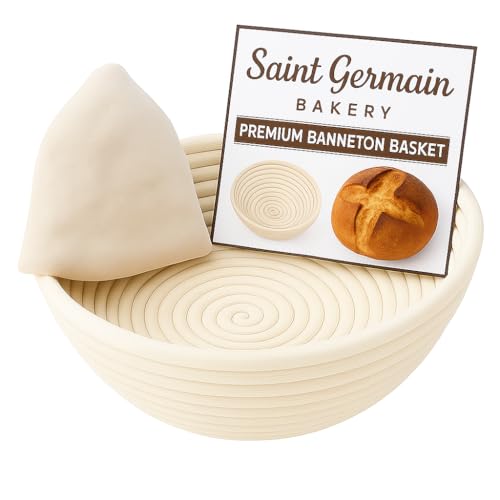
This is a single 9-inch round basket with a liner, unlike the multi-basket sets. Its natural rattan construction and smooth surface are aimed at supporting shaped dough; the maker says sufficient flour dusting helps dough release. Use the liner for a smoother finish, or proof directly against the basket to leave its pattern on the dough. The product features recommend shaking out loose flour and brushing away dried dough rather than routine washing. One basket may be limiting for anyone proofing several loaves at once, and the height is 6 inches, taller than the other round baskets here.
Bottom line: Pick this basket if you need one 9-inch round proofing vessel.
How to choose a bread proofing bowl
Choose a banneton by the loaf shape you form and the dough quantity your recipe makes. Round baskets support boules, while oval baskets suit bâtards; a matched pair is useful when two doughs proof together. Many home recipes use baskets around 8 to 10 inches across, but the dough’s weight and hydration affect fit, so match the basket to the recipe’s intended loaf rather than diameter alone. A practical rule is to pick a basket whose opening is close to the dough’s shaped footprint, with room for expansion. Rattan supports airflow and can leave spiral impressions; a cloth liner creates a smoother contact surface. These vessels support the dough during its rise and should not go into the oven.
Rattan baskets and liners compared
Rattan makes a breathable support for final proofing, while a liner changes the dough’s contact surface. Use the table to match that difference to your preferred crust appearance and cleanup routine.
| Setup | Dough surface | Useful when |
|---|---|---|
| Bare rattan | Basket pattern may show | You want a ridged or spiral impression |
| Basket with liner | Smoother contact | You prefer less pattern or easier handling |
Flour the basket or liner before placing shaped dough inside; rice flour is commonly used because it tends to resist sticking better than wheat flour. A liner can reduce the rattan pattern, but it does not change the need to size the basket for the dough. Keep the basket reserved for proofing rather than baking, since woven rattan is not an oven pan.
How to size a banneton for dough
Basket diameter is only one part of fit: dough mass, hydration and shaping all affect how fully a basket is occupied. An 8.5- to 9-inch round basket is a common home size, while a 10-inch oval gives a longer footprint for a bâtard. Avoid forcing a large dough into a small basket, where expansion can push the dough above the rim; an undersized dough may spread rather than hold a tall profile. When a recipe specifies a basket size, use that as the starting point and compare its dough weight with your basket’s dimensions. If those quantities are not a close match, confirm the fit before proofing a full batch.
Cleaning and storing bread proofing baskets
Let residual dough dry before removing it, then brush or shake away flour rather than soaking a rattan basket. Moisture trapped in woven cane can encourage mold, so allow the basket to dry completely before storing it in a dry, ventilated place. If a basket becomes damp during cleaning, leave it open until no moisture remains in the weave. Liners can be cleaned separately according to their care directions; do not assume a cloth liner and rattan basket need identical care. A common mistake is putting a basket away with wet dough stuck inside: dried scraps are generally easier to brush off, and thorough drying helps preserve the basket.
Frequently Asked Questions
Should dough proof in a banneton seam side up?
Yes. Place shaped dough seam side up in the basket so the seam faces down after you invert the loaf for baking. The basket supports the dough; it is not the baking surface.
Can a bread proofing basket go in the oven?
No, a rattan banneton is for supporting dough during proofing, not for baking. Turn the dough out onto an oven-safe baking surface before baking.
What flour helps keep dough from sticking?
Rice flour is commonly used on bannetons because it tends to stick less than wheat flour. Dust the basket or liner before adding dough, especially if the dough is tacky.
How should a rattan banneton be cleaned?
Let stuck dough dry, then brush it away and shake out loose flour. Avoid soaking woven rattan, and dry the basket completely before storage to reduce the chance of mold.
Does a liner change the bread pattern?
Yes. A cloth liner gives dough a smoother contact surface, while bare rattan can leave a spiral or ridged impression. Both setups still need flouring to help release the dough.