
Best Shortwave UV Light for Minerals: 5 Models Compared

For most mineral collectors, ULTRAFIRE 254 nm Mineral Flashlight is the clearest fit because it is made for mineral hunting and includes protective glasses and a black filter lens. Choose a different model if you need a larger flashlight or a unit whose features mention battery protection.
Shortwave UV lights emit ultraviolet-C radiation near 254 nm, which can make some minerals fluoresce; the response depends on the specimen.
We earn a commission if you buy through links on this page. As an Amazon Associate I earn from qualifying purchases. Products are compared on manufacturer specifications, not hands-on testing.
- Best overall: ULTRAFIRE 254 nm Mineral Flashlight – Mineral-focused design includes protective glasses and a black filter lens.
- Best for lab versatility: WONDSUNSON 9-Core 254 nm Flashlight – Lists use for mineral detection, TLC plates, and laboratory research.
- Best for higher listed output: 20 W 254 nm USB-Rechargeable Flashlight – Its maker gives a maximum of 560 mW/cm².
| Product | Best for | Filter | Weight | Shop |
|---|---|---|---|---|
| ULTRAFIRE 254 nm Mineral Flashlight | Mineral collecting | Black filter lens | 0.35 lb | Check Price on Amazon |
| WONDSUNSON 9-Core 254 nm Flashlight | Lab and field use | ZWB3 optical filter | 1.5 lb | Check Price on Amazon |
| 10 W 254 nm ZWB3 Flashlight | TLC and minerals | ZWB3 optical filter | — | Check Price on Amazon |
| 20 W 254 nm USB-Rechargeable Flashlight | Higher output | ZWB3 filter | 1.65 lb | Check Price on Amazon |
| 2N5M 254 nm Mineral Flashlight | Compact collecting | — | 0.4 lb | Check Price on Amazon |
Shortwave UV lights for minerals
Compare wavelength, filter details, and form factor before choosing a light for collecting or specimen work.
ULTRAFIRE 254 nm Mineral Flashlight

For mineral collecting, this flashlight stands apart by including protective glasses alongside a black filter lens. Its single-mode 254 nm shortwave UVC light is intended to reveal fluorescence in specimens such as Willemite, Scheelite, and Calcite; colors vary with composition and locality. The compact body measures 5.2 inches long and weighs 0.35 lb, which suits field exploration. The limitation is its single mode, so choose another style if you need selectable output settings or a larger body.
Bottom line: Pick this if you want a mineral-focused light with protective glasses included.
WONDSUNSON 9-Core 254 nm Flashlight
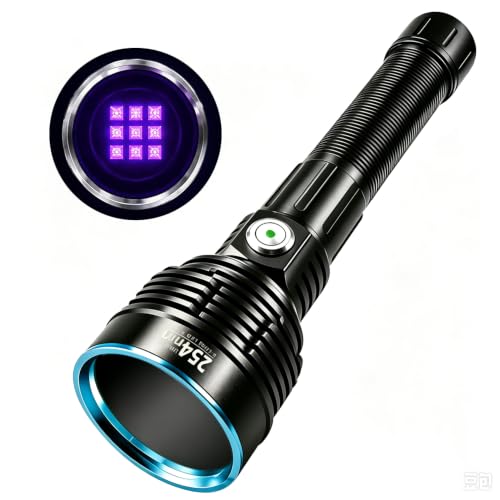
The WONDSUNSON combines mineral detection with uses beyond collecting, including TLC chromatography plates and laboratory research. Its features identify a 9-core 254 nm UVC source, a ZWB3 optical filter, rechargeable-battery operation, and low-voltage and temperature protection. The aluminum-alloy body measures 9.3 inches long and weighs 1.5 lb, a more substantial choice than the compact mineral-oriented light. The maker also describes an IP5 rating; confirm the level of water protection you need before taking any UV flashlight into wet field conditions.
Bottom line: Choose this for a rechargeable 254 nm light with battery protections and lab uses.
10 W 254 nm ZWB3 Flashlight

This 10 W model is distinguished by its maximum output of 220 mW/cm² and ZWB3 filter, while also targeting mineral detection and TLC chromatography plates. Its aluminum-alloy construction and low-voltage and temperature protections are useful features for laboratory or field work. The body measures 222 mm long, approximately 8.7 inches. Weight is not available in the specifications, so buyers who need to limit pack weight should compare physical handling before choosing this model.
Bottom line: Pick this when the 10 W rating and TLC use matter alongside mineral fluorescence.
20 W 254 nm USB-Rechargeable Flashlight

The 20 W model is the standout for its maximum output of 560 mW/cm², higher than the 220 mW/cm² maximum given for the other watt-rated model. It has a ZWB3 filter, rechargeable-battery operation, low-voltage and temperature protection, and an aluminum-alloy body measuring 9 inches long. The beam-use claim reaches 6 meters, but real fluorescence visibility depends on the specimen and surroundings. At 1.65 lb, this is a heavier carry than the 0.35 lb mineral-specific option.
Bottom line: Choose this if its higher stated output matters more than carrying weight.
2N5M 254 nm Mineral Flashlight

The 2N5M is a lightweight mineral-hunting option at 0.4 lb, far lighter than the larger 1.5 lb and 1.65 lb models in this group. It uses 254 nm shortwave UV and an aviation-aluminum body with a textured grip, positioning it for outdoor rock hunting and specimen identification. Its features emphasize handheld portability rather than lab applications. It measures 5 inches high, while specific filter and battery-protection details are not established here; buyers who require either should verify those before purchase.
Bottom line: Pick this for a light handheld form aimed at outdoor mineral hunting.
How to choose a shortwave UV light for minerals
Start with wavelength: mineral-hunting shortwave lights in this group use 254 nm UVC. A filter is useful because visible light from the source can compete with the fluorescence you are trying to see; several models specify a ZWB3 filter, while the mineral-focused ULTRAFIRE specifies a black filter lens. Compare output claims cautiously: 220 and 560 mW/cm² are maxima given for two models, not guarantees of the fluorescence a particular specimen will show. If you will carry the light, a practical rule is to favor a model under 0.5 lb for long hikes; heavier bodies are more burdensome over distance. Also consider whether you need battery protections, included eyewear, or lab use.
What 254 nm reveals in mineral specimens
A 254 nm shortwave lamp can excite fluorescence in responsive minerals, but not every specimen fluoresces and the color is not a reliable identification by itself. Willemite and Calcite appear among the examples named for these lights, and the ULTRAFIRE also names Scheelite; trace activators and specimen composition affect the visible response. Fluorescence is different from phosphorescence: fluorescence fades promptly when the UV source is removed, while phosphorescent material can continue glowing afterward. Test clean, dry samples in a dark area and compare several spots rather than assuming an entire rock has one response. Mineral fluorescence is a collecting aid, not a substitute for identification by hardness, cleavage, or other properties.
Shortwave UV flashlight safety and field use
UVC can injure eyes and skin, so never look into an operating lamp or aim it at people or animals. Wear UV-blocking eye protection and cover exposed skin; the ULTRAFIRE includes protective glasses, but included eyewear should not be assumed to suit every user or exposure. Keep the light pointed at the specimen and turn it off before handling samples. For outdoor work, darkness improves contrast, and a stable surface helps prevent the beam from sweeping across people. The specifications mention protection circuits on some models, but those protect the flashlight rather than the user. Avoid direct eye or skin exposure regardless of a model’s housing or filter.
Why specimen preparation and surroundings matter
Fluorescence is easier to judge when ambient light is low and the sample surface is clean; dust, coatings, and nearby visible light can obscure weak responses. A shortwave UV lamp does not make every mineral glow, and different pieces of the same mineral may respond differently because of trace elements. Record the wavelength and viewing conditions when comparing specimens so results remain comparable. Do not use a UV flashlight as a sterilizer or as a general-purpose illumination source: 254 nm UVC is intended for controlled applications and requires exposure precautions. A practical field routine is to illuminate one specimen at a time, keep observers behind the beam, and switch the lamp off before packing it.
Frequently Asked Questions
Do all minerals fluoresce under 254 nm UV?
No; only some specimens respond, and the brightness and color can vary with composition and trace activators. Test individual samples in a dark setting rather than assuming a mineral name guarantees fluorescence.
What does a ZWB3 filter do on a UV flashlight?
A ZWB3 filter is an optical filter used to reduce visible light from the lamp so fluorescence is easier to observe. It does not change the specimen’s response or make UVC exposure safe.
Can a 254 nm flashlight identify a mineral by color?
No; fluorescence color alone is not a dependable identification because composition and locality can change the response. Combine UV observation with properties such as hardness and cleavage.
How should I protect my eyes around shortwave UV?
Do not look at the source or aim it toward anyone, and use UV-blocking eye protection with exposed skin covered. UVC eye and skin exposure can cause injury, so keep the beam on the specimen.
Why does a rock glow less outside at night?
Ambient light reduces contrast, making faint fluorescence harder to see; shade the sample or use a darker viewing area. Dirt or a surface coating can also hide weak responses, so compare clean areas when practical.