
Brake Line Clamp Tools: 5 Options Compared by Fit

DURATECH 6-Piece Hose Clamp Set suits the widest range of flexible hose sizes, with three clamp ranges spanning 1/8 to 2-1/4 inches. Choose a different set if you need a specific clamp style or material, and do not use any of these tools on rigid brake tubing.
These tools pinch flexible hoses to restrict fluid flow during service; a brake hardline is metal tubing and must not be pinched.
We earn a commission if you buy through links on this page. As an Amazon Associate I earn from qualifying purchases. Products are compared on manufacturer specifications, not hands-on testing.
- Best overall: DURATECH 6-Piece Hose Clamp Set – Three nylon clamp ranges cover hoses from 1/8 to 2-1/4 inches.
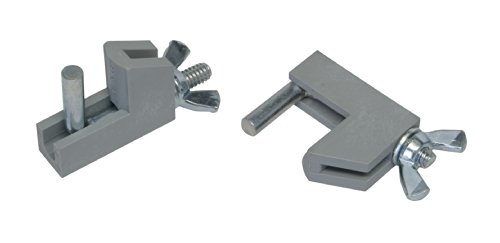
- Best for controlled tightening: Wing-Nut Brake Line Clamp, 2-Pack – The wing-nut locking jaw tightens against the hose, and the package includes two clamps.
- Best for varied hose sizes: OBTANIM Plastic Hose Pinch-Off Pliers, 3-Pack – Three plastic pliers have openings of 0.8, 1.4, and 2.6 inches.
| Product | Best for | Quantity | Material | Clamp size or opening | Shop |
|---|---|---|---|---|---|
| DURATECH 6-Piece Hose Clamp Set | Broad size coverage | 6 pieces | PA6 reinforced nylon | 1/8–2-1/4 in. | Check Price on Amazon |
| Wing-Nut Brake Line Clamp, 2-Pack | Controlled tightening | 2 pieces | Metal | 1 in. diameter | Check Price on Amazon |
| OBTANIM Plastic Hose Pinch-Off Pliers, 3-Pack | Three opening sizes | 3 pieces | Plastic | 0.8, 1.4, 2.6 in. openings | Check Price on Amazon |
| Lisle 22850 Hose Pincher | Compact two-piece set | 2 pieces | — | — | Check Price on Amazon |
| BILITOOLS 4-Piece Hose Pinch-Off Pliers | Four clamp sizes | 4 pieces | Carbon steel | 3/8, 1/2, 1, 1-3/4 in. | Check Price on Amazon |
Brake Line Clamp Tools for Flexible Hoses
Compare clamp styles and size ranges, and reserve them for suitable flexible hoses rather than rigid brake tubing.
DURATECH 6-Piece Hose Clamp Set

The six-piece set is the only option here with three stated clamp ranges, spanning small, medium, and large hoses. Its PA6 reinforced nylon construction is non-conductive and heat resistant, and the grips are anti-slip with a safety buckle. The maker says it is intended for flexible brake, fuel, gas, coolant, and radiator hoses. Choose it if you need several sizes for flexible hose service; its explicit warning rules out hard, reinforced, or high-pressure lines, so it is not a universal line-stopping tool.
Bottom line: Pick this set when the hose falls within one of its three stated ranges.
Wing-Nut Brake Line Clamp, 2-Pack

The wing-nut mechanism distinguishes this pair from the plier-style sets: it lets the user tighten the jaws by turning a nut. The metal clamps measure 1.6 by 1.25 inches, weigh 0.13 pound each per the features, and are intended for flexible lines up to 1 inch in diameter. The maker says the jaw arrangement avoids hose damage when pinching off a line. The single diameter makes this a poor fit if your hose is wider than 1 inch or you need several sizes.
Bottom line: Choose this pair for a flexible hose within its 1-inch diameter fit.
OBTANIM Plastic Hose Pinch-Off Pliers, 3-Pack

The three distinct jaw openings are the key difference here: 0.8, 1.4, and 2.6 inches. The red plastic pliers are described as heat-resistant, non-conductive nylon, with overall lengths of about 6.1, 7.3, and 9.8 inches. The maker identifies automotive flexible hoses including brake, coolant, and fuel lines. The set provides the largest opening among these options, but the size information gives openings rather than a supported hose-diameter range, so check the jaw fit before using it.
Bottom line: Choose these pliers when one of the three openings matches the hose.
Lisle 22850 Hose Pincher
The Lisle set keeps the choice simple, with two hose pinchers sold together and no size range provided. The maker says they can pinch-off vacuum and fuel lines without damaging the line; the product name identifies them as a hose pincher rather than a dedicated hardline tool. The package measures 7.2 by 2.91 by 0.55 inches, which can help when planning storage, though package dimensions do not establish the clamp’s working opening. This is a limited pick if you need a specified jaw capacity or multiple sizes.
Bottom line: Pick this set for basic hose pinching when its working fit is confirmed.
BILITOOLS 4-Piece Hose Pinch-Off Pliers

The four separate clamp sizes—3/8, 1/2, 1, and 1-3/4 inches—make this set distinct from the three-size options. Carbon steel is identified in the product name, while the sizes indicate the clamp dimensions supplied. The maker says the set is for fuel, vacuum, coolant, radiator, and brake hoses and has adjustable flow. Choose it when those four increments suit your flexible lines. The size list does not give a continuous supported range, so a hose between sizes may not fit securely.
Bottom line: Choose it when one of the four stated clamp sizes matches your hose.
Choosing a brake line clamp tool by hose size
Match the clamp to the outside diameter and construction of a flexible hose, not the metal brake tube. Hose pinch pliers and screw-tightened pinch clamps use broad jaws to compress a hose; their opening or rated diameter is the useful fit measure. A set with several sizes can cover more hose dimensions, but a jaw opening is not always the same as a supported hose diameter. If the tool’s fit is unclear or the hose is reinforced, choose another service method rather than forcing the clamp. The safest decision rule is simple: if the line is rigid metal, do not clamp it; if a flexible hose is outside the tool’s size, do not use that tool.
Flexible brake hoses versus rigid brake tubing
Brake hoses are flexible sections, while brake hardlines are formed metal tubing; a pinch clamp belongs only on a suitable flexible hose. A brake hose may have internal reinforcement or braided construction, and forcing jaws onto it can damage its structure even when its outer cover looks intact. Many vehicle service procedures also caution against clamping brake hoses, so verify whether the vehicle maker permits it before using a pinch-off tool on a brake circuit. For an uncertain or reinforced hose, use a repair procedure that does not compress the hose. Never treat a clamp’s fit on an exterior cover as proof that the hose can safely be pinched.
How hose pinch clamps restrict fluid flow
Hose pinch clamps work by compressing a flexible tube between broad jaw faces, temporarily restricting flow through the passage. This differs from a conventional hose clamp, which tightens around a hose to secure it to a fitting. A screw or wing-nut can allow gradual jaw closure, while plier-style designs trade fine adjustment for quick placement and removal. Neither type repairs a leak or substitutes for a brake-system bleed after opening a hydraulic circuit. Keep a clamp square to the hose, avoid sharp edges or narrow contact points, and stop if the hose flattens unevenly or shows cracking. The line’s material and manufacturer procedure matter as much as jaw size.
Brake hose clamp mistakes to avoid
The most important mistake is pinching a hardline, a braided hose, or any line explicitly marked reinforced or high-pressure. Another is assuming that a non-conductive or heat-resistant material makes a clamp safe for every hose; those properties do not establish compatibility with brake-hose construction. Do not overtighten a wing-nut or squeeze pliers beyond the point needed to restrict flow, because excessive compression can damage the hose. After brake work, inspect the hose and connections for leakage, then follow the vehicle-specific bleeding procedure if the hydraulic system was opened. If a hose is aged, cracked, swollen, or damaged, replace it rather than attempting to preserve it with a clamp.
Frequently Asked Questions
Can I use a clamp on a metal brake line?
No. Brake hardlines are rigid metal tubing, not flexible hose; a pinch tool is not designed to compress them. Use an appropriate service procedure for the metal line.
Are hose pinch pliers safe for every brake hose?
No. Reinforced or braided hoses should not be pinched, and vehicle service procedures may prohibit clamping brake hoses. Verify compatibility before applying any clamp.
What is the difference between hose pinch pliers and hose clamps?
Pinch pliers temporarily compress a flexible hose to restrict flow, while a conventional hose clamp secures a hose around a fitting. They serve different purposes and are not interchangeable.
How do I choose a clamp opening for a hose?
Match the tool’s hose diameter or opening to the hose’s outside diameter and construction. If only jaw opening is given, confirm actual fit before use rather than assuming it equals hose capacity.
What should I do after opening a brake hydraulic line?
Inspect the repaired connection for leaks and bleed the system using the vehicle-specific procedure before driving. A clamp only restricts flow temporarily and does not replace bleeding.