
Beyond Paint Cabinet Paint: 3 Colors and Sizes Compared

For most cabinet projects, Beyond Paint Bright White Gallon is the practical pick when you want Bright White and need a gallon marked to cover 400 square feet. Choose Beyond Paint Bright White Quart for a smaller Bright White quantity, or Beyond Paint Soft Gray Gallon if Soft Gray is the color you want.
Beyond Paint is an all-in-one refinishing paint marketed for furniture and cabinets; the maker says these options need no stripping, sanding, or priming. Cabinet condition and the amount of surface area still matter when planning the work.
We earn a commission if you buy through links on this page. As an Amazon Associate I earn from qualifying purchases. Products are compared on manufacturer specifications, not hands-on testing.
- Best overall: Beyond Paint Bright White Gallon – Bright White in a gallon, with coverage of 400 square feet.
- Best for smaller projects: Beyond Paint Bright White Quart – Bright White in a 32-fluid-ounce quart.
- Best for gray cabinets: Beyond Paint Soft Gray Gallon – Soft Gray in a 128-fluid-ounce gallon.
| Product | Best for | Volume | Color | Shop |
|---|---|---|---|---|
| Beyond Paint Bright White Gallon | Bright White projects | 128 fl oz | Bright White | Check Price on Amazon |
| Beyond Paint Bright White Quart | Smaller white projects | 32 fl oz | Bright White | Check Price on Amazon |
| Beyond Paint Soft Gray Gallon | Gray cabinet projects | 128 fl oz | Soft Gray | Check Price on Amazon |
Beyond Paint Cabinet Paint Options
Compare the color, container size, and coverage figure before choosing paint for your cabinet project.
Beyond Paint Bright White Gallon

Beyond Paint Bright White Gallon is the Bright White gallon option, and it is the only one here with a coverage figure: 400 square feet. The maker describes this as an all-in-one refinishing paint for furniture and cabinets and says no stripping, sanding, or priming is needed. Its 128-fluid-ounce container suits a project where Bright White is the desired finish and the coverage estimate matches the planned area. A limitation is color choice: this option is Bright White, so it is not the fit for someone seeking gray.
Bottom line: Choose this when Bright White and a gallon quantity suit the cabinet area.
Beyond Paint Bright White Quart

Beyond Paint Bright White Quart offers the same Bright White color in a quart rather than a gallon, making container size its clearest distinction from the larger options. The maker calls it an all-in-one refinishing paint for furniture and cabinets and says it requires no stripping, sanding, or priming. The 32-fluid-ounce size is suited to a smaller scope or a limited area where a gallon would be more paint than needed. A limitation is that no coverage figure is provided for this quart, so it cannot be matched to a square-foot estimate from the available product facts.
Bottom line: Pick this for a smaller Bright White job where a quart is the preferred size.
Beyond Paint Soft Gray Gallon
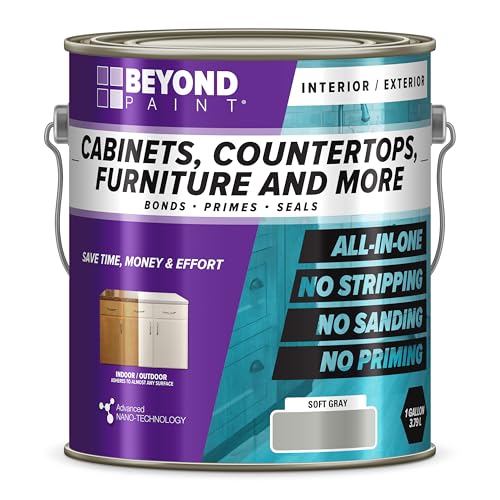
Beyond Paint Soft Gray Gallon differs from the Bright White gallons by offering Soft Gray in a 128-fluid-ounce container. The maker says this all-in-one refinishing paint for furniture and cabinets needs no stripping, sanding, or priming. It suits a project whose chosen cabinet color is gray and calls for a gallon-sized container. The main limitation is that this option has no coverage figure here, so do not use the Bright White gallon’s 400-square-foot figure as its own estimate; plan quantities using the paint label or a verified project calculation.
Bottom line: Choose this when Soft Gray is the target color and gallon volume fits the job.
How to Choose Beyond Paint for Cabinets
Choose cabinet paint by surface condition, color, and the amount of paint the job needs. These options are marketed as all-in-one refinishing paint, and the maker says they do not require stripping, sanding, or priming; that claim does not remove the need to clean away grease, dust, or loose material before coating. Cabinet doors and drawer fronts also add area beyond the visible cabinet faces, so count both sides if they will be painted. For a starting estimate, the Bright White gallon has a coverage of 400 square feet; use that figure only for that option, and leave room for extra coats or a rough, absorbent surface. If your measured area is near the coverage, confirm the can label’s coverage and coat guidance before beginning.
Cabinet paint is a coating, not a substitute for repairing loose veneer, swollen particleboard, or failing hardware. Stabilize damaged surfaces first, and choose the color before estimating quantities so the paint area and finish plan stay aligned.
Container Size, Coverage, and Color
Container volume separates the quart from the gallons: one quart is 32 fluid ounces, while a gallon is 128 fluid ounces. That makes a gallon four times the volume of a quart, but it does not establish coverage for every color or container. Only the Bright White gallon carries a 400-square-foot coverage figure among these options. The table keeps that distinction clear rather than assigning the same estimate to another container.
Use this comparison to narrow the choice, then measure the cabinet faces, doors, and drawer fronts that will receive paint. A cabinet layout with many doors or two-sided painting can use more coating than a quick front-face estimate suggests.
| Option | Container | Color | Coverage figure |
|---|---|---|---|
| Beyond Paint Bright White Gallon | 128 fl oz | Bright White | 400 sq ft |
| Beyond Paint Bright White Quart | 32 fl oz | Bright White | — |
| Beyond Paint Soft Gray Gallon | 128 fl oz | Soft Gray | — |
Preparing Cabinets Before Painting
Clean cabinets before coating them, especially around handles, cooktops, and other areas that collect grease. Even when a paint is marketed as requiring no sanding or primer, dust, oils, loose finish, and peeling material can interfere with adhesion; remove contaminants and address loose coating before painting. Mask hinges, counters, floors, and adjacent walls to keep paint off surfaces that are not part of the project.
Remove doors and drawer fronts when practical, label their positions, and coat them in a ventilated work area. Keep paint away from flames and follow the container’s safety and drying directions, since application and recoat timing depend on the specific coating and conditions. Do not close freshly painted doors against frames until the finish has dried enough to avoid sticking.
Estimating Paint for Cabinet Doors and Frames
Measure every surface that will be painted instead of estimating from cabinet width alone. For a single flat panel, multiply height by width; count both faces when painting both sides, then add the cabinet frames and exposed end panels. For example, a 20-by-30-inch door face is about 4.2 square feet, so both faces are about 8.4 square feet before edges. This approach helps compare the total area with the only explicit coverage figure here: 400 square feet for Beyond Paint Bright White Gallon.
Use a measured-area buffer when doors are detailed, textured, or unusually absorbent, because their extra surface can consume more paint than a flat-area calculation suggests. If the estimate approaches 400 square feet, verify the can’s coverage guidance and plan enough coating for the intended number of coats rather than assuming one coat will finish the job.
Frequently Asked Questions
How much area does a gallon of Beyond Paint cover?
The Bright White gallon is marked to cover 400 square feet. Treat that as an estimate for that option, and account for extra coats, textured surfaces, and cabinet doors painted on both sides.
Do cabinet doors need sanding before painting?
The maker says these Beyond Paint options do not require sanding, but cabinets should still be clean and free of grease, dust, and loose coating. Remove peeling material and repair damage before applying a new finish.
How do I calculate paint for cabinet doors?
Multiply each door’s height by its width, then count both faces if both will be painted; add frames and exposed sides separately. A 20-by-30-inch door face is about 4.2 square feet, or about 8.4 square feet for both faces.
Should cabinet doors be removed before painting?
Removing doors and drawer fronts makes it easier to coat edges and keep paint off hinges and frames. Label each piece and let painted surfaces dry before closing doors against their frames to reduce sticking.
What should I do before painting kitchen cabinets?
Clean away grease and dust, then remove loose finish and repair damaged surfaces before coating. Mask nearby counters and floors, and work with ventilation while following the paint container’s safety and drying directions.