
Best Stretch Cord for Bracelet Making: 4 Picks Compared

Stretch Magic Clear 1 mm is the best stretch cord for most bracelet makers because its 1 mm clear polyurethane cord pairs a defined diameter with a 25-meter spool. Choose JULIMAIDONG Clear 0.8 mm instead for beads with tighter holes; Paxcoo Flat Elastic 1 mm or LUSTEMBER 1 mm Black and White suit projects where a colored or flat cord is preferable.
Stretch cord is elastic string that lets a beaded bracelet slip on and off without a clasp; bead-hole clearance and a secure knot matter more than spool length alone.
We earn a commission if you buy through links on this page. As an Amazon Associate I earn from qualifying purchases. Products are compared on manufacturer specifications, not hands-on testing.
- Best overall: Stretch Magic Clear 1 mm – Round, clear 1 mm polyurethane cord on a 25-meter spool works across many bead styles.
- Best for white cord: Paxcoo Flat Elastic 1 mm – The 1 mm flat elastic is white, with 100 meters per roll and a width and thickness.
- Best for smaller holes: JULIMAIDONG Clear 0.8 mm – Its 0.8 mm diameter may pass through bead holes that are too narrow for 1 mm cord.
- Best for two colors: LUSTEMBER 1 mm Black and White – The two-roll set offers black and white 1 mm elastic for matching cord color to a design.
| Product | Best for | Diameter / profile | Material | Cord length | Shop |
|---|---|---|---|---|---|
| Stretch Magic Clear 1 mm | General bead stringing | 1 mm, round | Polyurethane | 25 m (82 ft) | Check Price on Amazon |
| Paxcoo Flat Elastic 1 mm | White flat cord | 1 mm wide, 0.7 mm thick; flat | Elastic polyester spandex | 100 m (328 ft) | Check Price on Amazon |
| JULIMAIDONG Clear 0.8 mm | Narrow bead holes | 0.8 mm, round | Elastic polyester spandex | 60 m (200 ft) | Check Price on Amazon |
| LUSTEMBER 1 mm Black and White | Color-matched projects | 1 mm; profile unspecified | Nylon-polyester fabric and braided rubber | Two rolls; length unspecified | Check Price on Amazon |
Stretch Cord for Bracelet Making
Compare the cord profile and bead fit first, then choose the color and spool length that suit your projects.
Stretch Magic Clear 1 mm

Stretch Magic Clear 1 mm stands out for its round 1 mm polyurethane cord and clear finish, a versatile combination for bracelets using glass, crystal, plastic, pearls or gemstones. The 25-meter spool is a practical amount for repeated projects, and the cord is latex-free and designed to knot easily. Brand claims include durability and elasticity; treat those as maker claims rather than a guarantee against wear. A 1 mm cord will not fit every bead, so check the bead-hole opening before starting if the beads are small or have narrow drillings.
Bottom line: Choose this for a clear, round 1 mm cord when your beads have sufficient hole clearance.
Paxcoo Flat Elastic 1 mm
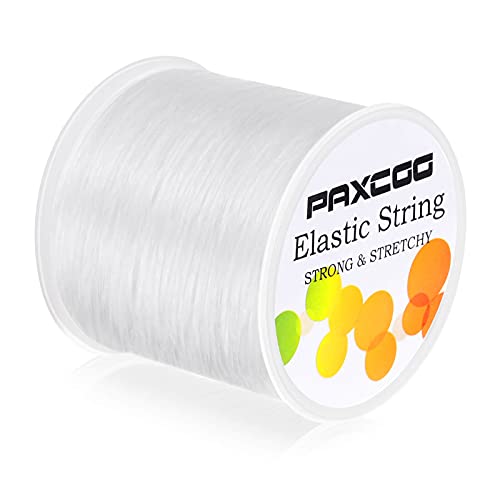
Paxcoo Flat Elastic 1 mm differs from round cord with a flat profile measuring about 1 mm wide and 0.7 mm thick, and its white color can coordinate with pale or opaque beads. The 100-meter roll provides the longest length among these picks, useful when making multiple bracelets. Its elastic polyester-spandex construction is intended for bracelet stringing, and the cord is described as easy to knot and conceal. Because a flat profile does not behave exactly like round cord, test it through the bead holes and check how the knot sits before stringing a full bracelet.
Bottom line: Pick this when white flat cord and a long roll suit the bead design.
JULIMAIDONG Clear 0.8 mm

JULIMAIDONG Clear 0.8 mm is the thinnest round cord here at 0.8 mm, making it the choice to consider when a bead hole is too tight for 1 mm cord. It is clear elastic polyester spandex and comes on a 60-meter roll, balancing fine-gauge stringing with a substantial length. The slimmer diameter may be less suitable than 1 mm cord for beads with larger holes or designs where a thicker cord is preferred. Verify that the beads slide freely over the cord before committing to a finished bracelet; a snug pass can make stringing and knot placement harder.
Bottom line: Choose this for smaller bead holes that can still accommodate a 0.8 mm cord.
LUSTEMBER 1 mm Black and White

LUSTEMBER 1 mm Black and White is the color-focused choice, supplying two rolls in black and white so the cord can coordinate with contrasting bead palettes. The 1 mm size and fabric-plus-braided-rubber construction distinguish it from the clear, round options; it is presented as flexible and easy to cut and knot. The total length per roll is not provided, so this set is harder to compare for production quantity. The cord profile is also not clear from the specifications, making a bead-hole test especially useful before choosing it for beads with tight drillings.
Bottom line: Pick this when having both black and white cord matters more than knowing the roll length.
How to Choose Stretch Cord for Bracelets
Start with bead-hole clearance, then decide whether cord color and profile will show in the finished bracelet. Cord sold for beading commonly ranges from about 0.5 mm to 1 mm; the useful diameter is the thickest one that passes through every bead smoothly. A 0.8 mm option can help with smaller holes, while 1 mm cord suits beads with wider drilling. Round cord and flat cord are not interchangeable in every bead: a flat strand may twist or bunch in a round hole. Make a short threading test before cutting bracelet-length cord, especially when beads have varied hole sizes.
For a simple rule, if the smallest bead hole will not accept 1 mm cord without force, try 0.8 mm cord or choose beads with larger holes. Do not force cord through a bead, since that can fray or damage the elastic.
Diameter, Bead Holes, and Knot Fit
Bead-hole size decides whether a cord can be threaded and whether a finished knot can be hidden. Many common craft beads have holes around 1 to 2 mm, but drilled gemstones and small glass beads can be narrower, so measure or test the smallest hole rather than relying on a bead’s outside size. Leave enough room to pass the cord without scraping it against a sharp hole edge. A knot also takes more space than a single strand; test whether it can tuck inside a bead before making a full bracelet.
Stretch cord is not a substitute for matching bead weight and design to the cord. For heavy beads or a bracelet worn often, inspect the elastic and knot regularly and restring it if it becomes slack, nicked, or visibly worn.
Round and Flat Elastic Cord Compared
Round elastic cord has a consistent circular profile, while flat elastic has a wider face and a thinner edge. The profile changes how the strand passes through a drilled hole and how much cord contact the bead has, so diameter alone does not tell the whole fit story. Round cord is a straightforward starting point for standard drilled beads; flat cord can be useful when the bead holes accommodate its width and the flatter strand suits the design.
| Need | Choose | Fit check |
|---|---|---|
| Smaller hole | Round 0.8 mm | Test the narrowest bead |
| General round stringing | Round 1 mm | Confirm at least 1 mm clearance |
| Flat or color-matched look | Flat or colored cord | Check profile and hole width |
How to Tie and Maintain Stretch Bracelets
A secure elastic bracelet depends on a snug knot and an unabraded cord, not on adding a bulky knot that cannot fit inside a bead. Leave working tail, tie the knot according to the cord maker’s directions, and test the knot by gently stretching the bracelet before trimming. Some makers use a small dab of jewelry glue, but glue must be compatible with the elastic and fully dry before wear; excess glue can stiffen the strand or discolor beads.
Take bracelets off by rolling them over the hand rather than pulling hard from one side, which concentrates strain at the knot. Store elastic jewelry away from prolonged heat and direct sunlight, and restring when the cord shows fraying, loss of spring, or a damaged knot.
Frequently Asked Questions
What stretch cord diameter works for most bracelets?
A 1 mm cord is a common starting point for standard drilled beads, provided the smallest hole accepts it freely. Use 0.8 mm when a bead’s hole is too narrow for 1 mm, and test before stringing the full bracelet.
How do I measure bead holes for elastic cord?
Use a bead reamer gauge or a small drill-bit shank as a sizing reference, without forcing it into the hole. Allow clearance beyond the cord diameter so threading does not scrape or pinch the elastic.
Can I use flat elastic cord with round-hole beads?
Yes, if the hole is wide enough for the flat cord’s broad dimension and the strand passes without bunching. For a flat cord about 1 mm wide, check both the hole width and how the cord sits as beads turn.
How often should I replace elastic bracelet cord?
Replace the cord when it becomes slack, frayed, nicked, or fails to return to length after a gentle stretch. Bracelets worn daily or exposed to sweat, lotions, and sunlight generally need inspection more often than occasional-wear pieces.
Should I stretch elastic cord before stringing beads?
A gentle pre-stretch can reduce later slack, but pulling hard can weaken the cord. Stretch short sections carefully and stop if the cord whitens, thins, or no longer springs back.