
Best Deep Sea Reels: 4 Options Compared by Use

SAMOLLA FX50W Two-Speed Reel suits most anglers seeking a deep sea reel because its two gear ratios offer a choice between faster line pickup and lower-speed cranking, and its maker says it has up to 83 pounds of drag. Choose TX1200 Electric Reel for electric retrieval, or Penn Squall II 30 Combo if you need a rod-and-reel combo rather than a reel alone.
Deep sea reels are built for boat fishing where line capacity, drag control, and the way line is retrieved need to match the target and tackle.
We earn a commission if you buy through links on this page. As an Amazon Associate I earn from qualifying purchases. Products are compared on manufacturer specifications, not hands-on testing.
- Best overall: SAMOLLA FX50W Two-Speed Reel – Two gear ratios let you switch between quicker pickup and lower-speed cranking.
- Best for electric retrieval: TX1200 Electric Reel – Electric operation has 10 speed settings and a digital display.
- Best for a complete setup: Penn Squall II 30 Combo – The package pairs a size 30 reel with a 6-foot-6-inch rod.
| Product | Best for | Gear ratio | Max drag | Weight | Shop |
|---|---|---|---|---|---|
| SAMOLLA FX50W Two-Speed Reel | Two-speed cranking | 3.1:1 / 1.3:1 | 83 lb | 4.3 lb | Check Price on Amazon |
| TX1200 Electric Reel | Electric retrieval | 6.3:1 | 35.3 lb | 0.85 lb | Check Price on Amazon |
| Penn Squall II 30LWLC | Reel-only setup | — | — | 1.8 lb | Check Price on Amazon |
| Penn Squall II 30 Combo | Rod-and-reel combo | 4.9:1 | 33 lb | 2.8 lb | Check Price on Amazon |
Best deep sea reels
Compare the reel styles and combo here by retrieval method, drag, and included tackle.
SAMOLLA FX50W Two-Speed Reel

SAMOLLA FX50W Two-Speed Reel stands out for its two-speed gearing, giving anglers a faster ratio for line pickup and a lower ratio for cranking under load. The maker says the multi-disc drag system reaches 83 pounds of maximum drag. Its right-hand configuration and 4.3-pound weight are useful fit checks before choosing it for an offshore setup. This is a reel-only option, so it suits anglers who already have a compatible rod and line. The main limitation is that the maker does not give line capacity; anglers planning deep drops should confirm capacity against their target depth and line diameter before ordering.
Bottom line: Pick this if you want two gear ratios in a conventional offshore reel.
TX1200 Electric Reel

TX1200 Electric Reel differs from the conventional options by using electric retrieval with 1–10 speed control. Its maker says the digital display shows air pressure, ambient temperature, and time, while a visual flicker and audible prompt indicate a fish pulling line. The body is aluminum alloy with stainless steel and brass components, and the weight converts to about 0.85 pound. This option suits anglers who specifically want powered line retrieval and selectable speed.
Bottom line: Choose this if electric retrieval and adjustable speed are priorities.
Penn Squall II 30LWLC
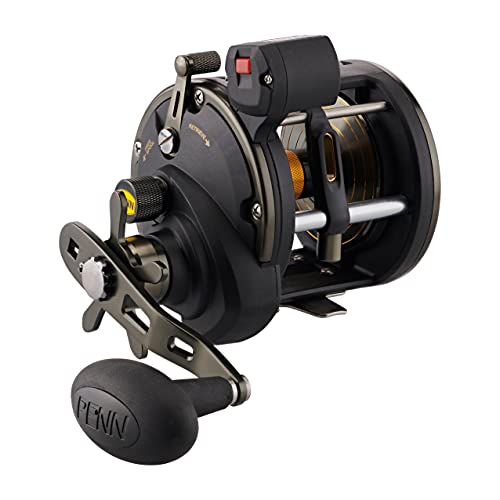
Penn Squall II 30LWLC is a reel-only choice with a level wind, forged and machined aluminum spool, and lightweight graphite frame and sideplates. It has three shielded stainless steel ball bearings plus one additional bearing, and HT-100 carbon fiber drag washers. Those construction details distinguish it from the electric reel and from the combo that includes a rod. The 30LWLC model weighs about 1.8 pounds.
Bottom line: Consider it if you want a conventional level-wind reel and can verify its capacity needs.
Penn Squall II 30 Combo

Penn Squall II 30 Combo is the only option here that includes a 6-foot-6-inch, one-piece tubular fiberglass rod with the reel. The size 30 reel has a star drag, a four-bearing system, instant anti-reverse, and a maximum drag of 33 pounds. Its mono and braid capacities give buyers a starting point for matching line to a setup. The combo is a partial match for shoppers seeking a reel alone or a setup for unusually deep drops. Its medium-heavy rod and listed line capacities should guide whether it suits the intended species and depth.
Bottom line: Pick this if you need a matched rod and reel rather than a reel alone.
How to choose a deep sea reel
Start with the target depth, line, and retrieval method; maximum drag alone does not determine whether a reel fits. Conventional reels use a hand crank, while electric reels power line retrieval, and a combo can simplify matching the rod and reel. For a conventional reel, compare its line capacity with the amount of line needed for the planned depth and possible runs; thinner line generally packs more capacity on a spool. A common starting point for drag is about 25 to 30 percent of the line’s breaking strength, then adjust to the rod, knots, and tackle. Keep drag within the weakest component’s safe limit. If the setup’s capacity or rod rating cannot be confirmed, verify it before choosing.
Gear ratio and retrieval style
Gear ratio describes how many spool turns correspond to one handle turn; a higher ratio generally retrieves more line per crank, while a lower ratio typically gives more mechanical advantage. Two-speed reels let anglers change ratios rather than compromise on one speed, while electric reels use powered retrieval and may offer speed controls. Ratios are not a direct measure of how quickly line comes in, because spool fill and handle rotation also matter. A level-wind reel guides line across the spool as it is retrieved; it does not replace checking line lay or capacity. Choose manual retrieval when hand cranking is your preference, and consider electric operation when powered retrieval is the deciding feature.
Match line, drag, and rod ratings
Match the reel to a rod’s line and lure ratings, then choose line strength and capacity for the species and depth. A reel with a large maximum-drag figure is not automatically appropriate: the rod, knots, leader, and line can be the limiting parts of the system. Set drag with a scale rather than guessing; a common starting point is 25 to 30 percent of line breaking strength, reduced when knots or tackle are weaker. For a combo, check that the rod’s ratings suit your intended line. Use this quick decision guide to narrow the reel type, then confirm specific capacity and compatibility for the setup.
| Need | Reel type | Check before choosing |
|---|---|---|
| Switch between cranking speeds | Two-speed conventional | Gear ratios and line capacity |
| Powered retrieval | Electric | Power source, speed control, and capacity |
| Matched rod and reel | Combo | Rod rating and included line capacity |
Deep sea reel safety and setup
Keep hands and loose clothing clear of a moving spool, line, and handle, especially when a fish is pulling line under load. A sudden stop or over-tight drag can transfer force to the rod, line, knots, or angler; set drag below the weakest component’s limit and avoid handling taut line barehanded. Saltwater exposure makes rinsing and drying gear after use a sensible care habit, and periodic inspection can reveal corrosion, damaged line, or a rough drag before the next trip. Check the spool for uneven line buildup, because poor line lay can interfere with retrieval. Use the rod’s rating and the reel’s capacity—not maximum drag alone—to decide whether the full setup is suited to a planned drop.
Frequently Asked Questions
What does a reel gear ratio tell you?
A 6.3:1 ratio means the spool turns about 6.3 times per handle turn, although spool fill affects actual line pickup. Higher ratios tend to retrieve more line per crank, while lower ratios usually favor cranking leverage.
How much drag should a deep sea reel use?
A common starting point is roughly 25 to 30 percent of the line’s breaking strength. Lower the setting if the rod, leader, or knots are the weaker part of the setup.
Does a level-wind reel work for deep sea fishing?
A level wind guides line across the spool during retrieval, but suitability also depends on capacity, drag, and the rod-and-line pairing. Check those specifications against the intended depth and target.
What should I check on an electric fishing reel?
Confirm the power source and line capacity before planning deep drops or long trips. Speed control is useful, but it does not tell you how much line the spool holds.
How should you care for a saltwater reel?
Rinse salt residue with fresh water and dry the reel after use, avoiding forceful water that can drive salt or grit into the mechanism. Inspect line, drag operation, and spool line lay regularly.