
Best 10 Ft Sit-On-Top Fishing Kayaks Compared

The Pelican Catch Classic 100 suits most anglers seeking a 10-foot sit-on-top fishing kayak because its 34-inch tunnel hull prioritizes stability and includes a dual-position seat. Anglers who need a lighter boat for carrying should consider a different fit, since the Sentinel 100X weighs 44.6 pounds.
Sit-on-top kayaks keep the cockpit open rather than enclosing the paddler, making deck layout and storage access important choices for fishing.
We earn a commission if you buy through links on this page. As an Amazon Associate I earn from qualifying purchases. Products are compared on manufacturer specifications, not hands-on testing.
- Best overall: Pelican Catch Classic 100 – Its 34-inch tunnel hull and adjustable high- or low-position seat suit anglers who value stability and casting room.
- Best for lighter carrying: Pelican Sentinel 100X – At 44.6 pounds and 9 feet 6 inches long, it is the lightest and shortest option.
- Best for onboard measuring: Lifetime Tamarack Pro 103 – It includes a ruler, three rod holders and a center hatch bucket.
| Product | Best for | Length | Width | Weight | Shop |
|---|---|---|---|---|---|
| Pelican Catch Classic 100 | Stability-focused fishing | 120 in | 34 in | 57 lb | Check Price on Amazon |
| Lifetime Tamarack Pro 103 | Gear organization | 123 in | 31 in | 57.5 lb | Check Price on Amazon |
| Perception Pescador Pro 10 | Seat comfort | 126 in | 32 in | 57 lb | Check Price on Amazon |
| Pelican Sentinel 100X | Easier transport | 114 in | 30 in | 44.6 lb | Check Price on Amazon |
10 ft Sit-On-Top Fishing Kayaks
Compare hull dimensions, carrying weight and fishing-specific features to match a kayak to your launch and gear needs.
Pelican Catch Classic 100

The Catch Classic 100 is the widest option here at 34 inches, and its tunnel hull is designed for stability and easier entry and exit. The ERGOCAST CLASSIC seat adjusts between high and low positions, while a front quick-lock hatch and rear tank well with bungees provide separate storage areas. The open deck offers room to position fishing gear and cast while standing, according to the maker. This 57-pound kayak is heavier than the Sentinel, so buyers who must carry a boat alone over a long distance may prefer the lighter alternative.
Bottom line: Choose this if a wide hull and two seat positions matter more than minimizing carry weight.
Lifetime Tamarack Pro 103
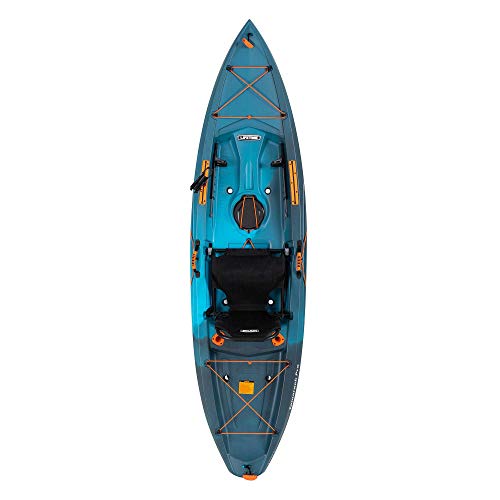
The Tamarack Pro 103 stands out for built-in measuring and tackle organization: it has a ruler, a center hatch with a bucket, and a deeper rear tank well. Three rod holders—one adjustable and two flush-mounted—cover different rod placements, and accessory mounting adds another way to arrange gear. Its adjustable framed seat and footrests let paddlers change their position. At 57.5 pounds, it is the heaviest boat in this group, so frequent lifting or transport without help may make the lighter Sentinel a more practical choice.
Bottom line: Pick this if a built-in ruler and organized tackle storage are priorities.
Perception Pescador Pro 10
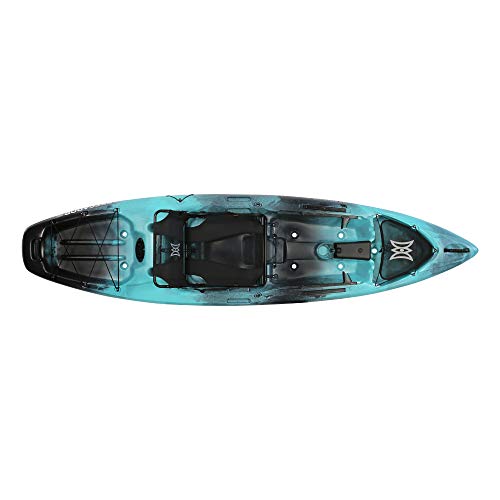
The Pescador Pro 10 is the longest option here at 126 inches, with an adjustable lawn-chair-style seat and large front and rear storage areas. Its 32-inch width sits between the narrower Tamarack Pro 103 and the wider Catch Classic 100, offering a middle ground in footprint. The maker gives a maximum capacity of 325 pounds, which includes the paddler and gear; account for both when loading the kayak. Its 57-pound hull and longer length may be less convenient in tight storage spaces than the shorter, lighter Sentinel.
Bottom line: Choose this for an adjustable lawn-chair seat, broad storage areas and a 325-pound capacity.
Pelican Sentinel 100X

The Sentinel 100X is the shortest and lightest kayak in this group, measuring 114 inches and weighing 44.6 pounds. Its 30-inch width uses less storage space across the beam than the wider choices. Fishing gear provisions include two flush-mounted rod holders and two vertical holders in the removable ExoPak, which can be packed separately before launching. The padded Ergolounge seat has a high, wide backrest. Buyers wanting an adjustable footrest or a hull capacity should compare those points before choosing; the standout here is easier carrying, not the most spacious hull.
Bottom line: Pick this when lower carry weight and a compact footprint take precedence.
How to Choose a 10 ft Fishing Kayak
Start with the tradeoff between hull width, weight and the gear you carry. In this group, widths run from 30 to 34 inches and hull weights run from 44.6 to 57.5 pounds, so a wider platform can take more space to store while heavier kayaks demand more effort at a carry. If solo lifting is a regular part of your launch, favor a kayak under 50 pounds; if you need more deck room, compare widths and storage layout instead. Seat adjustment also matters on long outings: a chair-style or adjustable seat changes posture, but does not determine capacity. Count the paddler, tackle, clothing and safety equipment together when evaluating the load.
Rod-holder count is only one measure of fishing utility. Check whether holders are flush-mounted, vertical or adjustable, then consider whether hatch, tank-well and bungee storage keep frequently used gear reachable without crowding the casting area.
Length, Width and Transport Fit
A 10-foot-class kayak is roughly 114 to 126 inches long in these choices, while the narrowest-to-widest beams span 30 to 34 inches. Measure the usable storage space and vehicle or rack loading area before deciding; allow clearance for handles and any hull curvature rather than matching a nominal “10 ft” label exactly. For solo carries, a measurable rule is useful: if you routinely lift a kayak more than 50 feet from vehicle to launch, prioritize a hull under 50 pounds. A wider kayak can feel roomier on deck but may be harder to fit through a narrow gate or store on a wall rack.
For roof transport, use kayak-rated cradles or saddles and secure the bow and stern as well as the hull; a wide load may need a second person to position safely. Never exceed the boat’s load capacity, and include all carried gear in the total.
Sit-On-Top Fishing Kayak Features Compared
Fishing kayaks differ most in how they organize tackle, support a seated posture and expose deck space. A quick-lock hatch protects items below deck, while an open tank well with bungees is better suited to bulky gear that must stay accessible. Removable compartments such as a pack-in storage unit can simplify loading away from the water, but should be secured for travel and use. Rod holders also serve distinct jobs: flush mounts keep rods low, while vertical holders make spare rods easier to reach.
This table links common needs to the feature worth prioritizing.
| Need | Prioritize | Why it matters |
|---|---|---|
| Frequent solo carrying | Hull under 50 lb | Reduces lifting weight at launch and storage |
| Open-deck casting | Wide hull and clear deck | Leaves room to reposition gear and stand only if the boat supports that use |
| Multiple rod setups | Mixed holder positions | Flush and vertical holders suit different stowage needs |
| Protected small items | Hatch storage | Keeps gear below the open deck |
Safety and Loading Basics
Wear a properly fitted personal flotation device whenever paddling, and keep it on rather than stowed; U.S. Coast Guard rules require a wearable PFD for each person aboard, with additional requirements varying by craft and state. A kayak’s maximum capacity is a limit, not a target: subtract the paddler’s weight and all gear from that figure before loading. Keep heavy items low and centered so the hull remains balanced, and secure loose tackle before launching.
Standing to cast is not suitable for every paddler or condition, even when a deck is roomy. Stay seated in wind, current or boat traffic, and avoid standing unless the hull’s stability, water conditions and your balance make it appropriate. A stable design does not replace a PFD, weather check or conservative loading.
Frequently Asked Questions
What does a kayak weight capacity include?
Capacity includes the paddler and everything carried aboard, not just fishing tackle. For a 325-pound limit, subtract body weight, clothing, food, tackle and safety gear to find remaining payload.
How wide should a fishing kayak be?
A 30- to 34-inch beam spans the options here, with wider hulls generally offering more deck width at the cost of storage footprint. Measure your rack, doorway or storage bay before selecting a wider model.
Can you stand up in a sit-on-top fishing kayak?
Some designs have room for standing, but standing is appropriate only when the hull and conditions support it and the paddler has steady balance. Stay seated in wind, current or traffic, and wear a PFD throughout the outing.
How should fishing rods be carried in a kayak?
Use flush-mounted holders for low-profile rod storage and vertical holders for rods you want readily accessible. Secure rods before paddling, and keep them clear of lines, paddle strokes and overhead obstructions.