
Best Eyeglass Cleaner Wipes: 4 Picks Compared

For most glasses wearers, ZEISS 200-Count Lens Wipes is the strongest fit because its maker says the wipes are safe for anti-reflective and other coated lenses. Choose another option if you want a 100-count pack or wipes also promoted for screens.
Eyeglass cleaner wipes are pre-moistened, disposable cloths for removing fingerprints and grime from lenses; use them only after loose grit is removed.
We earn a commission if you buy through links on this page. As an Amazon Associate I earn from qualifying purchases. Products are compared on manufacturer specifications, not hands-on testing.
- Best overall: ZEISS 200-Count Lens Wipes – The maker says these wipes are safe for anti-reflective and blue-light lenses.
- Best for screens: Meihua 120-Count Lens Wipes – Its maker promotes use on phone, laptop and car infotainment screens.
- Best for a smaller pack: Nice ‘n Clean SmudgeGuard 100-Count – The 100-count pack has less than half the wipe count of the 200-count options.
| Product | Best for | Count | Coating compatibility | Other stated uses | Shop |
|---|---|---|---|---|---|
| ZEISS 200-Count Lens Wipes | Coated lenses | 200 wipes | Anti-reflective, blue-light | Camera lenses | Check Price on Amazon |
| Wowflash 200-Count Lens Wipes | Everyday carry | 200 wipes | Ammonia-free | Sunglasses, cameras, goggles | Check Price on Amazon |
| Meihua 120-Count Lens Wipes | Screens and glasses | 120 wipes | Ammonia-free; anti-reflective stated | Screens, watch faces | Check Price on Amazon |
| Nice ‘n Clean SmudgeGuard 100-Count | Smaller pack | 100 wipes | Ammonia-free; anti-reflective stated | Goggles, device lenses | Check Price on Amazon |
Best eyeglass cleaner wipes
Compare pack size, lens-coating compatibility and the surfaces each maker says its wipes can clean.
ZEISS 200-Count Lens Wipes
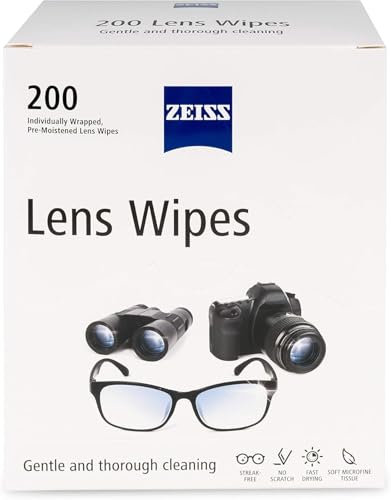
For coated-lens compatibility, ZEISS 200-Count Lens Wipes is the clearest match: its maker says the wipes are safe for prescription lenses, anti-reflective coatings and blue-light lenses. The pack contains 200 individually wrapped, pre-moistened wipes for single use, and the maker says they remove fingerprints, oil and buildup. This option also covers reading glasses, sunglasses and camera lenses. Choose it when coating compatibility is the deciding factor; the pack does not claim the broad phone- and computer-screen use promoted for some alternatives.
Bottom line: Choose this if you want a 200-count pack with explicit anti-reflective coating compatibility.
Wowflash 200-Count Lens Wipes

Wowflash 200-Count Lens Wipes pairs a 200-wipe count with an ammonia-free formula, making it a straightforward everyday option for eyeglasses, sunglasses, camera lenses and goggles. The maker says the individually wrapped wipes remove dirt, dust and fingerprints without scratches or streaks. That broad range of optical uses distinguishes it from packs focused mainly on glasses and camera lenses. The limitation is that coating compatibility is not addressed, so people with delicate coated lenses should confirm suitability before using the wipes.
Bottom line: Choose this for a large pack of individually wrapped wipes across several types of optical lenses.
Meihua 120-Count Lens Wipes

Meihua 120-Count Lens Wipes is the multipurpose pick: its maker promotes use on eyeglasses, camera optics, phone and laptop screens, car infotainment systems and watch faces. The 120 wipes are individually wrapped and pre-moistened, and the maker describes the formula as ammonia-free and suitable for anti-reflective coatings. That screen-focused use separates it from the other options. It contains fewer wipes than the 200-count packs, and the broad surface claims do not establish compatibility with every screen coating.
Bottom line: Choose this if screen cleaning is as important as cleaning eyeglasses.
Nice ‘n Clean SmudgeGuard 100-Count

Nice ‘n Clean SmudgeGuard 100-Count offers the smallest pack here at 100 individually wrapped wipes, with an ammonia-free formula the maker says is suitable for glass and plastic lenses and anti-reflective coatings. The maker also promotes the wipes for goggles, safety eyewear, camera lenses and device lenses such as phone and laptop cameras. Its SmudgeGuard technology is described as providing three times the cleaning power of the brand’s standard wipes. The smaller count may suit occasional use, but frequent cleaners will go through the pack sooner than the 200-count options.
Bottom line: Choose this if a 100-count pack and compatibility with glass or plastic lenses fit your needs.
How to choose eyeglass cleaner wipes
Choose by coating compatibility first, then pack size and the extra surfaces you plan to clean. Anti-reflective coatings are thin layers on lens surfaces, so avoid assuming that every wipe is suitable for every coating; look for explicit compatibility or confirm it with the lens maker. Individually wrapped wipes stay separate until use, while a larger count can be more convenient for frequent cleaning. Use this guide to narrow the options:
| Need | What to prioritize |
|---|---|
| Coated prescription lenses | Explicit coating compatibility |
| Glasses and screens | Screen use named by the maker |
| Occasional cleaning | A smaller pack count |
| Several optical items | Compatibility with those lens types |
Count alone does not establish how gently a wipe cleans; grit on the lens or cloth can still cause scratches.
How to use lens wipes without scratching
Rinse loose dust and grit from lenses before wiping, because rubbing particles across a lens can scratch it. Use clean, lukewarm water when available, then gently wipe with a fresh lens wipe; do not reuse a disposable wipe after it has picked up debris. A wipe that looks clean can still carry grit from an earlier surface. Avoid household glass cleaner, which may contain ammonia or other ingredients unsuitable for some lens coatings. For stubborn residue, wash with a small amount of lotion-free dish soap and rinse thoroughly rather than pressing harder with a wipe. Keep wipes away from eyes and follow the package safety directions.
When to use wipes or a microfiber cloth
Use a lens wipe when you need a pre-moistened disposable cleaner away from a sink; use a clean microfiber cloth for routine dry dusting only after loose grit is gone. Microfiber can be washed and reused, but fabric softener leaves residue that can smear lenses. A cloth carried loose in a pocket or bag can collect abrasive particles, so keep it in a clean case and wash it when visibly dirty. Wipes avoid carrying a reusable cloth, but each one is single-use and creates waste. For oily smudges, a rinse or proper lens-cleaning solution is preferable to dry rubbing.
Frequently Asked Questions
Can lens wipes damage anti-reflective glasses?
A wipe can scratch a lens if grit is dragged across its surface. Choose wipes whose maker explicitly says they are suitable for anti-reflective coatings, and rinse away loose particles first.
Should I rinse glasses before using a wipe?
Yes, rinsing with clean lukewarm water removes loose dust and grit before wiping. That matters most when lenses look dusty or have been exposed to sand or road debris.
Can eyeglass wipes clean phone screens?
Some makers promote their wipes for screens, but screen coatings vary. Check the device maker’s cleaning guidance before wiping a coated display.
How often should microfiber lens cloths be washed?
Wash a microfiber cloth when it looks dirty or starts leaving smears; trapped grit can scratch lenses. Use mild detergent and skip fabric softener, which can leave a film.
Are eyeglass wipes safe for contact lenses?
No; eyeglass wipes are for lens surfaces, not contact lenses. Use contact-lens solution made for the specific lens type, and keep cleaning wipes away from the eye.