
Best Brace for IT Band Syndrome: 3 Options Compared

The Pro-Tec Athletics IT Band Compression Wrap is the best fit for most people seeking a brace for IT band syndrome because its EVA pad applies targeted compression above the knee. Choose an adjustable strap instead if you want a longer band to fit around the thigh.
IT band braces are external compression supports; they may help manage rubbing during activity but do not address every cause of outer-knee pain.
We earn a commission if you buy through links on this page. As an Amazon Associate I earn from qualifying purchases. Products are compared on manufacturer specifications, not hands-on testing.
- Best overall: Pro-Tec Athletics IT Band Compression Wrap – Its 3 mm neoprene wrap has an EVA pad designed to apply focused pressure above the knee.
- Best for gel padding: Vive IT Band Strap – The neoprene strap combines adjustable compression with an integrated gel pad.
- Best for adjustable fit: EXVITAL IT Band Straps – Its 24-inch hook-and-loop strap adjusts to fit around the thigh.
| Product | Best for | Material | Fit | Pad | Shop |
|---|---|---|---|---|---|
| Pro-Tec Athletics IT Band Compression Wrap | Targeted compression | 3 mm neoprene | Small–large | EVA foam | Check Price on Amazon |
| Vive IT Band Strap | Gel pad support | Breathable neoprene | One pack | Gel | Check Price on Amazon |
| EXVITAL IT Band Straps | Adjustable strap fit | — | 24-inch adjustable strap | Silicone | Check Price on Amazon |
IT band braces for IT band syndrome
Compare the wrap material, fit approach and pad style to find the support that matches your activity and comfort needs.
Pro-Tec Athletics IT Band Compression Wrap

Unlike the longer adjustable straps, Pro-Tec Athletics IT Band Compression Wrap is a compact neoprene wrap with an EVA foam pad intended to press directly on the IT band just above the knee. The 3 mm neoprene construction and small-to-large size range make it a straightforward option for someone who wants a short wrap rather than a long band to position around the thigh. Its focused pad is the defining feature, but a single size range may not suit every body or preferred compression level. Check that the wrap can sit comfortably above your knee without restricting movement.
Bottom line: Choose this if you want a compact neoprene wrap with a focused EVA pad.
Vive IT Band Strap
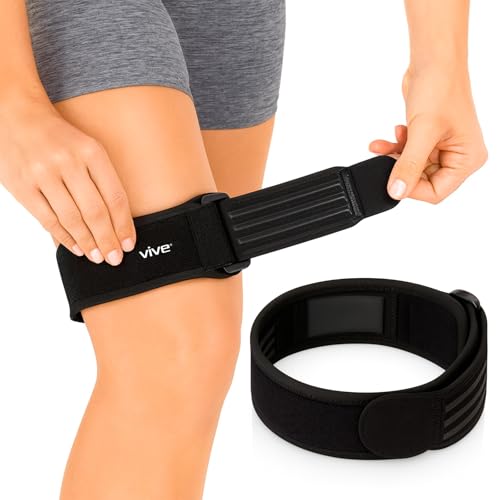
Vive IT Band Strap stands apart with an integrated gel compression pad in a breathable neoprene strap, rather than the EVA foam pad in the compact wrap. The maker says its pad dampens movement vibrations, and the strap can also be worn below the knee for other knee-support needs. That placement flexibility may suit people who want one strap for more than one activity-related support purpose. Its size is one pack, so buyers looking for a clearly specified adjustable length should compare the 24-inch strap instead.
Bottom line: Pick this if a gel pad and potential below-knee placement matter to you.
EXVITAL IT Band Straps

EXVITAL IT Band Straps is the clearest choice when strap length and adjustability matter: its 24-inch hook-and-loop band adjusts within that range and has a silicone compression pad. That differs from the shorter neoprene wrap and the Vive strap’s integrated gel pad. The adjustable closure may help accommodate different thigh sizes, while the blue color is a visible distinction from the black options.
Bottom line: Choose this if you want an adjustable 24-inch strap with a silicone pad.
How to choose an IT band brace
Choose an IT band brace by deciding whether you prefer a compact wrap or an adjustable strap, then prioritize comfortable placement over maximum tightness. IT band syndrome commonly causes pain on the outside of the knee, and a pad is intended to apply local pressure near that area. A brace is a support accessory, not a substitute for addressing training load or other causes of pain.
For an adjustable closure, check the band length against the circumference where you plan to wear it; the 24-inch option gives an adjustment range, while a small-to-large wrap uses a size category. Padding also differs: EVA foam, gel and silicone are not interchangeable descriptions, so select the pad type you prefer rather than assuming one will work better. Stop using a brace that causes numbness, tingling or increased pain.
Where to position an IT band strap
Position an IT band strap just above the knee on the outer thigh, with its pad over the area where the band passes near the outside of the knee. The Pro-Tec wrap specifically describes application just above the knee; follow the strap’s intended placement for other designs. A strap worn too low may press over the kneecap or a different tendon instead of the intended outer-thigh area.
Begin with a snug fit that stays in place while walking, not a tight fit that restricts circulation or knee motion. Test the position during a short, easy movement before running or exercising. If the strap slides, adjust its position and tension rather than tightening it until uncomfortable. Persistent pain, swelling, locking, or trouble bearing weight warrants medical evaluation rather than simply changing brace tension.
Brace support versus IT band recovery
A brace can provide compression during activity, but recovery from IT band pain usually also involves changing the load that provokes symptoms. Runners often need to reduce or pause painful mileage, then return gradually as symptoms allow; abruptly adding hills, speed work or distance can increase irritation. Hip and gluteal strengthening is commonly included in rehabilitation, alongside evaluation of training and movement factors.
Use discomfort as a practical guide: if pain alters your stride or gets worse as you continue, stop that session rather than relying on tighter compression. A clinician or physical therapist can check whether outer-knee pain is actually IT band syndrome, since several knee problems can feel similar. A strap is best treated as one optional part of a broader plan, not proof that continuing painful exercise is safe.
Common mistakes with IT band braces
The most common mistake is treating a brace as permission to push through increasing pain. Another is placing a pad over the kneecap or wrapping the strap so tightly that it causes numbness, tingling or skin irritation. Comfort and stable placement matter more than forceful compression.
Do not assume every outer-knee ache comes from the IT band: pain after a fall, major swelling, inability to bear weight, or a locked knee calls for prompt medical assessment. Keep the skin clean and dry under a neoprene support, and remove it if irritation develops. For repeated symptoms, note the activity and duration that bring on pain; that pattern can help a clinician or physical therapist assess load and guide a gradual return.
Frequently Asked Questions
Can I run while wearing an IT band strap?
A strap may be worn during activity if it stays comfortable, but it does not make worsening pain safe to ignore. Stop if pain changes your stride or increases as you run, and return gradually after symptoms settle.
How tight should an IT band brace feel?
An IT band brace should feel snug enough to stay positioned without restricting knee movement. Loosen or remove it if you notice numbness, tingling, skin irritation or increased pain.
Should an IT band strap go above or below the knee?
For IT band support, the pad is generally positioned just above the knee on the outer thigh. Some straps describe below-knee use for other types of knee support, which is a different placement purpose.
Does an IT band brace fix the cause of pain?
No, a brace provides external compression and does not by itself address training load or other causes of outer-knee pain. Persistent or recurrent symptoms merit assessment, especially if pain affects walking.
When should I seek care for outer-knee pain?
Seek prompt medical evaluation for severe pain, major swelling, a locked knee or trouble bearing weight. Ongoing pain despite reducing painful activity is also a reason to consult a clinician or physical therapist.