
Best Glasses to Block Fluorescent Light: 3 Picks Compared

AVDLAB Indoor FL-Flex FL-41 is the best fit for most people seeking glasses to block fluorescent light because its maker specifies an FL-41 lens targeting 480–520 nm wavelengths. Choose Bloomoak Rose Photochromic if you want photochromic lenses, or Bloomoak Light Pink FL-Flex if you prefer a square acetate frame and a 52% light rose tint.
Tinted glasses can reduce some incoming light, but they do not correct every cause of glare or discomfort.
We earn a commission if you buy through links on this page. As an Amazon Associate I earn from qualifying purchases. Products are compared on manufacturer specifications, not hands-on testing.
- Best overall: AVDLAB Indoor FL-Flex FL-41 – Its maker identifies an FL-41 lens that targets 480–520 nm light.
- Best for changing light: Bloomoak Rose Photochromic – The lens is described as photochromic for indoor and outdoor use.
- Best for a square frame: Bloomoak Light Pink FL-Flex – It pairs a geometric square acetate frame with a 52% light rose tint.
| Product | Best for | Lens tint | Frame style | Filtering or coating | Shop |
|---|---|---|---|---|---|
| AVDLAB Indoor FL-Flex FL-41 | Targeted wavelength filtering | Light pink, 25% | Cat eye | 480–520 nm; UV400 | Check Price on Amazon |
| Bloomoak Rose Photochromic | Changing light conditions | Rose; photochromic | Round retro | 480–520 nm; UV400; AR | Check Price on Amazon |
| Bloomoak Light Pink FL-Flex | Square acetate frame | Light rose, 52% | Geometric square, acetate | 480–520 nm; UV400; AR | Check Price on Amazon |
Fluorescent-light glasses compared
Compare the lens features and frame details that distinguish these three rose-tinted options.
AVDLAB Indoor FL-Flex FL-41
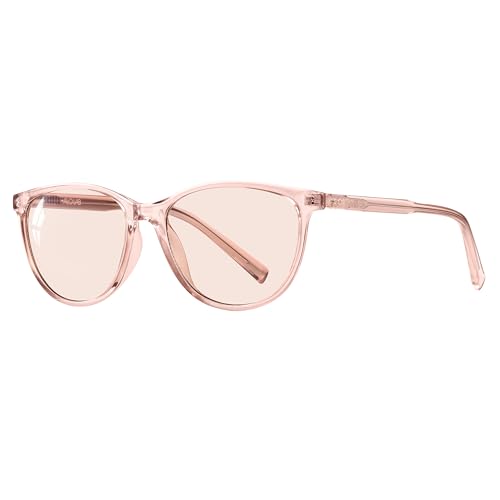
AVDLAB Indoor FL-Flex FL-41 stands apart with a named FL-41 lens and a specific wavelength target. The maker says its light-pink lens filters 480–520 nm light and includes a 100% UVA/UVB coating alongside UV400 blocking. The 54-size cat-eye frame suits shoppers who want a defined frame shape and a tint percentage called out in the product name. Its narrow target is a useful point of comparison, but it does not establish that every fluorescent lamp or source of glare will be blocked.
Bottom line: Choose this pair if a FL-41 wavelength target is your priority.
Bloomoak Rose Photochromic

Bloomoak Rose Photochromic is the option here with a photochromic lens, so its use spans indoor and outdoor conditions rather than a single fixed tint choice. The maker says its FL-ONE lens reduces 480–520 nm blue light and has an anti-reflective coating and UV400 protection. Its round retro design suits buyers who want that frame style. Photochromic lenses can respond differently depending on light and surroundings, so this choice may be less appealing if you want a consistently fixed tint indoors.
Bottom line: Pick this pair if you want a photochromic lens for indoor and outdoor settings.
Bloomoak Light Pink FL-Flex

Bloomoak Light Pink FL-Flex differs with its geometric square acetate frame and a light rose tint identified as 52%. The maker says the lens reduces 480–520 nm blue light and uses an anti-reflective coating; the product name also identifies a UV400 lens. This is a fit for shoppers who prefer a more angular frame and want a tint percentage specified. The percentage label alone does not describe how the lens will feel in every room, so people sensitive to darker tints should consider that before choosing.
Bottom line: Choose this pair if the square acetate frame and 52% tint label suit your preferences.
How to choose glasses for fluorescent light
Start with the lens tint and its filtering range, then decide whether you want a fixed tint or a photochromic lens. FL-41 is a rose-colored filter commonly used to reduce selected blue-green light; it is not a guarantee that all fluorescent lighting will feel comfortable. Fluorescent lamps can differ in color and brightness, while LED fixtures use different light sources and drivers. Match the lens feature to the setting where discomfort occurs rather than assuming one tint works for every lamp.
Frame fit matters too: the lens should sit securely without slipping or pressing painfully at the temples. If symptoms are new, persistent, or include vision changes, consult an eye-care professional rather than relying on tinted glasses alone.
What FL-41 and wavelength claims mean
A wavelength range identifies portions of visible light a lens is intended to filter, not a promise to eliminate glare. The 480–520 nm range is in the blue-to-green part of the visible spectrum, and rose-tinted lenses can also change overall color perception. A claim about that band does not tell you the percentage of all visible light transmitted; tint percentages can use different labeling conventions.
Anti-reflective coatings are a separate lens feature intended to reduce reflections from lens surfaces. They do not make a lens glare-proof or substitute for a specific wavelength filter. If color accuracy is essential for work, consider how a rose tint may shift colors before choosing a strong tint.
Choose a fixed tint or photochromic lens
A fixed tint keeps the same basic color in changing rooms, while a photochromic lens is designed to change with light exposure. Use the table to narrow the choice by the feature that matters most; the percentages are reproduced as product labels, not a direct measure of total visible-light transmission.
| Need | Lens direction | Tradeoff |
|---|---|---|
| Specified FL-41 range | FL-41 / FL-Flex | Does not filter every source of glare |
| Changing indoor and outdoor light | Photochromic | Tint may vary with conditions |
| Defined labeled tint percentage | Fixed light-pink tint | Color remains a consideration indoors |
Choose photochromic lenses when conditions change often; choose a fixed lens when you want a more consistent tint. Neither choice guarantees the same comfort under every fixture.
Reduce fluorescent glare at the source
Glasses are only one way to manage discomfort around fluorescent fixtures. A practical first step is to move out of a direct line with a bare or exposed lamp, reduce unnecessary overhead lighting where possible, or use a task light with a shielded diffuser. These changes alter the light reaching your eyes without changing lens tint.
Some fluorescent systems can flicker, and light sources differ in color temperature and output. If glare remains with a different seat or lighting setup, note which rooms and fixtures trigger it; that pattern can help an eye-care professional assess the issue. Do not treat tinted glasses as protective eyewear for hazardous work or as a replacement for prescribed vision correction.
Frequently Asked Questions
Do rose-tinted glasses block all fluorescent light?
No, rose lenses filter or reduce selected light rather than blocking every wavelength from a fluorescent lamp. Different fixtures vary in color and brightness, so a tint that helps in one room may not feel the same elsewhere.
What does the 480–520 nm range refer to?
It refers to wavelengths in the blue-to-green portion of visible light. A filter range does not indicate the lens’s total visible-light transmission or guarantee relief from all glare.
Can photochromic glasses be used indoors?
Photochromic lenses are intended to change in response to light, but their behavior depends on the lens and conditions. If you need a steady tint in a particular room, a fixed tint is the more predictable option.
Will anti-reflective coating stop overhead glare?
No, an anti-reflective coating can reduce reflections from lens surfaces but does not eliminate glare from the light source itself. Changing your position or diffusing the fixture can address the source more directly.