
Chinese Finger Wire Pulling Grips: 4 Options Compared

For most cable sizes, Ryansunoro 6-Piece Grip Kit is the most versatile choice because its six color-coded grips cover a 4-25 mm range. A Chinese finger is a wire-mesh sleeve that tightens around cable as tension is applied.
Choose YZELCMT 25-31 mm Grip Lasso instead for cable measuring 25-31 mm; the size match matters more than the number of grips in a set.
We earn a commission if you buy through links on this page. As an Amazon Associate I earn from qualifying purchases. Products are compared on manufacturer specifications, not hands-on testing.
- Best overall: Ryansunoro 6-Piece Grip Kit – Six color-coded grips cover a 4-25 mm cable range.
- Best for larger cable: YZELCMT 25-31 mm Grip Lasso – Its range is 25-31 mm, larger than the 4-25 mm kits.
- Best for a six-piece set: Six-Piece 4-25 mm Cable Sock Set – It includes six galvanized steel mesh socks in different diameters.
| Product | Best for | Cable diameter range | Grip length | Set size | Shop |
|---|---|---|---|---|---|
| Ryansunoro 6-Piece Grip Kit | Multiple cable sizes | 0.16-0.98 in | — | 6 grips | Check Price on Amazon |
| Gisafai 1/2- and 3/4-Inch Grips | Two common sizes | 1/2 in and 3/4 in | 5.74 in mesh | 2 grips | Check Price on Amazon |
| YZELCMT 25-31 mm Grip Lasso | Larger cable | 0.98-1.22 in | 22.83 in | 1 grip | Check Price on Amazon |
| Six-Piece 4-25 mm Cable Sock Set | Flexible set | 0.16-0.98 in | — | 6 grips | Check Price on Amazon |
Chinese finger wire pulling grips
Match the grip’s cable range to the cable’s outside diameter before choosing a set.
Ryansunoro 6-Piece Grip Kit

Six color-coded sizes distinguish this kit from the single-size options, covering the 4-25 mm cable range. The grips use galvanized steel mesh with a single-wave eye design, and the maker says the smooth edges are intended to protect cable jackets. That range suits jobs involving several cable diameters, provided each cable falls within the usable size of one grip.
Bottom line: Choose this set when one job may involve several cable diameters within 4-25 mm.
Gisafai 1/2- and 3/4-Inch Grips
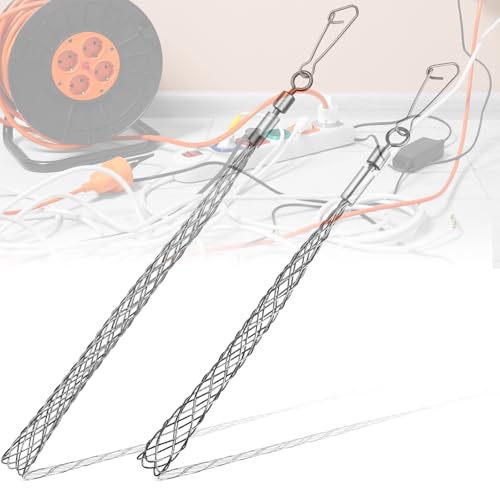
The two-piece set targets 1/2- and 3/4-inch cable, making it more focused than the multi-size kits. Each grip has a mesh length of about 5.74 inches, and the product uses galvanized mesh. The size text also gives a maximum diameter of about 0.39 inches, which conflicts with the 1/2- and 3/4-inch cable sizes. Confirm the usable cable diameter with the seller before ordering; that inconsistency makes this a less certain fit than a grip with a consistent range.
Bottom line: Pick it only after confirming the cable diameter the grips actually accept.
YZELCMT 25-31 mm Grip Lasso

This single-head lasso is sized for 25-31 mm cable, extending above the 4-25 mm range of the two kits. It is 22.83 inches long and made from galvanized steel wire; the maker describes it as flexible and intended for pulling cable through conduit or along overhead stay wire. Its narrow size range suits a known larger cable diameter, not a mixed-size job. Check the cable’s outside diameter first, since a grip that is too large may not tighten securely and one that is too small may not accept the cable.
Bottom line: Choose this lasso for a measured cable diameter between 25 and 31 mm.
Six-Piece 4-25 mm Cable Sock Set

This six-piece set covers different cable diameters within a 4-25 mm range and uses galvanized single-strand steel mesh. The maker says the mesh is bendable and intended to grip cable while limiting scratches during pulls through walls or conduit. Avoid bending a sleeve sharply at a right angle, as the maker specifically cautions against that shape.
Bottom line: Choose this set when you need several sizes and can identify each grip by its fit.
How a Chinese finger grip holds cable
A Chinese finger grip tightens around a cable as pulling tension draws its woven mesh lengthwise. The sleeve’s eye mesh distributes contact around the cable jacket, while the end eye or loop transfers force to a pulling line. These grips are mechanical accessories, not substitutes for a cable’s specified pulling limits or a properly rated pulling system. Inspect the mesh, end loop and connection before each pull; damaged or distorted strands can compromise the grip. Keep hands clear of the line of pull and never stand where a loaded line could recoil. A grip without a published load rating should not be treated as suitable for a particular force just because its cable diameter fits.
Choosing the grip size by cable diameter
Choose a grip by the cable’s outside diameter, not its conductor size or conduit trade size. Measure the finished cable jacket with calipers or a tape measure, then select a grip whose range includes that measurement. For example, a cable at 20 mm falls within a 4-25 mm range, while a 28 mm cable falls within a 25-31 mm range. If a cable measures at the boundary between two sizes, verify fit before pulling rather than assuming either sleeve will hold securely. A grip that cannot expand enough may damage the jacket during installation; one that is too loose may slip under tension. Compare actual usable diameters, since product sizing can be inconsistent.
Mesh sock sets compared by cable range
The useful difference among these grips is their cable range and whether the package contains one size or several. Use the table to narrow the choice by measured cable diameter, then confirm the exact fit of the selected sleeve.
| Grip option | Stated cable size | Set contents |
|---|---|---|
| Gisafai 1/2- and 3/4-Inch Grips | 1/2 and 3/4 in; size text also says about 0.39 in maximum | 2 grips |
| YZELCMT 25-31 mm Grip Lasso | 25-31 mm | 1 grip |
| Ryansunoro 6-Piece Grip Kit | 4-25 mm | 6 grips |
| Six-Piece 4-25 mm Cable Sock Set | 4-25 mm | 6 grips |
Several grips in a kit do not establish that every intermediate cable diameter is covered; match the particular sleeve to the cable before use. Diameter is only one selection factor: pulling load, grip length and attachment method also matter, and these product options do not provide a load rating.
Using and caring for cable pulling socks
Before a pull, place the cable fully into the mesh and attach the grip’s eye to a pulling line using a connection suited to the expected load. Keep the pulling force aligned with the cable; sharp bends can concentrate strain on the jacket and mesh. During use, stop if the sleeve slips, strands separate or the cable jacket shows damage. Remove dirt and moisture after work and let the steel mesh dry before storage to reduce corrosion risk, even when the wire is galvanized. Store sleeves without crushing or sharply folding them. For a demanding pull, use a grip and pulling system with documented capacities rather than estimating safe load from cable diameter alone.
Frequently Asked Questions
How do I measure cable for a pulling grip?
Measure the outside diameter across the finished jacket, not the conductor. A caliper is useful on round cable; compare the result directly with the grip’s range, such as 4-25 mm or 25-31 mm.
Can one cable grip fit several wire sizes?
A multi-size kit can cover several diameters, but each sleeve has its own usable range. For example, a 4-25 mm kit does not mean one grip fits every cable from 4 to 25 mm.
Does a Chinese finger grip protect cable insulation?
Mesh can spread contact around the jacket, but it cannot guarantee protection from damage. Keep the pull aligned and stop if the jacket is pinched, abraded or cut.
How should I inspect a wire pulling sock?
Check the mesh strands, end loop and connection for breaks, distortion or corrosion before each pull. Do not use a damaged grip, and do not exceed a rated load.
Can I bend a cable pulling sock sharply?
Avoid sharp bends and right-angle folds that distort the mesh. A smooth, aligned pull helps the sleeve stay engaged and reduces concentrated stress on the cable jacket.