
Everstride Compression Socks: Fit and Features Compared

For fuller calves and a 15–20 mmHg rating, choose Everstride Bamboo Compression Socks, 2XL; its bamboo-rich stretch knit is made for everyday wear. Choose Everstride Wide Calf Socks, 3 Pairs instead if a three-pair set and breathable nylon matter more, but verify its compression range and calf measurements before ordering.
We earn a commission if you buy through links on this page. As an Amazon Associate I earn from qualifying purchases. Products are compared on manufacturer specifications, not hands-on testing.
- Best overall: Everstride Bamboo Compression Socks, 2XL – The only Everstride option here with a 15–20 mmHg compression rating and 2XL size.
- Best for multipacks: Everstride Wide Calf Socks, 3 Pairs – Includes three pairs in a nylon wide-calf design.
| Product | Best for | Compression | Fabric | Pack size | Shop |
|---|---|---|---|---|---|
| Everstride Bamboo Compression Socks, 2XL | Everyday calf fit | 15–20 mmHg | Bamboo-rich knit | 1 pair | Check Price on Amazon |
| Everstride Wide Calf Socks, 3 Pairs | Multi-pair rotation | Progressive; rating not given | Nylon | 3 pairs | Check Price on Amazon |
| Copper Fit 2.0 Easy-Off Socks, L/XL | Easy-off alternative | — | Copper-infused fabric | 1 pair | Check Price on Amazon |
Everstride compression socks
Compare the available Everstride options by compression rating, fabric, and included pairs.
Everstride Bamboo Compression Socks, 2XL

Everstride Bamboo Compression Socks, 2XL is the choice here with a compression rating, 15–20 mmHg graduated support, and a 2XL size. The bamboo-rich, breathable knit is designed for everyday wear, and the four-way stretch is intended to accommodate fuller legs while easing pull-on. The product features describe compression as firmest at the ankle and gradually easing up the leg. This option comes in black and suits shoppers prioritizing a clear rating and a larger marked size. The product name identifies the sock as a single pair; it does not provide a calf measurement, so verify fit if you need a precise circumference.
Bottom line: Choose this pair if you want a 15–20 mmHg rating and a marked 2XL size.
Everstride Wide Calf Socks, 3 Pairs

Everstride Wide Calf Socks, 3 Pairs stands apart with a three-pair set in breathable, moisture-wicking nylon rather than a bamboo-rich knit. Its features describe progressive compression and a stretch fit for wider calves, but give no mmHg figure; shoppers who need a particular compression level should choose a product with a matching stated rating instead. The set is described as knee high and comes in black, white, and beige. It suits someone who wants several pairs for rotation and a wide-calf design.
Bottom line: Pick this set if multiple nylon pairs matter more than a specified mmHg rating.
Copper Fit 2.0 Easy-Off Socks, L/XL
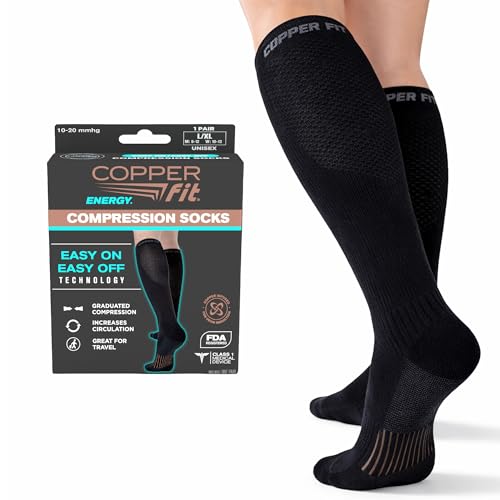
Copper Fit 2.0 Easy-Off Socks, L/XL is the non-Everstride alternative, with a knee-high easy-on/easy-off construction and a fully cushioned footbed. Its unisex large/extra-large sizing differs from the wide-calf-focused Everstride choices, and the product features provide no compression rating for comparison with Everstride Bamboo Compression Socks, 2XL. The fabric is described as copper-infused, and the maker says it helps prevent odor during longer wear and travel. This option may suit someone who values easier removal and foot cushioning; it is less suitable for a buyer specifically seeking Everstride or a confirmed 15–20 mmHg level.
Bottom line: Choose it if easy removal and a cushioned footbed outweigh brand or rating requirements.
How to choose compression socks
Start with the compression rating and the fit you need, not just the fabric. Compression is measured in mmHg; 15–20 mmHg is a common moderate range for everyday graduated compression, while higher levels generally call for clinician guidance. Socks should feel snug without numbness, tingling, pain, or skin color change. Measure the ankle and calf at the times and points specified by the sizing chart, since swelling can change measurements through the day. For these options, Everstride Bamboo Compression Socks, 2XL is the only one with a mmHg number, while Everstride Wide Calf Socks, 3 Pairs is described as progressive without a numerical range. If a clinician prescribed a pressure level, select a pair that explicitly matches it.
Wide-calf sizing and sock fit
Wide-calf socks need more than stretchy fabric: calf circumference and sock length determine whether the top edge sits comfortably without rolling or pinching. Measure the fullest part of the calf and compare it with the maker’s size chart; a “one size” label does not establish a circumference range. Everstride Bamboo Compression Socks, 2XL is marked 2XL, whereas Everstride Wide Calf Socks, 3 Pairs uses “One Size Tall,” so those labels are not directly comparable sizing units. For a measurable rule, if the calf measurement exceeds a pair’s chart maximum, choose another size or model rather than relying on fabric stretch. Put socks on when legs are least swollen, commonly in the morning, and smooth wrinkles to avoid pressure points.
Compression sock materials and features
Material affects feel and moisture handling, but it does not establish compression strength. Nylon is commonly used in durable, quick-drying hosiery; bamboo-derived viscose blends can feel smooth and breathable, though fiber content and knit construction vary by product. Cushioned footbeds add padding underfoot but can make shoes feel tighter, so check shoe fit when changing sock thickness. The category comparison below separates the attributes that matter most in these choices.
| Need | Relevant choice | Trade-off |
|---|---|---|
| Known compression level | Everstride Bamboo Compression Socks, 2XL | One marked size |
| Several pairs for rotation | Everstride Wide Calf Socks, 3 Pairs | No numerical mmHg rating |
| Easy removal and foot padding | Copper Fit 2.0 Easy-Off Socks, L/XL | Alternative brand and no rating figure |
Safe wear and care for compression socks
Compression socks should not cause pain, numbness, or skin discoloration; remove them and seek medical advice if those symptoms occur. People with poor circulation, reduced sensation, or a history of leg wounds should ask a clinician before using compression garments, because pressure may be inappropriate for some conditions. Keep the fabric smooth and avoid rolling the top down, which can create a tight band. Follow the garment care label for washing and drying; high heat can damage elastic fibers, reducing their ability to maintain a close fit. Replace a pair when the fabric loses elasticity, develops holes, or no longer stays in place.
Frequently Asked Questions
What does 15–20 mmHg mean in compression socks?
The mmHg figure measures compression pressure, and 15–20 mmHg is a moderate range commonly used for everyday graduated socks. It is not interchangeable with a higher prescribed level, so match a clinician’s recommendation when one applies.
How should I measure my calves for compression socks?
Measure around the fullest part of each calf with a flexible tape and compare both measurements with the maker’s chart. Measure in the morning if swelling increases later in the day, and do not choose a size whose chart maximum is smaller than your measurement.
Can I sleep in knee-high compression socks?
Most people should not sleep in daytime compression socks unless a clinician advises it, because lying down changes the need for leg compression. Ask a medical professional about overnight wear, especially if you have circulation problems or reduced sensation.
When should compression socks be replaced?
Replace compression socks when elastic recovery fades, holes appear, or the socks repeatedly slip or wrinkle during wear. Washing and drying with high heat can weaken elastic fibers, so use the care label’s settings.
How tight should compression socks feel?
Compression socks should feel evenly snug, not painful or constricting, with no numbness, tingling, or color change in the toes. Remove them and seek advice if those symptoms occur.