
Stanadyne Additive for Diesel: 5 Package Options Compared

Stanadyne Performance Formula 1/2 Gallon suits buyers who want bulk treatment, with each half-gallon jug stated to treat 250 gallons of diesel fuel. Choose a smaller bottle pack for easier handling, or a different package count if you need a larger supply.
Diesel fuel additives are blended into fuel to serve purposes such as cleaning, lubricity support or cold-weather protection; use the product’s label to determine the dose for your tank.
We earn a commission if you buy through links on this page. As an Amazon Associate I earn from qualifying purchases. Products are compared on manufacturer specifications, not hands-on testing.
- Best overall: Stanadyne Performance Formula 1/2 Gallon – Each half-gallon jug is stated to treat 250 gallons, and this pack includes two jugs.
- Best for small bottles: Stanadyne Performance Formula 8 oz, 4 Bottles – Four 8-ounce bottles provide smaller containers than the half-gallon options.
- Best for case quantity: Stanadyne Performance Formula 16 oz, Case of 12 – The case of twelve 16-ounce containers is stated to treat 720 gallons.
| Product | Best for | Container size | Pack count | Stated treatment capacity | Shop |
|---|---|---|---|---|---|
| Stanadyne Performance Formula 1/2 Gallon | Bulk dosing | 1/2 gallon | 2 | 250 gallons per jug | Check Price on Amazon |
| Stanadyne Performance Formula 8 oz, 4 Bottles | Smaller containers | 8 ounces | 4 | — | Check Price on Amazon |
| Stanadyne Performance Formula 1/2 Pint, 12 Pack | Twelve small bottles | 1/2 pint | 12 | — | Check Price on Amazon |
| Stanadyne Performance Formula 16 oz, Case of 12 | Stated case coverage | 16 ounces | 12 | 720 gallons per case | Check Price on Amazon |
| Stanadyne Performance Formula Half Gallon, 6 Pack | Six large jugs | 1/2 gallon | 6 | — | Check Price on Amazon |
Stanadyne Additive for Diesel Options
Compare the container formats and stated coverage to choose a package size that matches your fuel use.
Stanadyne Performance Formula 1/2 Gallon
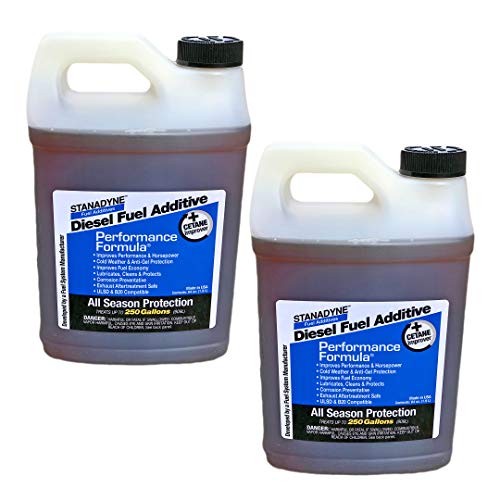
Stanadyne Performance Formula 1/2 Gallon stands apart for stating treatment coverage per jug: Stanadyne says one half-gallon container treats 250 gallons of diesel fuel. The two-jug package therefore offers a larger supply in fewer, larger containers than the bottle packs. Stanadyne says the formula improves cetane, restores lubricity in ultra-low-sulfur diesel, and reduces smoke and particulates. This format suits buyers who regularly treat larger fuel volumes. A half-gallon jug is less convenient to carry and pour than a small bottle, so confirm the label’s dose instructions before filling a tank.
Bottom line: Choose this package if you want two larger containers and stated coverage per jug.
Stanadyne Performance Formula 8 oz, 4 Bottles
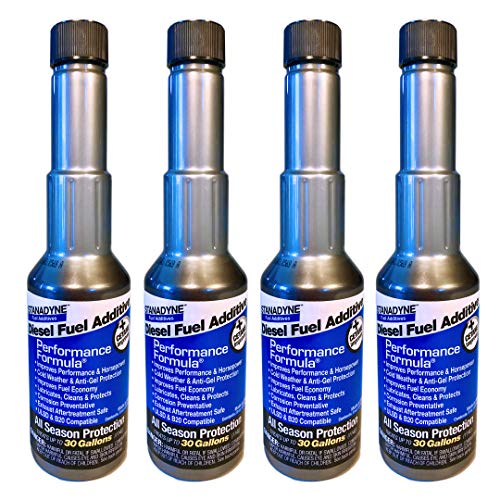
Stanadyne Performance Formula 8 oz, 4 Bottles uses four 8-ounce bottles rather than a jug or a twelve-count case, making this a smaller-container option. Stanadyne says the formula offers cold-weather and anti-gel protection, lubricates and protects, and is compatible with ULSD and B20. It also says the additive is safe for exhaust aftertreatment systems. This pack can suit a buyer who prefers separate compact bottles over storing a half-gallon jug. The specifications do not give a treatment capacity, so check the bottle label for the correct dose for your fuel volume before use.
Bottom line: Pick this pack if four small bottles suit your storage and dosing routine.
Stanadyne Performance Formula 1/2 Pint, 12 Pack

Stanadyne Performance Formula 1/2 Pint, 12 Pack provides twelve half-pint containers, a higher bottle count than the four-bottle 8-ounce pack. Stanadyne says the formula offers cold-weather and anti-gel protection, lubricates, cleans and protects, and is compatible with ULSD and B20. The package suits buyers who want multiple smaller containers rather than a single large jug. Avoid estimating a dose from the package quantity.
Bottom line: Choose this pack if you want twelve half-pint containers.
Stanadyne Performance Formula 16 oz, Case of 12
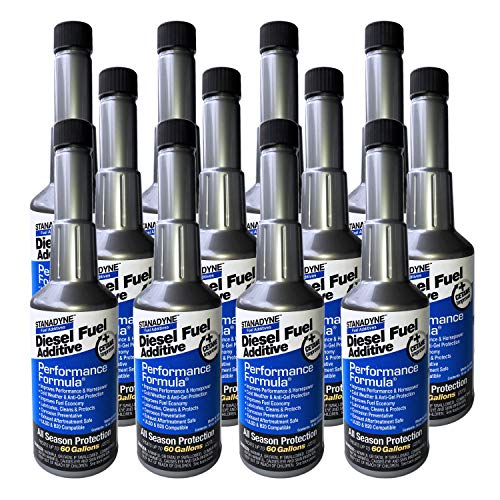
Stanadyne Performance Formula 16 oz, Case of 12 is the only package here with a treatment capacity for the whole case: 720 gallons of diesel fuel. It contains twelve 16-ounce containers, so it offers case quantity in pints rather than half-gallon jugs. Stanadyne says its detergents clean injection-system deposits and that the formula improves cetane and restores lubricity in ultra-low-sulfur diesel. This format suits buyers who want multiple containers and a case coverage figure. The full case is more to store than a four-bottle pack; follow the label rather than splitting doses by guesswork.
Bottom line: Pick this case if its twelve pints and stated coverage fit your planned use.
Stanadyne Performance Formula Half Gallon, 6 Pack
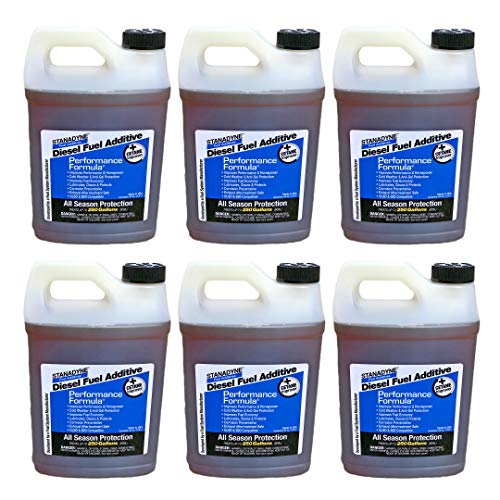
Stanadyne Performance Formula Half Gallon, 6 Pack supplies six half-gallon containers, the largest jug count among these packages. Stanadyne says the all-season formula is designed for diesel fuel-related issues and meets the Cummins L10 Superior Test for cleanliness. It also describes the product as approved by many original equipment manufacturers; that statement should not be read as approval for every engine or application. The larger pack may suit buyers planning to keep several jugs on hand.
Bottom line: Choose this pack if you specifically want six half-gallon jugs.
How to choose a diesel fuel additive
Choose by the job the additive is intended to do, then match the dose to your fuel volume. Diesel additives commonly target detergency, lubricity, cetane, water handling or cold-flow behavior; one product may claim several functions, but those claims do not make every additive interchangeable. In the United States, on-road ultra-low-sulfur diesel is limited to 15 parts per million sulfur, which is why some formulations emphasize restoring lubricity. Check that the product label identifies the fuel type and intended application, especially for biodiesel blends or equipment with exhaust aftertreatment. When comparing packages, distinguish container size from coverage: a half-gallon container does not by itself tell you how many gallons it treats.
What package size fits your diesel use
Package count helps with storage planning, but treatment instructions determine actual use. Use the maker’s dosage on the container for your tank or fuel batch; do not infer a dose from another package size, even when products share a name. A useful rule is to favor a capacity when you need to estimate how many gallons a package covers, and verify the label when capacity is absent. Keep containers closed and stored away from children, heat and ignition sources; diesel additives are concentrated chemicals and should not be handled or poured around flames. The comparison below separates available formats from coverage explicitly stated for the package.
| Need | Package approach | Decision point |
|---|---|---|
| Small containers | Bottles | Compare bottle size and count |
| Fewer, larger containers | Half-gallon jugs | Check jug dosing directions |
| Known package coverage | Package with capacity stated | Use that stated figure and label dose |
Cold-weather diesel additive basics
Cold-flow performance is tied to the fuel’s cloud point, when wax crystals begin to form, and its cold filter plugging point, when wax can restrict a filter. Those temperatures vary by fuel formulation and season, so a generic additive claim cannot establish the temperature limit for a particular tank. Anti-gel products are generally most useful when blended before fuel begins to cloud; additive added after fuel has gelled may not restore flow. Follow the product’s cold-weather label directions and consider the local fuel blend. Never use an open flame or improvised heater to warm a fuel tank or filter, because diesel fuel systems and additive containers present fire hazards.
How to dose diesel fuel additive safely
Measure the amount using the label’s ratio and the fuel volume being treated; do not pour by eye. If a tank already contains fuel, estimate its remaining volume as carefully as possible so the additive dose is not based on tank capacity alone. Use a clean measuring method that avoids contaminating fuel with dirt or water, and cap the container after dispensing. Additives do not replace routine maintenance: diesel fuel filters still need replacement on the equipment maker’s schedule, and water separators should be drained as directed. Stop if fuel contacts skin or eyes and follow the container’s first-aid directions.
Frequently Asked Questions
Can diesel fuel additive prevent diesel fuel from gelling?
An anti-gel additive can help improve cold-flow behavior when used according to its label before wax crystals restrict the fuel filter. The relevant temperature varies by fuel blend, so do not treat a general claim as a guaranteed operating temperature.
When should I add anti-gel to diesel fuel?
Add anti-gel before the fuel reaches its cloud point, when wax crystals begin forming. Fuel that has already gelled may not recover simply by adding more additive, so use the product’s cold-weather directions and avoid flame-based warming.
How much diesel additive should I put in my tank?
Use the dose printed on that product’s container and base it on the amount of fuel actually in the tank. Tank capacity is not the same as remaining fuel volume, and package size alone does not determine the correct dose.
Can diesel additives be used with biodiesel blends?
Compatibility depends on the particular additive and blend. Check the label for the specific blend designation; for example, some products identify B20 compatibility, which means a blend containing up to 20% biodiesel.
Does a diesel fuel additive replace changing the fuel filter?
No, an additive does not replace scheduled fuel-filter service. Follow the equipment maker’s maintenance interval, and drain a water separator according to its instructions because additive use does not remove the need for routine system care.