
Best Vinyl Shutter Restorer: 4 Options Compared

Shutter Renu Small Project Kit suits most people because it is a shutter-specific restorer kit that includes a cleaner. Choose Rejuvenate Outdoor Restorer instead if you want a multi-surface formula with coverage, or Premium Shutter Restorer Quart Kit if you need a larger kit.
Vinyl shutter restorers are surface treatments intended to refresh faded exterior plastic or vinyl. Their surfaces and included supplies differ, so match the product to your shutter material and project size.
We earn a commission if you buy through links on this page. As an Amazon Associate I earn from qualifying purchases. Products are compared on manufacturer specifications, not hands-on testing.
- Best overall: Shutter Renu Small Project Kit – A shutter-focused small project kit that includes a cleaner.
- Best for broad surface use: Rejuvenate Outdoor Restorer – The formula covers vinyl, plastic, stone and metal, with up to 800 square feet of coverage.
- Best for larger projects: Premium Shutter Restorer Quart Kit – The quart kit contains 32 fluid ounces and includes a cleaner.
| Product | Best for | Container size | Named surfaces | Included cleaner | Shop |
|---|---|---|---|---|---|
| Shutter Renu Small Project Kit | Shutter projects | 16 fl oz | Vinyl, plastic, exterior surfaces | Yes | Check Price on Amazon |
| Rejuvenate Outdoor Restorer | Broad surfaces | 16 fl oz | Vinyl, plastic, stone, metal | No | Check Price on Amazon |
| Premium Shutter Restorer Quart Kit | Larger projects | 32 fl oz | Vinyl, plastic, exterior surfaces | Yes | Check Price on Amazon |
| Renovadolt Outdoor Color Restorer | Small touch-ups | 16.5 fl oz | Outdoor plastic and vinyl shutters | No | Check Price on Amazon |
Vinyl Shutter Restorers Compared
Compare the intended surfaces, container sizes and kit contents to match a restorer to your shutters and project.
Shutter Renu Small Project Kit

Shutter Renu Small Project Kit is the most shutter-focused option here: the small project kit pairs a restorer with a concentrated cleaner. Its formula is water-based, and the maker says its multi-surface treatment lasts 10 or more years. The named uses include vinyl and plastic shutters, exterior doors and patio furniture, making it a fit for projects that extend beyond a single shutter pair.
The kit is 16 fluid ounces, so it is smaller than the 32-ounce option. Pick it when the included cleaner and shutter-oriented use matter more than a larger container; the durability is a maker claim, not a guaranteed service interval.
Bottom line: Choose this for shutter-focused projects where an included cleaner is useful.
Rejuvenate Outdoor Restorer

Rejuvenate Outdoor Restorer stands out for naming four surface types—vinyl, plastic, stone and metal—and stating coverage of up to 800 square feet. The maker says the wipe-on formula restores faded outdoor surfaces and protects against fading and sun damage. Shutters are among its named uses, alongside patio furniture and grills.
The 16-fluid-ounce bottle may suit a project where the broader surface range and coverage figure help with planning. Its coverage is a maximum, so the actual area per bottle can vary with the surface and application; choose another kit if you specifically want a cleaner included.
Bottom line: Choose this when you want one formula for shutters and other named surfaces.
Premium Shutter Restorer Quart Kit
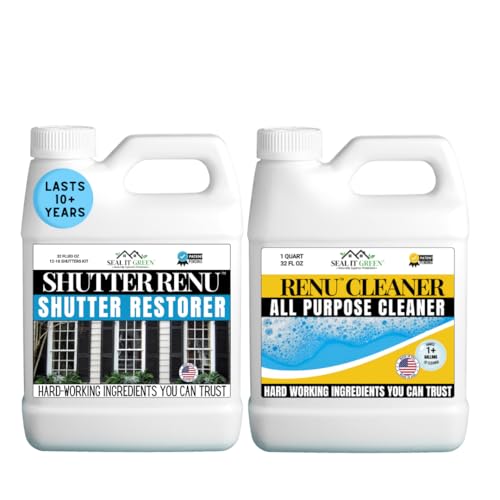
Premium Shutter Restorer Quart Kit is the larger shutter-kit choice, with 32 fluid ounces and a cleaner included. The maker describes its water-based restorer as suitable for vinyl and plastic shutters, doors, patio furniture and other exterior surfaces, and claims its treatment lasts 10 or more years. Those named uses make it relevant when several exterior items need attention.
The quart size is twice the volume of the 16-fluid-ounce shutter kit. Its larger container does not come with a coverage figure, so it is harder to estimate how many shutters one kit will treat; choose it for the larger quantity and included cleaner rather than a quantified area.
Bottom line: Choose this when a larger container and included cleaner suit the project.
Renovadolt Outdoor Color Restorer

Renovadolt Outdoor Color Restorer is a 16.5-fluid-ounce water-based restorer marketed for outdoor plastic and vinyl shutters. The maker says its concentrated formula penetrates weathered surfaces to refresh color and protect against future wear. Its use is broader than shutters, covering outdoor plastic possessions, but the product name explicitly identifies shutter restoration.
Choose it when a shutter-labeled plastic restorer is the priority; look elsewhere if you need a named cleaner or a coverage estimate.
Bottom line: Choose this for a shutter-labeled restorer in a 16.5-ounce bottle.
How to Choose a Vinyl Shutter Restorer
Start with the shutter material and the surfaces the formula names, then compare the kit contents and any coverage figure. Vinyl shutters are commonly made from PVC, but a product labeled for outdoor plastic or vinyl is a clearer match than one aimed only at siding. A cleaner included in a kit can simplify preparation, while a coverage amount helps estimate project size.
Use a measurable rule: if the project covers more than one named surface type, favor a formula that explicitly lists each type; if you are treating shutters only, prioritize a shutter-specific product. Coverage figures are ceilings, not promises for every surface. Porosity, oxidation and application amount can change how much area a container treats, so leave a margin rather than calculating from the maximum alone.
Prepare Vinyl Shutters Before Applying Restorer
Clean the shutter surface before applying a restorer, because loose dirt can interfere with an even application. A typical first step for exterior vinyl is rinsing away grit, then washing with mild soap and water using a soft cloth or sponge. Rinse off soap and let the surface dry fully before applying any treatment; trapped moisture can dilute a surface product or leave uneven results.
Avoid abrasive pads and harsh solvent cleaners on vinyl, which can scratch or damage the surface. Work on a small, inconspicuous area first to check for changes in appearance, especially if shutters have an existing coating or prior treatment. Remove surface contamination rather than scrubbing aggressively: deep fading, chalking or physical damage may call for a different repair approach than a color restorer.
Restorer, Cleaner and Paint Compared
Choose a restorer for a surface refresh, a cleaner for soil removal, and paint when the goal is a new color or a more substantial finish change. These products perform different jobs: cleaning removes contamination, while restorers are surface treatments marketed to revive appearance. Paint forms a new coating and requires material-compatible preparation and application.
The table maps common needs to the type of product to consider. Follow the product’s named surface compatibility, and do not assume a restorer will hide cracks, peeling or missing material. Vinyl can expand and contract with temperature, so a coating intended for other materials may not remain suitable on vinyl.
| Need | Product type | Best fit |
|---|---|---|
| Remove grime before treatment | Cleaner | Surface has dirt or residue |
| Refresh faded appearance | Vinyl or plastic restorer | Surface is intact and compatible |
| Change color or cover damage | Vinyl-compatible paint | Restoration alone is not enough |
Application and Maintenance Mistakes to Avoid
Apply a surface treatment only to a clean, dry, compatible shutter and avoid letting product pool in seams or hardware. A thin, even application is easier to control than a heavy coat, which can streak or collect dust. Protect nearby siding, glass and plants from drips, and keep the work area ventilated when using any outdoor surface treatment.
Do not treat a maker’s longevity claim as an automatic maintenance schedule: exposure, orientation and weather affect exterior surfaces. Inspect shutters periodically for chalking, peeling, cracks or loose fasteners, and address physical damage separately. Test a hidden spot before treating all shutters; if the finish becomes tacky, blotchy or unexpectedly darker, stop and reassess compatibility before continuing.
Frequently Asked Questions
How do you clean vinyl shutters before restoring them?
Rinse off grit, wash with mild soap and water using a soft sponge, then rinse and let the shutters dry fully. Avoid abrasive pads and harsh solvents that can scratch or damage vinyl.
Can a vinyl restorer cover cracked shutters?
No surface restorer should be assumed to repair cracks or missing material. Inspect for structural damage first, and replace a shutter that is broken or too deteriorated for a surface treatment.
Should you use a restorer or paint on faded shutters?
A restorer is intended to refresh appearance on an intact, compatible surface, while paint is for a new coating or color change. Choose paint labeled for vinyl if restoration will not meet the desired change.
How much restorer do vinyl shutters need?
The required amount depends on shutter area, surface condition and application thickness. Use a product’s coverage as an upper limit and allow extra for rough, oxidized or irregular surfaces.
Can you apply vinyl restorer in direct sunlight?
A hot surface can cause a treatment to dry unevenly, so work on a cool, shaded surface when possible. Avoid application during rain or before the surface has dried completely.