
SUADEX Steel Toe Shoes: Sneakers and Boots Compared

For most people seeking SUADEX steel toe shoes, SUADEX Composite-Toe Safety Sneaker is the clearest match because it pairs a composite toe with a Kevlar midsole for protection from impact and sharp objects. Choose SUADEX Composite-Toe Work Sneaker if its size fits better; choose SUADEX Arch-Support Work Boot only if you specifically want a boot with built-in arch support, since it is a different style.
We earn a commission if you buy through links on this page. As an Amazon Associate I earn from qualifying purchases. Products are compared on manufacturer specifications, not hands-on testing.
- Best overall: SUADEX Composite-Toe Safety Sneaker – Combines a composite toe with a Kevlar midsole and slip-resistant sole.
- Best for a different size: SUADEX Composite-Toe Work Sneaker – Offers the same sneaker protection features in a separate size.
- Best for arch support: SUADEX Arch-Support Work Boot – A boot-style option with built-in arch support insoles.
| Product | Best for | Style | Toe / midsole | Listed size | Shop |
|---|---|---|---|---|---|
| SUADEX Composite-Toe Safety Sneaker | Work sneaker protection | Sneaker | Composite toe / Kevlar | 12 women / 10.5 men | Check Price on Amazon |
| SUADEX Composite-Toe Work Sneaker | Alternate sneaker size | Sneaker | Composite toe / Kevlar | 11.5 women / 10 men | Check Price on Amazon |
| SUADEX Arch-Support Work Boot | Boot with arch support | Boot | Not specified / — | 13.5 women / 12 men | Check Price on Amazon |
SUADEX Steel Toe Shoes Compared
Compare the sneaker options with the arch-support boot before choosing by style and stated size.
SUADEX Composite-Toe Safety Sneaker
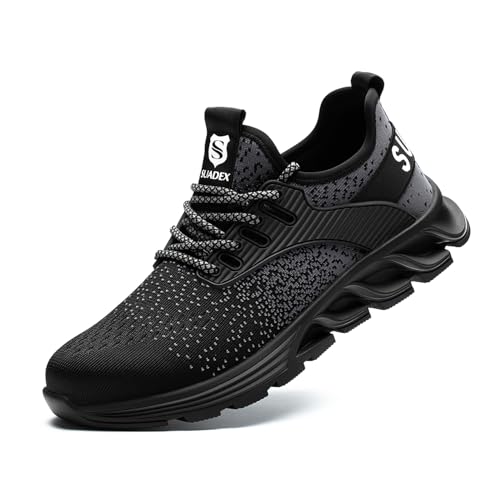
SUADEX Composite-Toe Safety Sneaker is a sneaker-style option with a composite toe and Kevlar midsole, rather than the boot style of SUADEX Arch-Support Work Boot. SUADEX says the toe meets a force-bearing standard of 200±4 J and the midsole resists punctures from nails and sharp objects; it also describes a slip-resistant sole and breathable lining and insole. The size is 12 women/10.5 men. This option suits buyers wanting sneaker styling with both toe and underfoot protection, but the size shown may not match every worker.
Bottom line: Choose this if you want a sneaker with composite-toe and puncture-resistance features.
SUADEX Composite-Toe Work Sneaker
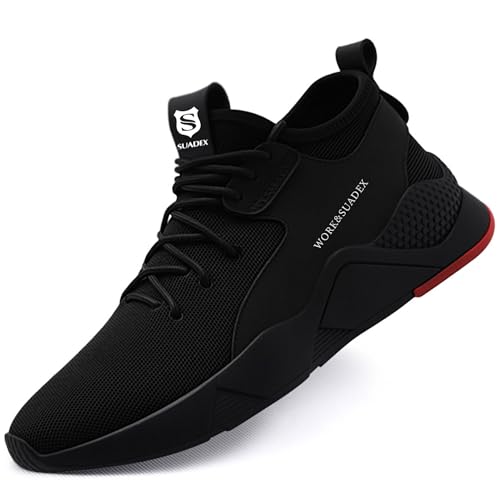
SUADEX Composite-Toe Work Sneaker has the same core protection features as SUADEX Composite-Toe Safety Sneaker but carries a different stated size: 11.5 women/10 men. SUADEX says the composite toe bears a force of 200±4 J and the Kevlar midsole protects against punctures; the sneaker also has a slip-resistant sole and breathable lining and insole. Its main distinction here is its size, so it is the relevant match when that size is closer to your fit. The size choice is limited to the size shown, so confirm the size conversion and fit before ordering.
Bottom line: Pick this when its size fits your needs better than the other sneaker size.
SUADEX Arch-Support Work Boot
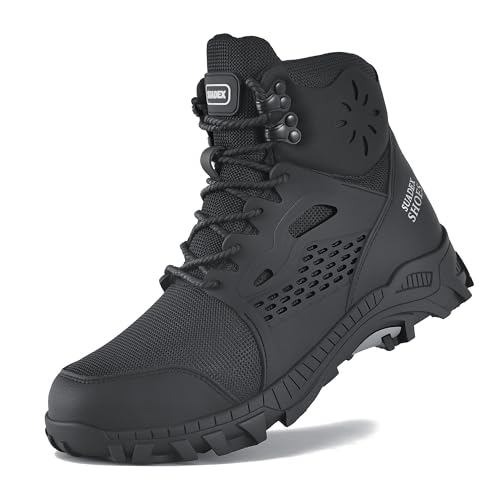
SUADEX Arch-Support Work Boot is the boot-style alternative, not a sneaker; its distinguishing feature is a built-in arch-support insole. SUADEX describes a rubber sole intended for grip and shock absorption, and says the arch support is designed to reduce pressure during walking or standing. The size is 13.5 women/12 men. This option may suit buyers prioritizing a boot and arch support over the composite-toe and Kevlar-midsole features of the sneakers.
Bottom line: Choose this for boot styling and built-in arch support rather than sneaker protection features.
How to choose SUADEX steel toe shoes
Start with the style and protection combination that matches your job: the two sneakers specify composite toes and Kevlar midsoles, while the boot emphasizes arch support. A toe cap helps shield against impact; an anti-puncture midsole is a separate layer intended to block sharp objects from below. SUADEX says the sneakers meet a force-bearing requirement of 200±4 J, but the specifications do not identify a US ASTM standard number. Do not treat impact and puncture features as interchangeable. If your workplace requires a specific certification or protective class, verify that exact marking before ordering.
Finding the right sneaker size
The sneaker options differ in stated size, so begin with your measured foot length rather than relying only on a women’s-to-men’s conversion. Measure both feet while standing, in the socks you expect to wear at work; use the larger foot and leave roughly a thumb’s width at the toe for movement. Work shoes should hold the heel without squeezing the forefoot, especially where a protective toe cap limits stretch. If your foot is between sizes or unusually wide, confirm the available fit and return terms before ordering, since the sizes are individual variants rather than a full size range.
Steel toe and composite toe differences
Steel and composite toes protect against impact, but they differ in material and weight; composite caps are typically nonmetallic, while steel caps are metal. Neither toe material by itself says whether the midsole resists punctures, so check that feature separately when sharp debris is a hazard. The sneaker descriptions call their toe cap composite, despite using “steel toe” in their names. Safety footwear standards can include different impact, compression, and puncture requirements; look for the exact standard or workplace code required for your site instead of assuming every safety sneaker qualifies for every task.
| Need | Feature to check | Option direction |
|---|---|---|
| Impact protection | Toe-cap material and required rating | Composite-toe sneaker |
| Sharp debris underfoot | Puncture-resistant midsole | Sneaker with Kevlar midsole |
| Boot style and arch support | Boot fit and insole support | Arch-support boot |
Safety shoe fit and worksite checks
A protective shoe must fit securely as well as match the hazard: excessive toe pressure can make a rigid cap uncomfortable, while a loose heel can increase slipping inside the shoe. Check whether your job also requires electrical hazard protection, metatarsal guards, or a specific slip-resistance test; these are separate properties, not implied by a composite toe or a grippy-sounding sole description. SUADEX describes the sneakers as slip resistant, but site conditions still matter: wet oil, metal shavings, and smooth floors can challenge footwear differently. Replace shoes when the sole is worn through, the toe cap is exposed or deformed, or the upper is damaged.
Frequently Asked Questions
Are SUADEX steel toe sneakers actually steel toe?
The two SUADEX sneaker descriptions identify their toe caps as composite, despite “steel toe” in their product names. Composite is a nonmetallic toe-cap material, unlike steel. Confirm the required toe material if your workplace specifies one.
Do the SUADEX sneakers protect against nails?
The sneaker descriptions say their Kevlar midsoles resist punctures from nails and sharp objects. A puncture-resistant midsole protects from below and is distinct from the toe cap’s impact protection. Check your workplace’s required protective-footwear marking for the task.
What size SUADEX sneaker options are listed?
The two sneaker size variants are 12 women/10.5 men and 11.5 women/10 men. Work-shoe sizing can vary by fit and sock thickness, so measure both feet while standing and compare the larger foot with the brand’s sizing guidance.
Is the SUADEX arch-support boot a composite-toe boot?
If your job requires impact-rated footwear, confirm the boot’s toe-cap type and marking before relying on it for that hazard.
When should safety shoes be replaced?
Replace safety footwear when the sole is worn through, the upper is damaged, or a toe cap is exposed or deformed. A worn tread can compromise grip even if the upper still looks intact; inspect footwear regularly in abrasive or debris-heavy work areas.