
Thompson’s WaterSeal Woodland Cedar Finish Compared

For a cedar-toned exterior wood finish, Thompson’s WaterSeal Semi-Transparent Natural Cedar is the clearest match because it is semi-transparent Natural Cedar; Thompson’s WaterSeal Transparent Natural Cedar is a transparent Natural Cedar alternative with a different grain description. Choose Thompson’s WaterSeal Clear Multi-Surface only if you need a clear product for multiple exterior surfaces rather than cedar color.
Wood stains and sealers add color, change how much grain shows, and help limit water exposure; the finish label matters as much as the color name.
We earn a commission if you buy through links on this page. As an Amazon Associate I earn from qualifying purchases. Products are compared on manufacturer specifications, not hands-on testing.
- Best overall: Thompson’s WaterSeal Semi-Transparent Natural Cedar – Its semi-transparent Natural Cedar finish adds moderate color while allowing medium wood grain to show.
- Best for transparent color: Thompson’s WaterSeal Transparent Natural Cedar – It offers Natural Cedar tint in a transparent finish.
- Best for multiple surfaces: Thompson’s WaterSeal Clear Multi-Surface – It is a clear waterproofer stain for exterior wood, concrete, brick, and other exterior surfaces.
| Product | Best for | Finish | Color | Shop |
|---|---|---|---|---|
| Thompson’s WaterSeal Semi-Transparent Natural Cedar | Cedar-tone wood | Semi-transparent | Natural Cedar | Check Price on Amazon |
| Thompson’s WaterSeal Transparent Natural Cedar | Transparent cedar tone | Transparent | Natural Cedar | Check Price on Amazon |
| Thompson’s WaterSeal Clear Multi-Surface | Clear multi-surface use | Clear | Clear | Check Price on Amazon |
Thompson’s WaterSeal Woodland Cedar Options
Compare the cedar-color choices with a clear multi-surface alternative before choosing a finish.
Thompson’s WaterSeal Semi-Transparent Natural Cedar

Thompson’s WaterSeal Semi-Transparent Natural Cedar stands apart with a semi-transparent finish that adds moderate color while allowing medium wood grain to show. It is a water-based acrylic-alkyd sealer for exterior wood, and Thompson’s says one recommended coat provides year-round protection and helps prevent water damage. The maker also says it exceeds ASTM D4446 for wood waterproofing and gives a limited warranty of five years on decks and seven years on fences and siding. This suits buyers seeking a cedar tone with visible grain; the color is not clear, so it is less suited to preserving the wood’s uncolored appearance.
Bottom line: Choose this when you want a Natural Cedar tone with medium grain visibility.
Thompson’s WaterSeal Transparent Natural Cedar

Thompson’s WaterSeal Transparent Natural Cedar is the transparent Natural Cedar option, while Thompson’s WaterSeal Semi-Transparent Natural Cedar is semi-transparent. The maker describes its finish as hiding the grain while leaving the wood texture visible, and says its advanced polymers resist fading and UV damage. It is a suitable alternative when the cedar tint matters but you prefer the product’s transparent finish. The maker does not give a recommended coat count or warranty, so buyers comparing those terms should confirm them before choosing; unlike Thompson’s WaterSeal Clear Multi-Surface, this product is presented as a wood stain and sealer rather than a multi-surface waterproofer.
Bottom line: Pick this for Natural Cedar tint in a transparent finish.
Thompson’s WaterSeal Clear Multi-Surface
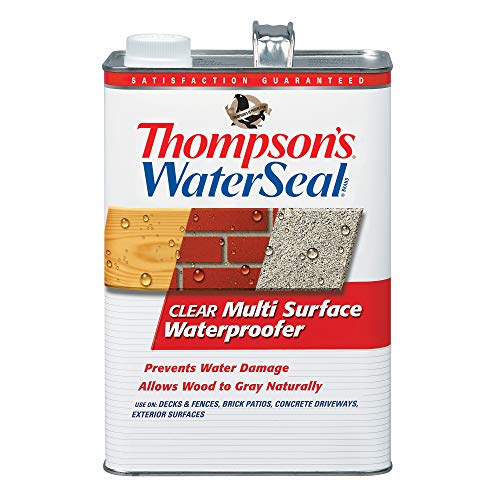
Thompson’s WaterSeal Clear Multi-Surface differs from the cedar-tone options because its finish is clear and its use spans concrete, brick, exterior wood, and other exterior surfaces. The maker says it waterproofs those surfaces and that its advanced polymers resist fading and UV damage. That breadth suits projects where the same clear product is wanted across several outdoor materials.
Bottom line: Choose this for clear protection across multiple exterior materials, not cedar color.
How to Choose a Cedar-Tone Wood Sealer
Choose by finish transparency first, then by color: the two Natural Cedar options have different descriptions of how much grain shows. Semi-transparent coatings generally leave more grain visible than opaque paint, while transparent products are intended to add less visual coverage; product wording can vary, so compare the finish rather than relying on the color name alone. Wood species, age, weathering, and prior coatings can also change the final appearance. Test a small, inconspicuous area before coating the full surface, especially when matching existing boards. A practical decision rule is simple: if showing grain is essential, select the semi-transparent option; if a clear product across several materials is the goal, the multi-surface choice is the better fit.
Prepare Exterior Wood Before Sealing
Clean, dry wood gives a coating a more even surface than damp, dirty, or weathered wood. Remove dirt and loose coating, then let washed wood dry thoroughly; moisture trapped under a film can interfere with adhesion and appearance. A typical moisture-content target before many exterior coatings is below about 15%, though the exact limit depends on the product and wood conditions. Check an inconspicuous spot for compatibility if the surface has an old stain or sealer, since a new coating may not bond evenly to a failing finish. Avoid coating wood when rain is imminent or when the surface is hot from direct sun; temperature and drying windows affect application and cure.
Understand Transparent and Semi-Transparent Finishes
Transparent and semi-transparent describe how strongly a coating changes the wood’s appearance, not the color name by itself. Semi-transparent finishes add visible pigment while retaining some grain; more opaque coatings conceal more grain, and clear finishes add no color tint. Color also varies with the wood’s species and existing tone. For a consistent fence or deck, apply the same finish across boards in a continuous section and compare the dried test area in daylight before proceeding.
Frequently Asked Questions
How can I tell whether exterior wood is dry enough to seal?
A common target for many exterior coatings is wood moisture below about 15%. A moisture meter can check boards, and recently washed wood needs time to dry before coating.
Can a clear waterproofer add a cedar color?
No; a clear finish does not supply the Natural Cedar tint of the two cedar-colored choices. Choose a colored finish when changing the wood tone is part of the goal.
Should I test wood stain before coating a whole deck?
Yes, test an inconspicuous area and let the sample dry before committing to the full surface. Wood species, weathering, and an existing finish can alter the final color and appearance.