
Flare Audio Calmer: Four Models Compared by Fit

For most people seeking less stress without quieter conversations, Flare Audio Calmer is the clearest starting point because it reduces ear resonance without lowering volume. Choose Flare Audio Calmer Max or Flare Audio Calmer Extra if you want some sound reduction; Flare Audio Calmer Pro also leaves volume unchanged but has a different style and color.
We earn a commission if you buy through links on this page. As an Amazon Associate I earn from qualifying purchases. Products are compared on manufacturer specifications, not hands-on testing.
- Best overall: Flare Audio Calmer – The standard Calmer is a reusable silicone option that reduces ear resonance without lowering volume.
- Best for adjustable fit: Flare Audio Calmer Max – Three silicone tip sizes and up to 17 dB reduction at 6 kHz suit shoppers seeking attenuation and a choice of tip size.
- Best for soft filtering: Flare Audio Calmer Extra – Calmer Extra combines a soft silicone body with a -10 dB filter.
- Best for no attenuation: Flare Audio Calmer Pro – Calmer Pro is soft silicone and designed to reduce ear resonance without volume reduction.
| Product | Best for | Sound reduction | Material | Fit options | Shop |
|---|---|---|---|---|---|
| Flare Audio Calmer | Everyday resonance | No volume reduction | Soft silicone | Standard size | Check Price on Amazon |
| Flare Audio Calmer Max | Tip-size choice | Up to 17 dB at 6 kHz | Clear resin | Small, medium, large tips | Check Price on Amazon |
| Flare Audio Calmer Extra | Soft filtered fit | -10 dB | Soft silicone, resin filter | Standard size | Check Price on Amazon |
| Flare Audio Calmer Pro | Black silicone | No volume reduction | Soft silicone | Standard size | Check Price on Amazon |
Flare Audio Calmer ear tools
Compare the Calmer models by whether they reduce volume, their materials and the fit choices described for each.
Flare Audio Calmer
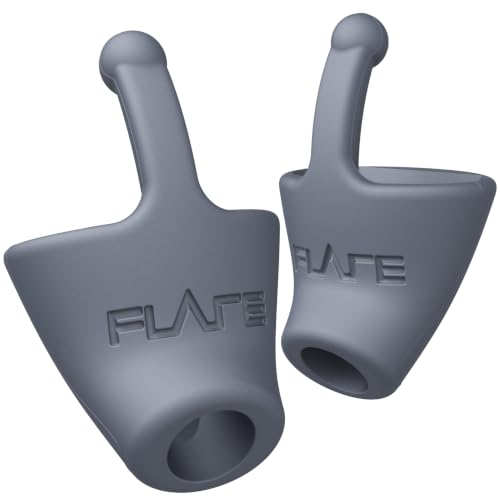
Unlike the filtered versions, this Calmer is designed to reduce ear resonance without lowering volume. Its hollow design lets speech through clearly, and the reusable soft-silicone pair is intended for everyday settings such as work, public transport and cafes. Choose it if you want the Calmer approach while keeping surrounding sound at its usual level. The trade-off is that it does not provide the volume reduction offered by Calmer Extra or Calmer Max, so it is a poor match if reducing sound level is your main goal.
Bottom line: Pick this if you want a reusable silicone ear tool without volume reduction.
Flare Audio Calmer Max

Calmer Max stands apart with three silicone tip sizes and maker-claimed reduction of up to 17 dB at 6 kHz. The clear resin body and slim shape are intended for discreet wear, while the product is described for noise sensitivity, busy spaces and social gatherings. Consider it if a choice of tip size and some reduction of sharp sounds matter more than leaving volume wholly unchanged. Its reduction figure applies to a particular frequency, not all sound equally, and it should not be treated as a hearing-protection rating.
Bottom line: Choose this if tip-size choice and targeted sound reduction matter.
Flare Audio Calmer Extra

Calmer Extra is the soft-silicone option with a resin filter and a maker-claimed -10 dB reduction. Unlike the standard Calmer and Calmer Pro, it adds volume reduction while aiming to keep conversations clear. It suits someone seeking a gentle filter for everyday noise rather than a conventional sound-blocking earplug. The fit is standard size, so shoppers who need multiple tip sizes should consider Calmer Max instead. The -10 dB claim is not an NRR hearing-protection rating.
Bottom line: Choose this if you want soft silicone with a -10 dB filter.
Flare Audio Calmer Pro

Calmer Pro is the black soft-silicone version, designed to reduce ear resonance without reducing volume or muffling sound. The reusable pair is intended for daily wear in places such as work, home and travel, making it comparable in purpose to the standard Calmer. Its key distinction here is the black finish rather than a different reduction level or fit choice. Because it does not reduce volume, it is not the option for shoppers who specifically want quieter surroundings; Calmer Extra and Max provide filtering instead.
Bottom line: Pick this if you want the no-volume-reduction design in black silicone.
How to choose a Calmer model
Start with whether you want lower volume or only a change in how sound feels. The standard Calmer and Calmer Pro are designed not to reduce volume; Calmer Extra adds a -10 dB filter, while Calmer Max claims up to 17 dB reduction at 6 kHz. Those figures are not directly interchangeable: the Max figure is frequency-specific. If tip sizing is important, Max is the only option here with small, medium and large silicone tips. Choose a no-volume-reduction model when retaining the ambient sound level is the priority; choose a filtered model when you want some reduction as well.
What sound-reduction figures mean
A decibel figure describes a sound-level change, but the frequency and rating method matter. Calmer Max’s up-to-17 dB figure applies at 6 kHz, while Calmer Extra’s -10 dB claim is presented as its filter reduction; neither is identified here as an NRR rating. NRR is the label used for hearing protectors in the United States, and a sensory ear tool should not be assumed to protect hearing at hazardous levels. For loud work, power tools or concerts, use hearing protection with an appropriate NRR and follow its fit instructions. Do not choose a Calmer model as a substitute for certified hearing protection.
Calmer materials and fit choices
Fit affects comfort and how securely an in-ear product stays in place. Calmer Max offers small, medium and large silicone tips, whereas the other three options in this comparison are standard size; choose Max if standard-fit products have been uncomfortable or loose. A properly fitting ear tip should sit securely without pain, and persistent pressure or irritation is a reason to remove it. Calmer Max’s body is clear resin, while Extra, Pro and standard Calmer are described as silicone-based. The material distinction may matter for feel, but the specifications do not establish compatibility for any particular allergy, so buyers with known sensitivities should confirm material suitability before use.
When to use hearing protection instead
Calmer products are positioned for everyday sound sensitivity, not as a replacement for hearing protection. Workplaces often use 85 dBA over an 8-hour shift as the benchmark for a hearing-conservation program; louder sound can require protection sooner. For hazardous noise, select hearing protectors with an NRR and make sure they fit correctly rather than relying on a Calmer reduction claim. For ordinary conversation or busy public spaces, decide whether keeping volume unchanged or reducing some sound is the priority. Avoid wearing any in-ear device if it causes pain, and keep situational awareness in mind near traffic, alarms or other sounds that signal immediate hazards.
Frequently Asked Questions
Does Flare Audio Calmer block all sound?
No, the standard Calmer and Calmer Pro are designed not to reduce volume, and the filtered models are described as reducing sound rather than blocking everything. Calmer Max’s maximum reduction is specified at 6 kHz, not across every frequency.
Can Calmer ear tools protect hearing at work?
OSHA uses 85 dBA over 8 hours as an action level for hearing-conservation programs, so use suitable rated protection in hazardous noise.
Which Calmer model has different tip sizes?
Calmer Max is the option with small, medium and large silicone tips. The other compared models are standard size, making Max the relevant choice if you need a choice of tip size.
Can Calmer be worn while sleeping?
Calmer Max is described as comfortable enough to sleep in, including on the side, but the other options are not characterized that way here. Remove an in-ear product if it causes pain or irritation.