
Mineral Oil for Stainless Steel: 5 Options Compared

For mineral oil on stainless steel, choose NSF Food Grade Mineral Oil, Gallon if you want a gallon with an explicit stainless-steel kitchen-equipment use; a thin, buffed coat is the key to avoiding a greasy finish. Choose a smaller bottle if you only maintain a few utensils or surfaces.
Food-grade mineral oil is a non-drying oil used to condition food-contact surfaces and leave a light protective film. It is not a substitute for cleaning stainless steel or removing stuck-on residue.
We earn a commission if you buy through links on this page. As an Amazon Associate I earn from qualifying purchases. Products are compared on manufacturer specifications, not hands-on testing.
- Best overall: NSF Food Grade Mineral Oil, Gallon – The gallon size and stated use on stainless-steel kitchen equipment suit regular or larger-scale maintenance.
- Best for rust protection: Viva Doria Mineral Oil, USP Grade, 8 fl oz – Its features specifically describe a protective barrier intended to help resist rust and corrosion on stainless steel.
- Best for small jobs: Kate Naturals Mineral Oil, 8 fl oz – The 8-ounce bottle suits occasional care of a few kitchen surfaces or utensils.
| Product | Best for | Size | Food-contact claim | Stainless-steel use | Shop |
|---|---|---|---|---|---|
| NSF Food Grade Mineral Oil, Gallon | Regular equipment care | 128 fl oz | NSF certified | Kitchen equipment | Check Price on Amazon |
| UltraPro Food Grade Mineral Oil, 1 Gallon | Multi-use maintenance | 128 fl oz | NSF approved | Surfaces and tools | Check Price on Amazon |
| Viva Doria Mineral Oil, USP Grade, 8 fl oz | Rust-conscious care | 8 fl oz | USP and FDA claims | Utensils and surfaces | Check Price on Amazon |
| Kate Naturals Mineral Oil, 8 fl oz | Small kitchen jobs | 8 fl oz | USP and food-grade claim | Surfaces and knife | Check Price on Amazon |
| Thirteen Chefs Mineral Oil, 12 fl oz | Compact food-grade care | 12 fl oz | NSF certified | Kitchen tools | Check Price on Amazon |
Mineral Oil for Stainless Steel
Compare the bottle sizes and stated uses, then choose a quantity that fits how often you maintain stainless steel.
NSF Food Grade Mineral Oil, Gallon

The gallon format and explicit stainless-steel kitchen-equipment use make this a practical choice for frequent or larger-scale maintenance. The product is colorless, odorless, and tasteless, and its features also describe use as a stainless-steel cleaner and for lubricating food-processing machines. Apply only a thin coat to a clean, dry surface, then buff away excess; mineral oil is not a replacement for removing grime first. A gallon may be more than a household needs if care is limited to a few utensils.
Bottom line: Choose it for recurring care of multiple stainless-steel kitchen surfaces or equipment.
UltraPro Food Grade Mineral Oil, 1 Gallon
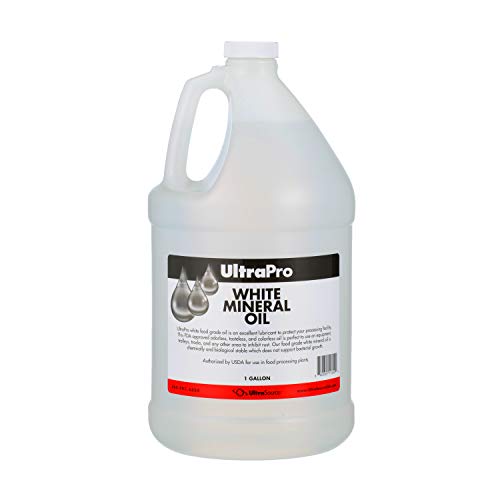
UltraPro pairs a gallon quantity with uses across stainless-steel surfaces, food-processing equipment, knives, and hand tools. The product is colorless, odorless, and tasteless white mineral oil, and the maker says it is NSF approved for food-contact applications. That broad mix may suit a kitchen that also maintains wood boards and utensils. Its gallon size is a drawback for occasional care of one appliance or a small set of knives; store the container securely and pour only what you need.
Bottom line: Pick it when one large container will serve several kitchen and shop maintenance tasks.
Viva Doria Mineral Oil, USP Grade, 8 fl oz

Viva Doria is the only option here whose features specifically call out a barrier to help resist rust and corrosion on stainless-steel utensils. The 8-ounce bottle is sized for smaller, occasional jobs, and the maker describes it as USP grade and suitable for direct and indirect food contact. Its suggested method is to spread a thin layer with a clean cloth, let it sit overnight, and wipe off excess. That overnight wait makes it less convenient when you need to use the item again soon.
Bottom line: Choose it for small utensil-care jobs when the rust-resistance purpose matters.
Kate Naturals Mineral Oil, 8 fl oz

Kate Naturals stands out for its emphasis on a light application that absorbs into wood without an oily residue, while also identifying stainless steel and knives as suitable uses. The 8-ounce size works for a household caring for a few boards and kitchen items rather than a large equipment operation. Its features call the oil USP and food grade, and describe it as colorless, odorless, and tasteless. The product is especially oriented toward wood conditioning, so buyers focused only on stainless-steel equipment may prefer a larger, equipment-focused option.
Bottom line: Pick it if stainless-steel care is occasional and you also condition wooden boards.
Thirteen Chefs Mineral Oil, 12 fl oz

Thirteen Chefs offers a middle-size 12-ounce bottle, between the smaller 8-ounce choices and the gallon containers. Its features emphasize conditioning wood boards and butcher blocks, as well as use on knives, utensils, and food-contact surfaces; the maker says the oil is NSF certified. The compact quantity can suit a kitchen with a modest mix of tools and boards. Stainless-steel use is less prominent in its features than in the gallon options, so it may be a less direct match for maintaining large appliance surfaces.
Bottom line: Choose it for a modest supply that will mainly serve kitchen tools and wood surfaces.
How to apply mineral oil to stainless steel
Apply mineral oil only after stainless steel is clean and completely dry. Wash away food residue with mild dish soap and water, rinse, and dry with a soft cloth; trapped water or cleaner beneath an oil film can leave streaks. Put a small amount of oil on the cloth rather than pouring it onto the appliance, then wipe with the direction of the visible grain. Buff with a separate clean cloth until the surface feels dry, not slick. Mineral oil leaves a surface film rather than a durable coating, so heavy application does not mean longer-lasting protection. Avoid treating hot stainless steel; let it cool fully before cleaning and oiling.
Choosing a bottle size for stainless steel
Choose bottle size by how much surface you maintain: an 8- to 12-ounce bottle is easier to handle for a few utensils, while a 128-ounce gallon is intended for repeated or broader use. Stainless-steel surfaces vary greatly in area, so a fixed amount per application is not useful; start with a few drops on the cloth and add only if the cloth no longer spreads a thin film. A large bottle takes more storage space and can be awkward to dispense neatly. Keep the opening and cloth clean so kitchen residue does not get into the container. Regardless of size, buffing away visible excess matters more than applying a thick layer.
Mineral oil versus stainless-steel cleaner
Use cleaner first when the goal is to remove fingerprints, food splashes, or dried residue; mineral oil is for a light conditioning or protective finish after cleaning. Most kitchen stainless steel has a visible directional grain, and wiping along that grain helps reduce noticeable streaks compared with cross-grain strokes. Oil can make fingerprints less conspicuous temporarily, but it does not remove scratches, restore damaged finishes, or replace routine cleaning. For cookware and food-contact equipment, use only an oil intended for food-contact use and follow the equipment maker’s care guidance. Do not use oil as a lubricant on a part unless the equipment instructions allow it.
Common mistakes when oiling stainless steel
The most common mistake is using too much oil: a heavy coat looks greasy and attracts dust and fingerprints rather than leaving a neat finish. Another is applying it over damp steel, which can trap moisture and produce uneven marks. Stainless-steel finishes can be brushed, polished, or coated, so test a small inconspicuous area first if the finish is unfamiliar. Never use an oily cloth near open flames or a hot burner, and keep oil away from children and pets. Mineral oil is not a rust remover; if corrosion or pitting is already present, clean and assess the surface before deciding whether an oil film is appropriate.
Frequently Asked Questions
Does mineral oil make stainless steel shiny?
A very thin coat can add a temporary sheen, but the finish depends on the steel’s condition and how thoroughly excess oil is buffed away. Oil will not repair scratches or restore a damaged coating.
How often should I oil stainless steel?
There is no universal interval for stainless-steel surfaces because exposure to water, handling, and cleaning differs. Reapply only when a clean, dry surface needs a refreshed film, rather than layering oil over residue.
Can mineral oil remove fingerprints from stainless steel?
Clean fingerprints off first with mild soap and water, then dry the surface before applying any oil. A buffed film may make new marks less conspicuous, but it does not clean away existing prints.
Can mineral oil be used on stainless steel cookware?
Use mineral oil on cookware only if the cookware maker permits that surface treatment and the oil is intended for food-contact use. Keep oil off hot cookware and remove any excess before heating.
Should I wipe mineral oil with the stainless steel grain?
Yes, follow the visible grain when spreading and buffing oil on brushed stainless steel. Grain direction can vary by panel, so change your wiping direction to match each surface.