
DREO Electric Heater 1500W: 5 Models Compared

For a compact 1500W ceramic heater with a thermostat, remote, five modes and a 12-hour timer, choose DREO 1500W Ceramic Heater, 10-Inch. A 1500W heater draws about 12.5 amps on a 120V circuit, so choose another model only if its oscillation, all-around airflow or oil-filled radiator design better suits your room.
These portable electric heaters convert electricity into heat; ceramic models use a resistance-heating element, while an oil-filled radiator warms oil inside its fins.
We earn a commission if you buy through links on this page. As an Amazon Associate I earn from qualifying purchases. Products are compared on manufacturer specifications, not hands-on testing.
- Best overall: DREO 1500W Ceramic Heater, 10-Inch – Combines 1500W ceramic heat with a thermostat, five modes, remote and 12-hour timer.
- Best for all-around airflow: DREO 360° Whole Room Heater, 13-Inch – Its 360-degree outlet is designed for rooms from 160 to 270 square feet.
- Best for radiator-style heat: DREO Oil-Filled Radiator, Large – Uses an oil-filled, seven-fin design and includes four modes and a child lock.
| Product | Best for | Heater type | Height | Controls and modes | Shop |
|---|---|---|---|---|---|
| DREO 1500W Ceramic Heater, 10-Inch | Compact rooms | PTC ceramic | 10 in | Thermostat, 5 modes, remote | Check Price on Amazon |
| DREO Atom One, Standard | Oscillating airflow | PTC ceramic | 10.31 in | Digital thermostat, remote | Check Price on Amazon |
| DREO 360° Whole Room Heater, 13-Inch | All-around airflow | PTC ceramic | 12.99 in | Thermostat, 3 heat settings, remote | Check Price on Amazon |
| DREO 1500W Ceramic Heater, 16-Inch | Oscillation and ECO | PTC ceramic | 15.8 in | Thermostat, ECO mode, remote | Check Price on Amazon |
| DREO Oil-Filled Radiator, Large | Radiator-style heat | Oil-filled radiator | 26.14 in | Digital thermostat, ECO, 4 modes, remote | Check Price on Amazon |
DREO 1500W Electric Heaters
Compare the heater design, footprint and controls to find the right match for your room and routine.
DREO 1500W Ceramic Heater, 10-Inch

At 10 inches tall, this compact ceramic model is the shortest of these five options. Its 1500W PTC system is paired with a thermostat, five modes, a remote and a 12-hour timer. DREO says its heat-funnel design extends warm-air reach compared with traditional heaters, and the heater operates at 34 dB. It has tip-over and overheat protection, flame-retardant materials and ETL certification. Choose it if a smaller footprint and multiple controls matter; choose an oscillating model if sweeping airflow is your priority.
Bottom line: Pick this model for compact 1500W ceramic heat with a thermostat and five modes.
DREO Atom One, Standard
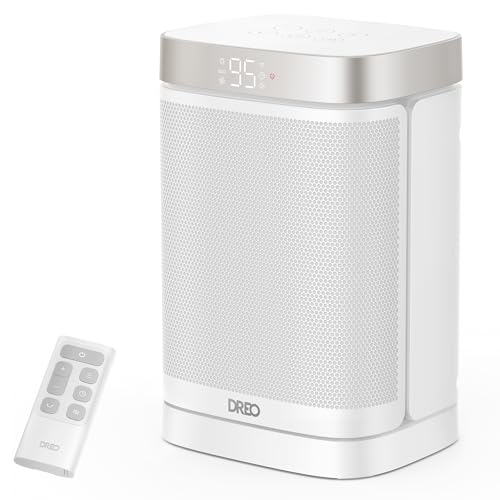
The Atom One is the lightest ceramic heater here at 4.4 pounds and adds 70-degree oscillation. Its 1500W PTC heating system is paired with a digital thermostat, remote and 12-hour timer. DREO says its brushless DC motor and nine-blade design reduce airflow noise; the product name does not give a decibel figure. ETL-listed protections include tip-over and overheat safeguards, plus V-0 flame-retardant materials. Choose it when moving airflow across a small area is more useful than an all-around outlet; the oscillation is limited to 70 degrees.
Bottom line: Choose this for a lightweight ceramic heater with 70-degree oscillation.
DREO 360° Whole Room Heater, 13-Inch

The 360-degree outlet sets this model apart from the directional and oscillating ceramic heaters. DREO gives a suggested coverage range of 160 to 270 square feet and says the airflow reaches 9.5 feet per second. The 1500W PTC heater offers three heat settings, a thermostat, digital display, remote and 12-hour timer; DREO also claims operation at 25 dB. Overheat and tip-over shutoff are among its protections. Its nearly 13-inch height and 5.21-pound weight make it larger than the compact options, so check the available floor space.
Bottom line: Choose this for 360-degree airflow and a 160-to-270-square-foot coverage range.
DREO 1500W Ceramic Heater, 16-Inch

At 15.8 inches tall, this is the tallest ceramic heater in the group and offers 70-degree oscillation with an ECO mode. It uses a 1500W PTC ceramic system and includes a remote, 12-hour timer and 24-hour automatic shutoff without interaction. Its safety features include ETL certification, tip-over and overheat protection, and a six-foot flat power cord. The taller body suits buyers who want an oscillating unit with ECO controls, but it occupies more vertical space than the compact models. Plug it directly into a wall outlet, not an extension cord.
Bottom line: Pick this taller ceramic model for 70-degree oscillation, ECO mode and automatic shutoff.
DREO Oil-Filled Radiator, Large

This is the only oil-filled radiator among these five heaters, with a 26.14-inch body and seven fins rather than a compact ceramic housing. It runs at 1500W and includes a digital thermostat, ECO mode, remote, four modes, child lock and 24-hour timer. The product specifies overheat and tip-over protection and ETL listing. A radiator is a different form factor from a fan-assisted ceramic heater, so choose it when that design and its controls suit the room; its 17.6-pound weight makes it substantially heavier than the portable ceramic options.
Bottom line: Choose this if you want an oil-filled radiator with a child lock and four modes.
How to choose a 1500W electric heater
Start with the room area and the heater’s airflow pattern: a 1500W resistance heater produces about 5,118 BTU per hour, and a rough sizing rule is 10 watts per square foot. That puts 1500W near 150 square feet as a starting point, not a guarantee; insulation, ceiling height, drafts and outdoor temperatures change the result. For a room bigger than that, consider a heater with a larger coverage range or use the unit as supplemental heat. Choose directional or oscillating airflow for a defined area, and a 360-degree outlet when you want warmth spreading in several directions. Never use a portable heater as the only heat source where freezing could endanger plumbing or occupants.
How ceramic and oil-filled heaters differ
Ceramic heaters warm a resistance element and use a fan to move heated air, while oil-filled radiators heat sealed oil and transfer warmth through metal fins. Ceramic models commonly deliver a faster sensation of warm airflow; a radiator’s larger, heavier body is less convenient to move. Neither type creates more heat than its electrical input allows: at 1500W, both are capped near 5,118 BTU per hour. Pick a ceramic model when a compact footprint, remote or oscillation is important, and an oil-filled design when its radiator form and controls suit your space. The heater type alone does not establish room coverage, so use the maker’s range where available.
| Need | Heater type | Trade-off |
|---|---|---|
| Directed warm airflow | Ceramic | Fan moves air across the room |
| Airflow across a wider arc | Oscillating ceramic | Movement is limited to its sweep |
| Airflow in multiple directions | 360-degree ceramic | Requires open floor placement |
| Radiator form factor | Oil-filled radiator | Heavier and larger to move |
Electrical load and safe placement
A 1500W heater draws 12.5 amps at 120 volts, so plug it directly into a wall outlet and avoid sharing a circuit with other high-draw appliances. A typical 15-amp, 120-volt circuit is rated for 1800 watts total, leaving little headroom for other loads when the heater runs at full power. Keep portable heaters at least 3 feet from bedding, curtains, furniture and other combustible materials, and place them on a stable, level surface where they cannot be tipped or blocked. Do not use an extension cord or power strip; the 16-inch DREO model specifically warns against extension cords. Stop using a heater if its plug, cord or outlet becomes hot, discolored or damaged.
Thermostats, timers and everyday use
A thermostat cycles the heating element to maintain a target temperature; it does not make a 1500W heater produce more heat. ECO settings typically adjust heating output or cycling to approach a set temperature while reducing unnecessary operation, but room insulation and drafts still matter. Timers help schedule shutoff, but they are not a substitute for turning a portable heater off when leaving the room or going to sleep. Keep the air intake and outlet unobstructed, since blocked airflow can contribute to overheating. Tip-over and overheat protections are useful safeguards, not permission to place a heater near fabrics, water or a child’s reach.
Frequently Asked Questions
How many square feet can a 1500W heater warm?
A rough sizing rule is 10 watts per square foot, so 1500W starts around 150 square feet. Drafts, insulation, ceiling height and outdoor temperature can reduce that practical coverage.
How much electricity does a 1500W space heater use?
At full power, a 1500W heater uses 1.5 kilowatt-hours in one hour. At 120 volts it draws about 12.5 amps, so account for other devices sharing the circuit.
Can I plug a 1500W heater into an extension cord?
No; plug a portable heater directly into a wall outlet because extension cords can overheat under sustained high current. The 16-inch DREO model also explicitly says not to use an extension cord.
How far should a space heater be from curtains?
Keep a portable space heater at least 3 feet from curtains, bedding, furniture and other combustible materials. Place it on a flat, stable surface and keep the airflow openings clear.
Is an oil-filled heater different from a ceramic heater?
Yes; a ceramic heater warms an element and moves hot air with a fan, while an oil-filled radiator transfers heat through oil and metal fins. At 1500W, either type produces up to about 5,118 BTU per hour.