
Big Ben Alarm Clock Wind Up: Key-Wound Options Compared

The Westclox keywound alarm clock is the closest match for a Big Ben-style wind-up clock because it combines manual winding with a loud bell alarm. Choose the Equity beep-alarm model if you prefer a less bell-like wake-up; the other alternatives use battery-powered quartz movement rather than wind-up mechanisms.
We earn a commission if you buy through links on this page. As an Amazon Associate I earn from qualifying purchases. Products are compared on manufacturer specifications, not hands-on testing.
- Best overall: Westclox Keywound Analog Alarm Clock – Manual winding and a loud bell alarm make it the closest match to the requested style.
- Best for a metal case: Equity 24014 Wind-Up Metal Alarm Clock – Its silver metal case and wind-up bell alarm suit buyers seeking a more substantial traditional look.
- Best for a beep alarm: Equity 14075 Black Wind-Up Alarm Clock – This compact key-wound clock uses a beep alarm rather than bells.
| Product | Best for | Power | Alarm style | Height | Shop |
|---|---|---|---|---|---|
| Westclox Keywound Analog Alarm Clock | Classic bell alarm | Manual wind-up | Bell | 3.1 in | Check Price on Amazon |
| Equity 24014 Wind-Up Metal Alarm Clock | Metal-case styling | Manual wind-up | Bell | 5.5 in | Check Price on Amazon |
| Equity 14075 Black Wind-Up Alarm Clock | Beep alarm preference | Key-wound | Beep | 4.25 in | Check Price on Amazon |
| AYRELY Twin-Bell Quartz Alarm Clock | Backlit battery clock | Battery-powered quartz | Twin bell | 6.2 in | Check Price on Amazon |
| Peakeep 4-Inch Twin-Bell Alarm Clock | Decorative blue finish | Battery-powered quartz | Twin bell | 6.5 in | Check Price on Amazon |
Big Ben-Style Wind-Up Alarm Clocks
Compare the manual-wind choices with related battery-powered bell clocks before choosing a wake-up style.
Westclox Keywound Analog Alarm Clock

The Westclox is the clearest fit for a Big Ben-style wind-up clock: it pairs manual winding with a loud bell alarm and a white analog face. Its compact dimensions can suit a bedside table or travel bag, and it does not require batteries or electricity. Choose it if the bell sound and mechanical winding are the priorities. Its 3.1-inch height is smaller than the 5.5-inch Equity metal model, so buyers wanting a taller clock should compare that alternative instead.
Bottom line: Choose this for a manual-wind clock with a traditional ringing alarm.
Equity 24014 Wind-Up Metal Alarm Clock
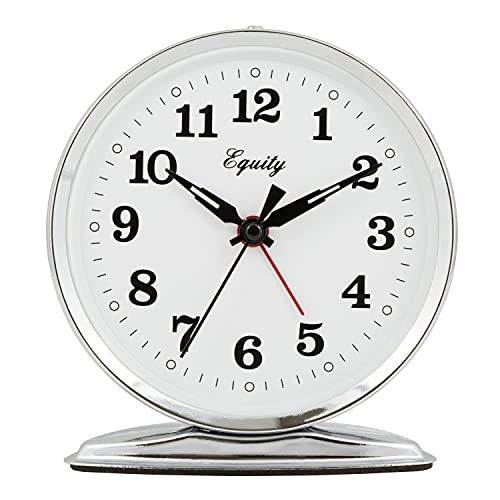
The Equity 24014 stands apart with a silver metal case and dome glass lens, while retaining a wind-up mechanism and loud bell alarm. A white dial with black hour, minute, and second hands gives it a traditional analog appearance. At 5.5 inches high, it is taller than the Westclox option and may be easier to see across a nightstand. The added height and metal construction make it less compact; choose the Westclox if portability is more important than case material.
Bottom line: Pick this if a metal case and taller bedside profile matter most.
Equity 14075 Black Wind-Up Alarm Clock

The Equity 14075 differs from the bell models by using a loud beep alarm, while its key-wound mechanism keeps it within the manual-wind category. Its round black-and-white dial has bold numbers, and the hour and minute hands glow in low light. The 4.25-inch height places it between the shorter Westclox and taller Equity metal clock. This is a better match for someone seeking a wind-up clock but not a ringing bell; buyers specifically wanting twin bells should choose another option.
Bottom line: Choose this when winding matters but a beep is preferable to bells.
AYRELY Twin-Bell Quartz Alarm Clock
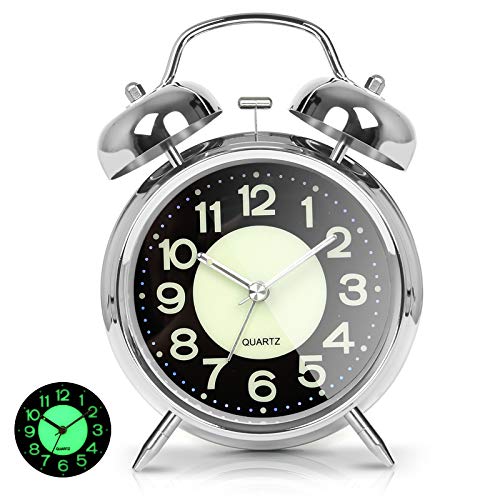
The AYRELY is a related twin-bell clock, not a wind-up model: its quartz movement is battery-powered. Its features include a backlight and luminous dial, and it measures 6.2 inches high, making it the tallest option here. Those details suit buyers who want a traditional bell form with added nighttime visibility. The power source is the key trade-off for a Big Ben-style wind-up search, so choose a manual-wind model instead if avoiding batteries is essential.
Bottom line: Pick this for a tall twin-bell clock with battery-powered quartz movement.
Peakeep 4-Inch Twin-Bell Alarm Clock
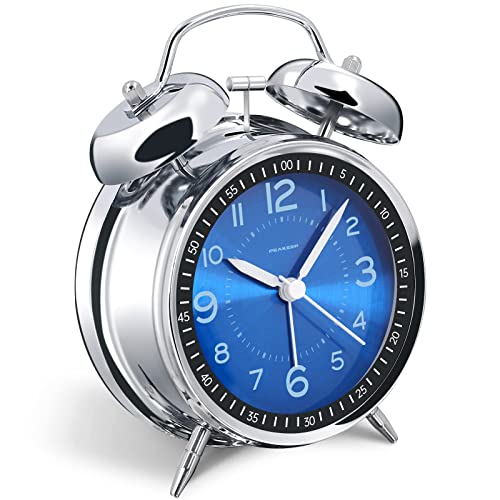
The Peakeep is a battery-operated quartz clock rather than a key-wound model, and its jewel-blue metal exterior distinguishes it from the silver or black choices. Its twin-bell alarm and 6.5-inch height give it a prominent bedside presence. The features also describe a silent sweep movement, which may appeal to buyers who prefer not to hear ticking. Because it uses batteries, it does not meet the no-battery benefit of a mechanical wind-up clock; select one of the manual-wind options for that requirement.
Bottom line: Choose this for a blue metal twin-bell clock if battery operation is acceptable.
How to choose a Big Ben-style wind-up alarm clock
Choose by winding method first, then by alarm sound and case size. Mechanical key-wound clocks use stored spring energy, so they need periodic winding and do not rely on batteries or wall power; the two exact-fit options here specify manual winding. Bell alarms create a ringing tone, while the Equity beep model uses an electronic-sounding alarm. For a traditional bell and manual winding together, select a bell-equipped key-wound model; for a beep, select the Equity 14075. Analog clocks also need occasional time resetting because mechanical movements can drift over time.
Bell alarms and beep alarms compared
Bell and beep alarms deliver different wake-up sounds, so decide which sound you want before comparing styling. Twin-bell designs use a hammer that strikes the bells, while a beep alarm produces an electronic tone. Sound level depends on the clock design and room conditions; a closed bedroom door or greater distance can make any alarm harder to hear. For a loud ringing sound without batteries, the manual-wind bell options are the relevant choices. A battery-powered bell clock can retain the familiar twin-bell silhouette, but its power source does not meet a wind-up requirement.
| Need | Choose | Trade-off |
|---|---|---|
| Manual winding and bell | Key-wound bell clock | Requires winding |
| Manual winding and beep | Key-wound beep clock | No bell ring |
| Twin bells with battery quartz | Battery-powered twin-bell clock | Not wind-up |
Where a bedside alarm clock should sit
Place an alarm clock where its dial is visible from bed and its sound is not blocked by bedding or furniture. A height of about 4 to 6.5 inches covers the range of these choices, but footprint and viewing angle matter more than height alone. If you need to read the time in a dark room, prefer luminous hands or a backlight; luminous paint glows after exposure to light, while a backlight needs power when activated. Keep a mechanical clock on a stable, level surface so it does not wobble while winding or ringing. Avoid placing it where it could fall from a narrow or crowded nightstand.
What to know about winding and nighttime visibility
Wind-up alarm clocks need separate attention to the timekeeping mechanism and alarm setting; check that both are wound before relying on the alarm. Mechanical clocks can stop if allowed to run down, so build winding into a regular bedtime routine and verify the set time after changing it. Luminous hands are not the same as an illuminated dial: they glow in low light but do not provide steady room lighting. A backlight is useful for a quick time check, though it only works when the clock has the required power. Keep the clock away from moisture and avoid forcing a winding key when it reaches resistance.
Frequently Asked Questions
How often should I wind a key-wound alarm clock?
Wind a key-wound clock according to its mechanism and verify that both the clock and alarm are ready each night. A mechanical clock can stop when its spring runs down, so a consistent daily routine is a practical safeguard.
Do luminous clock hands glow all night?
Luminous hands glow after absorbing light, but brightness can fade in darkness and depends on prior light exposure. Choose a clock with a backlight if you need illumination on demand.
Can a wind-up alarm clock work during a power outage?
A fully wound mechanical alarm clock can run without household electricity. Wind and set it before the outage, and confirm it is keeping time because a mechanical clock can stop after its spring runs down.
Why does a mechanical alarm clock lose or gain time?
Mechanical clocks can drift because their movement is affected by wear, position, and changes in the spring’s energy as it runs down. Check the displayed time regularly and reset it when needed.
Where should I place a loud bedside alarm clock?
Place the clock on a stable surface where the alarm sound is not muffled by bedding or blocked by furniture. Keep it within a comfortable reach so you can switch it off without placing it at risk of falling.