
Pure Monk Fruit Sweetener: 4 Extracts Compared

For a pure monk fruit sweetener powder, Morning Pep Pure Monk Fruit Extract is a strong starting point because it is a 5-ounce extract with no erythritol or fillers. Choose DureLife Organic Pure Monk Fruit or Organic Monk Fruit Extract Powder, 4.4 oz if organic certification matters more; choose a liquid format only if you prefer drops over powder.
Pure monk fruit extract is a concentrated sweetener, not a cup-for-cup sugar replacement: it adds sweetness but not sugar’s bulk or structure.
We earn a commission if you buy through links on this page. As an Amazon Associate I earn from qualifying purchases. Products are compared on manufacturer specifications, not hands-on testing.
- Best overall: Morning Pep Pure Monk Fruit Extract – A 5-ounce pure extract powder with no erythritol or fillers and Non-GMO Project verification.
- Best for organic certification: DureLife Organic Pure Monk Fruit – A 5-ounce pure extract powder with USDA Organic and Non-GMO Project verification.
- Best for a smaller package: Organic Monk Fruit Extract Powder, 4.4 oz – A 4.4-ounce organic pure extract powder with no erythritol or fillers.
| Product | Best for | Package size | Servings | Shop |
|---|---|---|---|---|
| Morning Pep Pure Monk Fruit Extract | Straightforward powder | 5 oz | Over 450 | Check Price on Amazon |
| DureLife Organic Pure Monk Fruit | Organic certification | 5 oz | — | Check Price on Amazon |
| WHYZ Organic Monk Fruit Powder | Stated serving count | 5 oz | 458 | Check Price on Amazon |
| Organic Monk Fruit Extract Powder, 4.4 oz | Smaller package | 4.4 oz | 403 | Check Price on Amazon |
Pure monk fruit sweetener powders
These options are concentrated extract powders, so compare the package and certifications as well as the form.
Morning Pep Pure Monk Fruit Extract
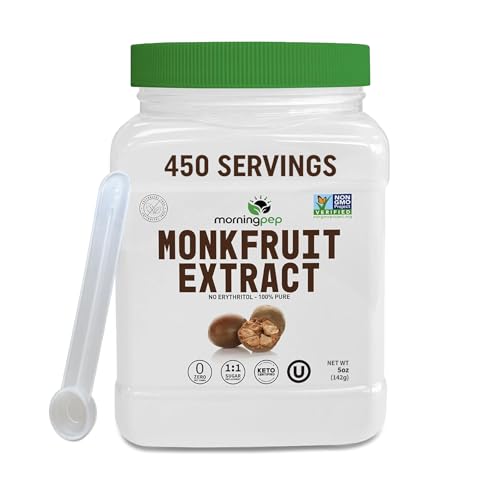
Morning Pep Pure Monk Fruit Extract pairs a 5-ounce powder with a serving count of over 450, and its features identify monk fruit extract as the only ingredient. It has no erythritol or other sugar alcohols, and the product carries Non-GMO Project verification, Keto Certified and OU kosher claims. This suits buyers who want a powdered extract and those certifications together. The main limitation is that the serving count does not explain the sweetness per serving; concentrated extracts are not measured like sugar, so avoid assuming a one-to-one swap in recipes.
Bottom line: Choose this if you want a 5-ounce pure powder with several named certifications.
DureLife Organic Pure Monk Fruit

DureLife Organic Pure Monk Fruit stands out for combining a 5-ounce pure extract powder with USDA Organic and Non-GMO Project verification. Its features say it contains no erythritol, sugar alcohols or fillers, and describe the powder as suitable for beverages, batters, cooking and baking. This is a fit for buyers prioritizing organic certification alongside a single-ingredient extract. The product does not provide a serving count in the fields, so package longevity cannot be compared directly with options that do. Because pure extract contributes sweetness without sugar’s volume, recipes may need other ingredients for bulk or texture.
Bottom line: Pick this when USDA Organic certification is a priority.
WHYZ Organic Monk Fruit Powder

WHYZ Organic Monk Fruit Powder is the 5-ounce powder in this group with a specific serving count of 458. Its features call it organic pure monk fruit extract and say it contains no erythritol, added sugar, fillers or carbs. The maker says it is 200 times sweeter than sugar, so the product is aimed at buyers comfortable measuring a very concentrated sweetener in small amounts. That concentration is also a limitation for conventional baking: the powder does not supply the bulk that granulated sugar provides. Start with a very small amount and adjust sweetness rather than replacing sugar cup for cup.
Bottom line: Choose this if a serving count is useful for planning use.
Organic Monk Fruit Extract Powder, 4.4 oz

Organic Monk Fruit Extract Powder, 4.4 oz is the smaller package among the pure extract powders here, at 4.4 ounces with a 403 servings. Its features identify organic monk fruit extract and say it has no erythritol, allulose, other sugar alcohols or fillers. That makes it a straightforward option for buyers who want an organic powder in a package below 5 ounces. It differs from DureLife Organic Pure Monk Fruit in package size and its serving count.
Bottom line: Pick this if you prefer a 4.4-ounce organic extract powder.
How pure monk fruit extract differs from sugar blends
Pure monk fruit extract is a concentrated sweetener, while many products labeled monk fruit sweetener combine extract with a bulk ingredient such as erythritol. Monk fruit’s sweetness comes from mogrosides, compounds in the fruit; the extract can deliver sweetness in a much smaller amount than sugar. That concentration means a pure powder is not a cup-for-cup sugar substitute. Sugar also supplies volume, moisture behavior and browning in baked goods, which a tiny measure of extract cannot provide. Check the ingredient list for a single extract ingredient if avoiding sugar alcohols is important. If you want a granulated measure similar to sugar, a blend may be more convenient, but it is a different product type.
How to measure pure monk fruit powder
Start with a pinch or the smallest available measure, then taste and increase gradually; concentrated extract can oversweeten a drink or batter when used like table sugar. The exact dose depends on the extract and the recipe, so follow the package serving measure when available and avoid assuming that one teaspoon equals one teaspoon of sugar. For hot drinks, stir the powder into a small amount first to disperse it, then add more liquid. For baking, use a recipe designed for high-intensity sweeteners or account separately for the missing sugar bulk; otherwise texture and browning can change. A practical rule: if a recipe calls for cups of sugar, do not replace that volume with pure extract powder.
Powder or liquid monk fruit sweetener
Powdered extracts are easier to portion into dry mixes, while drops can be convenient for sweetening a cup of coffee or tea. Liquid products avoid dispersing a fine powder, but they are not interchangeable with powder by volume: each product’s concentration and serving measure can differ. The options include powders in 4.4- and 5-ounce packages, plus drops with a maker-stated equivalent of 6 drops per teaspoon of sugar sweetness. Treat that drop conversion as specific to that product, not as a general monk fruit ratio. Choose powder when you want to incorporate a dry ingredient, and drops when drop-by-drop adjustment is useful.
What to check before using monk fruit in baking
Pure extract adds sweetness, not the structure, bulk or browning sugar provides, so recipe results can change even when sweetness seems right. The issue is most noticeable in cakes, cookies and other recipes where sugar contributes volume and helps determine texture. For a drink or a small portion of yogurt, a tiny quantity is easier to adjust than in a full batch of baked goods. Check the ingredient list if you are avoiding erythritol or other sugar alcohols, because products sold under the same broad monk fruit category can be blends. A useful decision rule is to choose a recipe written for concentrated sweeteners whenever the original recipe depends on a substantial amount of sugar.
Frequently Asked Questions
Can pure monk fruit replace sugar one for one?
Start with a very small amount for sweetness, and use a recipe designed for high-intensity sweeteners when baking.
Why do some monk fruit sweeteners contain erythritol?
Pure extract is intensely sweet, so some products combine it with erythritol to create a bulkier, more sugar-like measure. Check the ingredient list if avoiding sugar alcohols matters to you.
Does pure monk fruit powder dissolve in coffee?
Powdered extract can be stirred into coffee, but concentrated powder is easy to overmeasure. Add a pinch first, stir thoroughly, and increase only after tasting.
Is monk fruit powder suitable for baking?
It can sweeten baked goods, but pure extract does not replace sugar’s volume or browning role. For a recipe using cups of sugar, select a recipe formulated for concentrated sweeteners or account for the missing bulk.
How should monk fruit extract be stored?
Keep powdered sweeteners dry and tightly closed so moisture does not cause clumping. Use a dry measuring utensil and follow the package storage directions if they give a different requirement.