
Helical 13W Light Bulbs: 4 Spiral CFLs Compared

UNITEDLUX’s 13W spiral CFL suits most people who want a warm-white bulb with the highest output here, at 1040 lumens. Choose a different option if you prefer daylight color, need a larger pack, or want an explicit E26 base in the product name.
A helical bulb is a compact fluorescent lamp (CFL) with a spiral tube; check that your fixture accepts CFLs and that its base matches before choosing.
We earn a commission if you buy through links on this page. As an Amazon Associate I earn from qualifying purchases. Products are compared on manufacturer specifications, not hands-on testing.
- Best overall: UNITEDLUX 13W Spiral CFL – Its 1040-lumen output is the highest among these warm-white 13W choices.
- Best for daylight color: Xtricity 13W Daylight CFL – It pairs a 5000K color temperature with a six-bulb pack.
- Best for three bulbs: SLEEKLIGHTING 13W Spiral CFL – The three-count pack offers 800 lumens per bulb and a 2700K color.
| Product | Best for | Brightness | Color temperature | Pack count | Shop |
|---|---|---|---|---|---|
| UNITEDLUX 13W Spiral CFL | Brighter warm light | 1040 lumens | 2700K | 2 bulbs | Check Price on Amazon |
| Barfelty T2 Spiral CFL | Warm two-pack | 900 lumens | 2700K | 2 bulbs | Check Price on Amazon |
| Xtricity 13W Daylight CFL | Daylight six-pack | 900 lumens | 5000K | 6 bulbs | Check Price on Amazon |
| SLEEKLIGHTING 13W Spiral CFL | Three-bulb pack | 800 lumens | 2700K | 3 bulbs | Check Price on Amazon |
Helical 13W Light Bulbs Compared
Compare brightness, light color, and pack size to find a spiral CFL that suits your fixture and room.
UNITEDLUX 13W Spiral CFL
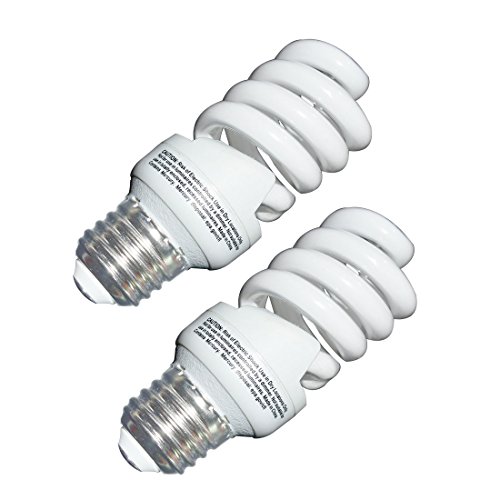
UNITEDLUX stands out for its 1040-lumen output, the highest among these warm-white 13W bulbs. Each bulb uses a medium base and is rated as a 60W incandescent equivalent, with a 2700K soft-white color and CRI 82. The two-count pack suits a pair of lamps or fixtures that need the same warm tone. The maker says the bulb is designed for more than 10,000 hours of normal use. Its main tradeoff is the smaller pack; choose another option if you need six bulbs at once or a daylight color.
Bottom line: Pick this if warm color and the strongest light output matter most.
Barfelty T2 Spiral CFL

Barfelty combines an instant-on feature with a 2700K warm-white color, making it a straightforward choice for lamps, sconces, ceiling lights, or fans that accept CFL bulbs. Each 13W bulb produces 900 lumens and is identified as a 60W equivalent; the pack includes two. The maker says the bulbs last 10,000 hours and use 80% less energy than incandescent or halogen bulbs. This pack offers less light per bulb than the 1040-lumen warm option, so it may not suit a space where higher output is the priority.
Bottom line: Choose this for a warm two-pack with an explicit instant-on feature.
Xtricity 13W Daylight CFL
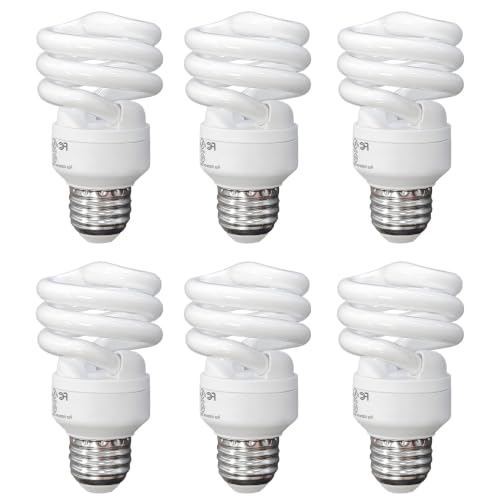
Xtricity is the only 5000K daylight choice here, and its six-bulb pack makes it useful when several matching fixtures need bulbs. Each 13W T2 spiral CFL delivers 900 lumens, is rated as a 60W equivalent, and uses an E26 base. The maker says it lasts 10,000 hours and has instant-on, flicker-free operation. Daylight color is distinctly cooler than the 2700K choices, so it may not be the right fit for someone seeking a softer warm-white look in living areas.
Bottom line: Pick this for cooler daylight color across multiple fixtures.
SLEEKLIGHTING 13W Spiral CFL
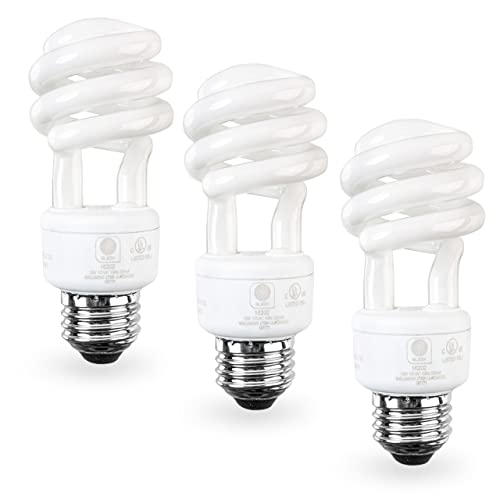
SLEEKLIGHTING offers three bulbs in a 2700K warm-white color, a useful middle ground between two-bulb and six-bulb packs. Each 13W spiral CFL has an E26 screw base and produces 800 lumens, which the maker equates to a 65W incandescent bulb. The maker says average bulb life is 10,000 hours and identifies the bulb as UL listed. Its lower listed output than the other warm choices matters if a single bulb must illuminate a larger area; match the lumen level to the room and fixture.
Bottom line: Choose this when a three-count pack and 2700K color fit your needs.
How to Choose a Helical 13W Bulb
Choose by base, light output, and color temperature, rather than wattage alone. The wattage describes energy use; lumens indicate the light produced, so a 900-lumen bulb appears brighter than an 800-lumen bulb under comparable conditions. Color temperature is measured in kelvins: around 2700K gives a warm, yellowish-white appearance, while 5000K looks cooler and more like daylight. A practical rule is to choose 2700K for a warm household atmosphere and 5000K when you want a cooler appearance. Confirm that the fixture accepts a CFL and has the correct screw base; a common E26 base is not interchangeable with every bulb socket.
| Need | Compare | Choice cue |
|---|---|---|
| Warmer appearance | Color temperature | 2700K |
| Cooler appearance | Color temperature | 5000K |
| More light | Lumens | Higher lumen figure |
Spiral CFL Color and Brightness
Spiral CFLs use a folded fluorescent tube to provide light from a compact bulb shape. A 13W CFL is commonly marketed as roughly a 60W incandescent replacement, but the lumen figure is the more direct brightness comparison. These bulbs span 800 to 1040 lumens, and that difference can matter in a task area or larger room. Color temperature changes the look of the light, not its brightness: 2700K is warm white, while 5000K is daylight-colored. The 5000K model here is not a brighter pick simply because its color sounds more vivid; compare its 900 lumens with the warm bulbs’ lumen figures.
Check Fixture Fit and Use
Confirm the socket type and fixture conditions before installing a CFL. E26 is a common medium screw base in the United States, but the socket still needs to match and the bulb must physically fit inside the shade. CFL compatibility with dimmers and enclosed fixtures depends on the specific bulb and fixture; do not assume a standard CFL works in either setup. A simple selection rule is to avoid an enclosed or dimming fixture unless the bulb packaging explicitly confirms that use. Turn power off before replacing a bulb, let a recently used CFL cool, and handle the glass tube carefully rather than gripping or twisting its spiral.
CFL Disposal and Breakage
CFLs contain a small amount of mercury, so use a household hazardous-waste collection program or retailer recycling option rather than putting an intact bulb in regular trash where local rules prohibit it. EPA guidance for a broken CFL is to have people and pets leave the room, ventilate it for 5 to 10 minutes, and avoid vacuuming the initial cleanup. Collect fragments and powder with stiff paper or cardboard, then use sticky tape for small residue and seal the waste in a container. Local disposal rules differ, so check municipal instructions after cleanup. Keeping spare CFLs in their packaging also reduces the chance of breakage while storing them.
Frequently Asked Questions
Are 13W spiral CFLs as bright as 60W bulbs?
Many 13W CFLs are marketed as 60W incandescent equivalents, but compare lumens for brightness. The bulbs here range from 800 to 1040 lumens, so their outputs are not identical.
What does 2700K mean on a CFL bulb?
2700K describes a warm-white color appearance, not wattage or brightness. A 5000K bulb looks cooler and more daylight-like.
Can a spiral CFL go in an enclosed fixture?
Only use a CFL in an enclosed fixture when its packaging says it is suitable for that use. Enclosed fixtures can trap heat, so confirm compatibility before installing one.
How should I dispose of a broken CFL?
Ventilate the room for 5 to 10 minutes and keep people and pets away while you clean up without vacuuming the initial debris. Seal the fragments and residue, then follow local rules for mercury-containing bulb waste.
Can I use a helical CFL with a dimmer switch?
Use a CFL with a dimmer only when the bulb is explicitly marked as dimmable and compatible with that control. A standard CFL should not be assumed to work with a dimmer.