
Coconut Milk No Additives: 4 Options Compared

For coconut milk with the clearest no-additives claim, choose Jiva Organics Organic Coconut Milk: its maker says it uses only coconut and water. Ingredient lists matter most because “no guar gum” does not mean “no additives,” and a carton beverage such as Califia Farms Organic Coconut Milk is a different format from full-fat canned coconut milk.
Choose Califia Farms Organic Coconut Milk if you want a drinkable carton for beverages; choose a canned option for richer cooking uses such as curries and sauces.
We earn a commission if you buy through links on this page. As an Amazon Associate I earn from qualifying purchases. Products are compared on manufacturer specifications, not hands-on testing.
- Best overall: Jiva Organics Organic Coconut Milk – Its maker says the canned milk contains only coconut and water, with no additives.
- Best for drinks: Califia Farms Organic Coconut Milk – A 32-ounce carton made from coconut cream, coconut water, purified water, and baking soda.
- Best for organic cooking: Native Forest Organic Unsweetened Coconut Milk – A canned USDA Organic option with no guar gum, suited to recipes calling for coconut milk.
| Product | Best for | Format | Size | Ingredient claim | Shop |
|---|---|---|---|---|---|
| Jiva Organics Organic Coconut Milk | Minimal ingredients | Canned | 13.53 fl oz | Coconut and water only | Check Price on Amazon |
| Native Forest Organic Unsweetened Coconut Milk | Organic recipes | Canned | 13.5 fl oz | No guar gum | Check Price on Amazon |
| True Organic Unsweetened Coconut Milk | No-guar cooking | Canned | 13.5 fl oz | No guar gum; no added sugar or preservatives | Check Price on Amazon |
| Califia Farms Organic Coconut Milk | Carton beverages | Carton beverage | 32 fl oz | Four ingredients; includes baking soda | Check Price on Amazon |
Coconut milk with no additives
Compare the ingredient claims and formats, then choose the option that fits how you plan to use it.
Jiva Organics Organic Coconut Milk

Jiva Organics makes the most direct no-additives claim among these options: its maker says the canned milk contains only coconut and water. The 13.53-ounce cans are described as unsweetened and full-fat, so this format suits soups, curries, sauces, and desserts where a rich coconut base is useful. Organic sourcing and a coconut-only factory are also claimed by the maker. The ingredient claim is the key distinction; buyers who need a carton beverage or a pourable drink for everyday sipping should choose a different format.
Bottom line: Pick this if your priority is a canned coconut milk whose maker claims only coconut and water.
Native Forest Organic Unsweetened Coconut Milk

Native Forest is an organic canned option that specifically excludes guar gum, rather than making the same only-coconut-and-water claim as Jiva Organics Organic Coconut Milk. The 13.5-ounce can is positioned for Thai, Indian, and Caribbean cooking, including soups, curries, sauces, desserts, and beverages; the maker also says it can replace dairy milk or cream in some recipes. It comes in a 12-pack.
Bottom line: Choose this for organic cooking when avoiding guar gum is the main requirement.
True Organic Unsweetened Coconut Milk
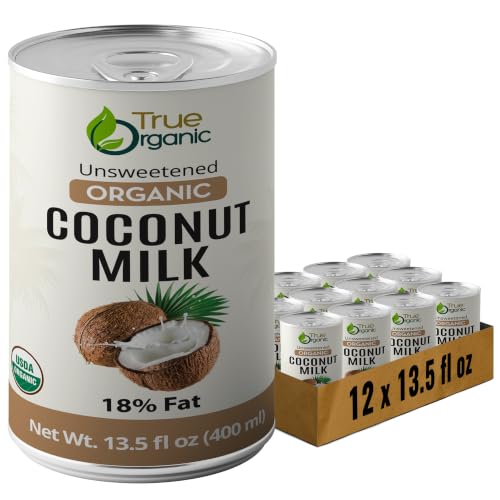
True Organic combines a no-guar-gum claim with an absence of added sugar and preservatives, making it a useful canned choice for shoppers avoiding those ingredients in particular. Each can is 13.5 fluid ounces, and the maker describes it as full-fat with 18% coconut milk fat. Suggested uses include curries, soups, smoothies, desserts, and sauces. Its claims do not amount to an only-two-ingredients promise, however, so shoppers seeking coconut and water alone should favor a product that explicitly makes that claim and verify the package ingredients.
Bottom line: Choose this when avoiding guar gum, added sugar, and preservatives is more important than an only-two-ingredient claim.
Califia Farms Organic Coconut Milk

Califia Farms stands apart as a carton beverage rather than canned cooking coconut milk. The maker names four ingredients—purified water, coconut cream, coconut water, and baking soda—and claims no oils or gums. Its 32-ounce carton is suited to pouring into drinks or using where a thinner plant-based milk works. Baking soda is an added ingredient, so this is not the match for shoppers interpreting “no additives” as coconut and water only. The carton format also differs from the richer canned options intended for recipes such as curries and sauces.
Bottom line: Pick this for a carton beverage if four ingredients and baking soda fit your preferences.
How to choose coconut milk with no additives
Start with the ingredient panel, not a front-label phrase such as “no guar gum.” A no-gum claim rules out that one thickener, while an only-coconut-and-water claim is narrower and easier to assess. Canned coconut milk is commonly used as a cooking ingredient; carton coconut beverages are made for pouring and often have a thinner drinkable format. For a strict two-ingredient preference, choose a product that names only coconut and water, then confirm the package ingredients match. If you mainly want to avoid a specific ingredient, such as guar gum or added sugar, use that as the decision rule rather than treating every claim as equivalent.
Canned coconut milk versus carton coconut beverage
Canned coconut milk generally suits recipes that need a concentrated coconut base, while carton beverages suit drinks and lighter uses. Coconut cream and water separate naturally in many canned products, so shake or stir the contents before measuring; separation alone does not indicate an additive. Carton products may name additional ingredients to achieve the texture or stability intended for sipping. Use the product format that matches the recipe: a creamy curry or sauce usually calls for canned coconut milk, while a smoothie or glass pour may work better with a carton beverage. Always compare ingredient panels because “coconut milk” can describe products with different uses.
The format-to-use guide below helps distinguish the two common forms.
| Format | Typical use | What to check |
|---|---|---|
| Canned coconut milk | Curries, soups, sauces | Ingredient list and whether it is unsweetened |
| Carton coconut beverage | Drinks, smoothies | Added ingredients and intended use |
Reading coconut milk ingredient claims
“Unsweetened,” “no guar gum,” and “no additives” describe different things. Unsweetened refers to added sweetening; no guar gum excludes that particular thickener; no additives is broader and should be checked against the complete ingredient panel. A product can be unsweetened yet still include other ingredients, and a carton beverage may include ingredients such as baking soda. For shoppers avoiding a specific substance, scan the complete list for that exact name. For a minimal-ingredient preference, set a measurable rule before choosing—for example, only coconut and water—and reject products with any additional listed ingredient.
Frequently Asked Questions
Does no guar gum mean coconut milk has no additives?
No; it means the maker claims that one gum is absent, not that every other additive is absent. Read the full ingredient panel if you want to exclude all ingredients beyond coconut and water.
Why does canned coconut milk separate in the can?
Coconut fat can separate from the watery portion during storage, so separation is common and does not by itself show that an additive is present. Shake or stir the can before using it in a recipe.
Can carton coconut milk replace canned coconut milk?
Not always: carton coconut beverages are generally intended for drinking, while canned coconut milk is commonly used for richer cooking. In a curry or sauce, use canned milk when the recipe relies on a concentrated coconut base.
What does unsweetened coconut milk mean?
“Unsweetened” means no sweetener is added; it does not guarantee that the product has only coconut and water. Check the ingredient panel separately for gums, stabilizers, or other ingredients.