
Sherem Easy Split Drill Bit: Options Compared

The 32 mm and 42 mm cone splitter set is the closest match for Sherem easy split drill bit searches because it is designed to split small, dry softwood. Choose a conventional twist drill instead if the job is making holes rather than splitting wood.
The Sherem-named product is not among these options, so the comparison focuses on related drill bits and their uses.
We earn a commission if you buy through links on this page. As an Amazon Associate I earn from qualifying purchases. Products are compared on manufacturer specifications, not hands-on testing.
- Best overall: Wood Splitting Drill Bit 32 mm + 42 mm – Its 32 mm and 42 mm cones are specifically intended for splitting small, dry softwood.
- Best for larger holes: COMOWARE Reduced Shank Set, 9/16–1 in – Eight reduced-shank sizes run from 9/16 inch to 1 inch.
- Best for broad hole sizing: Norseman Ultra Dex Jobber Set, 29-Piece – The 29-piece set spans 1/16 inch to 1/2 inch by 64ths.
| Product | Best for | Purpose | Size range (inches) | Material | Shop |
|---|---|---|---|---|---|
| Wood Splitting Drill Bit 32 mm + 42 mm | Dry kindling | Wood splitting | 1.26 in, 1.65 in | — | Check Price on Amazon |
| COMOWARE Reduced Shank Set, 9/16–1 in | Larger holes | Metal, plastic, wood drilling | 0.5625–1 in | M2 HSS | Check Price on Amazon |
| 6-Piece Titanium-Coated Side-Cutting Set | Hole shaping | Hole drilling and shaping | 0.12–0.31 in | HSS, titanium coated | Check Price on Amazon |
| Norseman Ultra Dex Jobber Set, 29-Piece | Precision hole sizes | Metal drilling | 0.0625–0.5 in by 0.015625 in | High-speed steel | Check Price on Amazon |
Easy Split Drill Bits and Related Drill Bits
Start with the intended task: splitting kindling calls for a cone splitter, while twist bits are for drilling holes.
Wood Splitting Drill Bit 32 mm + 42 mm
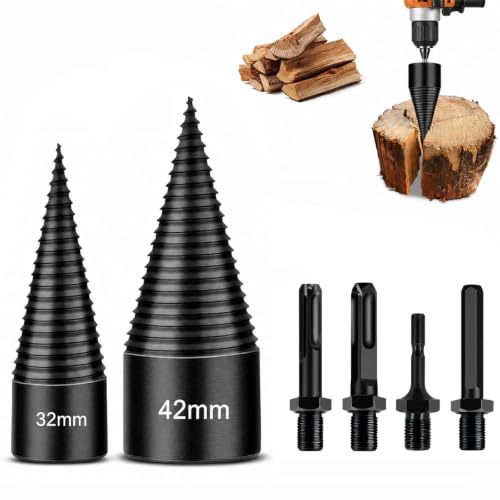
This is the only option here made to split wood rather than drill holes. The set includes 32 mm and 42 mm splitting cones plus four drill attachments, and it is intended for small, soft, dry wood such as kindling and thin logs. Brand claims about efficient splitting apply to those conditions; the product cautions against large, dense, wet, knotty, or hardwood logs. The limitation matters if your firewood is seasoned unevenly or includes large rounds: those pieces fall outside the recommended use, so choose a purpose-built log splitter instead.
Bottom line: Choose this set for small, dry softwood and kindling, not large or wet logs.
COMOWARE Reduced Shank Set, 9/16–1 in

Unlike a wood splitting cone, this set is for making holes, with eight sizes from 9/16 inch to 1 inch. Its M2 high-speed steel bits have a 135-degree split point and a 1/2-inch three-flat reduced shank; those features make it a fit for a drill setup that accepts that shank and needs larger holes in metal, plastic, or wood. Brand claims the coatings support lubrication and corrosion resistance. The limitation is its hole-making purpose: it will not perform the cone’s wood splitting job.
Bottom line: Pick this set for larger drilled holes when your chuck accepts a 1/2-inch shank.
6-Piece Titanium-Coated Side-Cutting Set

This six-piece set is the only option with serrated side-cutting edges for shaping or enlarging a hole after drilling. The 3–8 mm HSS bits have a round shank and are described for wood, plastic, aluminum, and thin sheet metal; their 135-degree split points are intended to help start holes accurately. That combination suits small fabrication or repair work where a hole may need adjustment. The limitation is size and purpose: these are small hole-making tools, not wood splitting bits or a substitute for the larger COMOWARE sizes.
Bottom line: Choose this set for small holes that may need shaping or enlargement.
Norseman Ultra Dex Jobber Set, 29-Piece
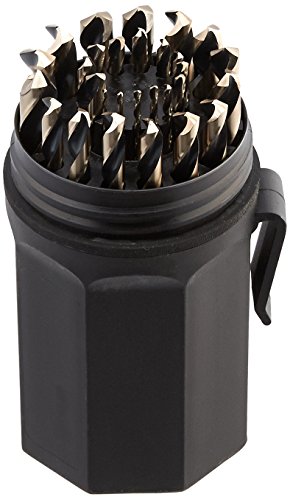
This set offers the broadest fine-grained size selection among the conventional drill options: 29 bits from 1/16 inch to 1/2 inch in 1/64-inch steps. Its high-speed steel construction, precision-ground geometry, and 135-degree split points suit hole drilling when a close size match matters. The specialty steel is hi-molybdenum, with a gold-oxide finish. The limitation is equally clear: a jobber drill set makes holes, not split logs, so it is only a related alternative if your search was actually for drilling rather than splitting firewood.
Bottom line: Choose this set when a precise hole size between 1/16 inch and 1/2 inch matters.
Choose a wood splitter or a hole-making bit
A cone splitter turns drill rotation into wedging force to separate wood fibers, while a twist drill cuts a cylindrical hole and carries chips up its flutes. For kindling under about 4 inches across, a cone bit may suit the task; for larger rounds, dense hardwood, knots, or wet wood, use a maul or a dedicated log splitter instead. Ordinary drill bits with split points do not become wood splitters just because their tips resist wandering. Match the tool to the job before comparing coatings or shank styles. The key distinction is the output: a split piece of wood versus a clean, measured hole.
Match wood size and condition to a cone bit
Small, dry, straight-grained softwood is the intended material for drill-powered cone splitters; large or knotty rounds can bind the cone and stall or twist the drill. The set here gives 32 mm and 42 mm cones, but those dimensions are cone sizes, not a guaranteed maximum log diameter. Start with short pieces of kindling and avoid forcing a jammed bit. Secure the wood so it cannot spin, keep hands clear of the cone, and use a drill with a side handle when available. If the wood cannot be held securely or the drill strains, stop and switch to a splitting tool designed for that piece.
Compare drill bit types by task and size
Use the table to separate a cone splitter from bits designed for drilling holes. Hole diameter and shank fit matter more than coating when choosing a conventional drill set.
| Tool type | Typical task | Size range here |
|---|---|---|
| Cone splitter | Splitting small, dry kindling | 32 mm and 42 mm cones |
| Reduced-shank twist set | Drilling larger holes | 9/16–1 inch |
| Side-cutting twist set | Drilling and enlarging small holes | 3–8 mm |
| Jobber twist set | Drilling precise hole sizes | 1/16–1/2 inch |
A drill chuck must match the bit shank: the COMOWARE set uses a 1/2-inch three-flat shank, while the smaller side-cutting set has a round shank.
Use a drill-powered splitter with care
Drill-powered cone splitters can catch suddenly, so secure each workpiece and keep both hands away from the rotating cone. A high-torque drill can twist at the handle when a cone binds; a side handle helps control reaction force, and a clutch setting can reduce uncontrolled torque if the drill has one. Do not hold a log against your leg or brace it by hand. Keep the work area clear of bystanders and wear eye protection against flying chips. Stop if the bit stalls, the wood rotates, or the drill strains, then reposition or use a manual splitting tool rather than increasing force.
Frequently Asked Questions
Can a drill splitter handle wet firewood?
Wet or freshly cut wood is a poor match for a drill-powered cone because it resists splitting more than small, dry kindling. The cone set here specifically cautions against wet logs; use a manual maul or a dedicated log splitter for them.
What wood is suitable for a drill-powered splitter?
Small, dry softwood such as pine kindling is the intended material. Avoid large hardwood pieces, knots, and logs that cannot be held securely.
Does a 135-degree split point split logs?
No, a 135-degree split point helps a conventional bit start a hole with less wandering; it is not a wood splitting cone. Cone splitters have a wedge-like spiral form that forces wood fibers apart.
What size drill chuck fits the reduced-shank set?
The COMOWARE reduced-shank bits use a 1/2-inch three-flat shank, so the drill chuck must accept a 1/2-inch shank. A 3-jaw chuck that clamps securely is typical for this style of bit.
How do I keep a log from spinning while splitting?
Clamp or otherwise secure a short piece on a stable surface before engaging the cone. Never hold the wood by hand, and stop immediately if the log or bit begins to rotate.