
3 Feet Tall Planters: Raised Beds Compared by Size

For a true 3-foot-tall planter, choose SnugNiture 6×3 Oval Raised Bed if you want a 6-by-3-foot oval bed or AHEONLAR 3×3 Round Raised Bed, 2-Pack for a compact, round 3-by-3-foot bed; both are raised garden beds rather than tall decorative pots. The 24-inch pots in MinCHI257 Plastic Pots, Set of 3 are shorter, so choose them only if a lower indoor or patio planter suits your space better.
We earn a commission if you buy through links on this page. As an Amazon Associate I earn from qualifying purchases. Products are compared on manufacturer specifications, not hands-on testing.
- Best overall: SnugNiture 6×3 Oval Raised Bed – Its 36-inch height and 6-by-3-foot oval footprint offer a full-size raised bed.
- Best for a compact footprint: AHEONLAR 3×3 Round Raised Bed, 2-Pack – The 35-inch round bed occupies a 3-by-3-foot footprint.
| Product | Best for | Height | Footprint | Material | Shop |
|---|---|---|---|---|---|
| SnugNiture 6×3 Oval Raised Bed | Large oval gardens | 36 in | 72 × 36 in | Galvanized steel | Check Price on Amazon |
| AHEONLAR 3×3 Round Raised Bed, 2-Pack | Paired small beds | 35 in | 35 × 35 in each | Galvanized steel | Check Price on Amazon |
| MinCHI257 Plastic Pots, Set of 3 | Shorter pot display | 24 in maximum | 14 × 9.65 in maximum | Plastic | Check Price on Amazon |
3 Feet Tall Planters Compared
These choices include two near-36-inch raised beds and one shorter set of decorative pots, so compare height and footprint first.
SnugNiture 6×3 Oval Raised Bed
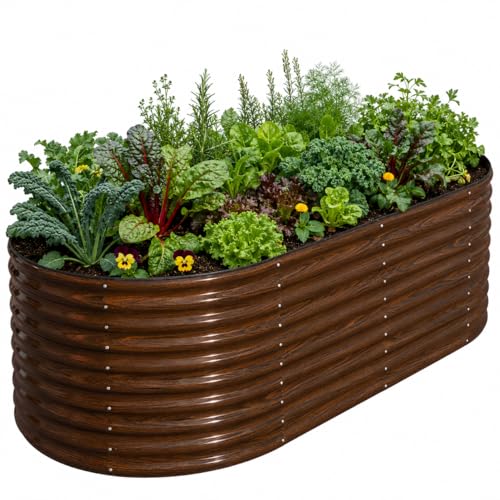
SnugNiture 6×3 Oval Raised Bed is the only 6-foot-long option here, with a 72-by-36-inch oval footprint and 36-inch height. Its galvanized steel panels form a bottomless bed, and the maker says the height supports gardening without bending. The 24-cubic-foot capacity is suited to gardeners planning a substantial planting area for vegetables, herbs, flowers, or small fruit trees. Its size is the tradeoff: allow for a 6-by-3-foot footprint, and plan where soil will come from before assembly. The open base also means the bed uses the ground beneath it.
Bottom line: Choose this if you want a waist-high oval bed with a 6-foot span.
AHEONLAR 3×3 Round Raised Bed, 2-Pack
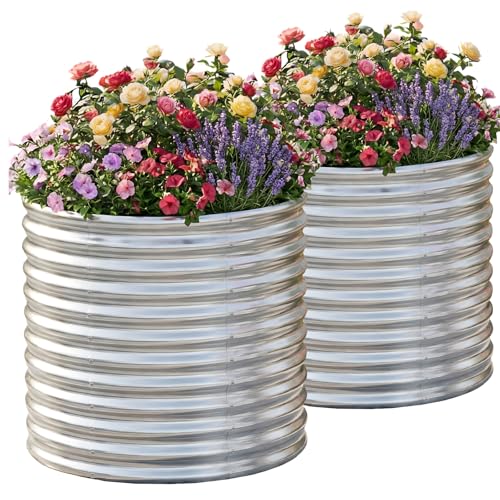
AHEONLAR 3×3 Round Raised Bed, 2-Pack comes as two round beds, each measuring 35 inches high and 35 inches across, making it the smaller-footprint raised-bed choice. The galvanized steel has a double-layer anti-corrosion coating, and the open bases let roots reach the underlying ground. This configuration suits gardeners who want separate planting zones for vegetables, flowers, or other plants rather than one long bed. The round shape and 3-foot width provide less continuous planting length than an oval bed, so it may not suit crops or layouts that need long rows. Leave room for both units when planning placement.
Bottom line: Pick this for two separate round beds in a compact layout.
MinCHI257 Plastic Pots, Set of 3

MinCHI257 Plastic Pots, Set of 3 differs from the raised beds: this is a set of three plastic pots, not a 3-foot-tall garden bed. Its tallest pot reaches 24 inches, with the other pots measuring 21 and 11 inches, so the staggered set works better for a lower display indoors or outdoors. Drainage holes and included saucers support container planting, while the lightweight plastic is easier to reposition than a steel bed. The 24-inch maximum height is the key limitation for this search; choose it only if a pot set below 3 feet meets your need.
Bottom line: Choose this only when a shorter decorative pot set is acceptable.
How to choose a 3-foot planter
Start with the footprint and planting style: a 3-by-3-foot round bed uses less linear space than a 6-by-3-foot oval bed, while a freestanding pot is a different kind of planter. A 36-inch planter is waist-high for many adults, but comfortable reach depends on the gardener’s height and whether all sides are accessible. Measure the site before choosing; leave a path around a bed if you need to reach its center without stepping into soil. With less than 6 feet of clear length, favor a compact round bed over a long oval one. Also decide whether you want roots to reach native soil or need a closed-bottom container.
Raised beds and tall pots are different
Raised beds sit above the ground and may be bottomless, while pots hold a finite volume of growing medium in a container. Bottomless beds can let roots access native soil, but they cannot be placed on a balcony or paved surface without a separate base. A pot with drainage needs a way to catch or direct runoff when used indoors. The pots in MinCHI257 Plastic Pots, Set of 3 top out at 24 inches, whereas AHEONLAR 3×3 Round Raised Bed, 2-Pack and SnugNiture 6×3 Oval Raised Bed are around 3 feet tall; do not treat a 24-inch pot as a 3-foot match. Choose a bed for a dedicated growing plot and a pot for movable container planting.
Plan soil depth and bed placement
A tall metal bed does not automatically require filling its full height with potting mix. For many vegetables, a root zone around 12 to 18 inches is sufficient, though deep-rooted plants need more; the soil beneath a bottomless bed may provide additional rooting depth if it is workable. Remove sod or loosen compacted ground before filling so roots can move downward. Place the bed where it will receive the sun the intended crops need, and check that the ground is level enough for the panels to meet evenly. Heavy soil-filled beds are difficult to relocate, so settle the location before adding growing medium.
Metal, drainage, and setup
Galvanized steel is zinc-coated to resist corrosion, but cut edges and scratches can wear sooner than intact surfaces; avoid damaging the coating during assembly. A bottomless design drains directly into the ground, so it is unsuitable where runoff must be contained. Keep a raised bed away from unstable slopes and retain clear access around its perimeter. For indoor pots, drainage holes are useful only when excess water can exit into a saucer or another catchment. Never assume a saucer makes a container watertight: empty standing water after watering to avoid spills and soggy roots.
Frequently Asked Questions
Is 36 inches the same as 3 feet tall?
Yes. One foot equals 12 inches, so 36 inches is exactly 3 feet. A 35-inch bed is one inch shorter than that measurement.
How much soil does a 6-by-3-foot bed need?
A 6-by-3-foot bed filled 12 inches deep takes about 18 cubic feet of soil, before settling. A bottomless bed can use the ground below for extra root depth, so filling all 36 inches is not automatically necessary.
Can a bottomless raised bed sit on concrete?
Not as designed for planting into the ground: concrete blocks the open base and does not contain soil. Use a container with a closed base and drainage arrangement for a paved or balcony surface.
How much space should I leave around a raised bed?
Allow at least 2 feet of clear path on sides you need to reach for routine planting and weeding. A bed accessible from only one side should be narrow enough to reach its far edge without stepping into it.