
Paper to Cover Windows: Shades and Films Compared

For paper to cover windows, Cordless Non-Woven Paper Shade, 24 x 59 in. is the closest match because it is a cut-to-size, stick-on paper shade with a blackout option. Choose a window film instead if you want a glass-mounted covering that preserves the window surface; frosted films soften views, while black films block light.
Measure each pane before choosing: Cordless Non-Woven Paper Shade, 24 x 59 in. is 24 inches wide by 59 inches high, while the films are about 17.5 inches wide and 78.7 inches long.
We earn a commission if you buy through links on this page. As an Amazon Associate I earn from qualifying purchases. Products are compared on manufacturer specifications, not hands-on testing.
- Best overall: Cordless Non-Woven Paper Shade, 24 x 59 in. – A cut-to-size paper shade with adhesive installation and a blackout color option.
- Best for blackout film: rabbitgoo Blackout Static-Cling Film, 17.5 x 78.7 in. – Black static-cling film is made for full light blocking when the glass is covered edge to edge.
- Best for soft daylight: Dwersty Frosted Privacy Film, 17.5 x 78.74 in. – Frosted film gives privacy while allowing soft light through.
| Product | Best for | Size | Covering type | Installation | Shop |
|---|---|---|---|---|---|
| Cordless Non-Woven Paper Shade, 24 x 59 in. | Blackout shade | 24 x 59 in. | Non-woven shade | Adhesive tape | Check Price on Amazon |
| rabbitgoo Blackout Static-Cling Film, 17.5 x 78.7 in. | Blackout glass film | 17.5 x 78.7 in. | Blackout film | Static cling | Check Price on Amazon |
| Dwersty Frosted Privacy Film, 17.5 x 78.74 in. | Frosted privacy | 17.5 x 78.74 in. | Frosted film | Static cling | Check Price on Amazon |
| VELIMAX Total Blackout Static-Cling Film | Reusable blackout | 17.7 x 78.7 in. | Blackout film | Static cling | Check Price on Amazon |
| Haton Lattice Static-Cling Privacy Film | Decorative daylight | 17.5 x 78.7 in. | Patterned film | Static cling | Check Price on Amazon |
Paper to Cover Windows: Shades and Films
Choose the covering by whether you want a shade over the glass or a film applied directly to it.
Cordless Non-Woven Paper Shade, 24 x 59 in.

Unlike the other options, this product is a non-woven shade rather than a film applied to glass. The 24-by-59-inch black shade is intended for indoor windows and doors and can be cut to fit; its adhesive tape attaches without drilling. The maker says black and gray shades block light, while white, blue, and brown filter it. This is the closest fit for someone specifically seeking paper-style window coverage. The 24-inch width limits its usefulness on wider panes unless multiple shades can be placed together, so measure first.
Bottom line: Choose this if you want a cut-to-size shade rather than glass film.
rabbitgoo Blackout Static-Cling Film, 17.5 x 78.7 in.

This option is black static-cling film, not a paper shade, so it suits buyers who want a covering directly on the glass. The roll measures 17.5 by 78.7 inches. The maker says it blocks outdoor light and UV rays when the glass is fully covered with minimal edge gaps. The maker also cautions against use on double-pane windows because of possible cracking. That restriction matters for homes with insulated glass; confirm the window type before choosing this film.
Bottom line: Pick this for a black film finish when the window is compatible.
Dwersty Frosted Privacy Film, 17.5 x 78.74 in.

Unlike blackout choices, this white frosted film is intended to add privacy while keeping light soft. It measures 17.5 by 78.74 inches and uses static-cling. Its backing has one-inch grid marks to help with cutting. It is meant for smooth glass; the maker warns against using it on frosted, cut, or otherwise processed non-smooth glass. Before applying, remove the protective backing and clear excess water and bubbles, as specified by the maker. It is not the right option when the goal is a darkened room.
Bottom line: Choose this for privacy and softened daylight on smooth glass.
VELIMAX Total Blackout Static-Cling Film
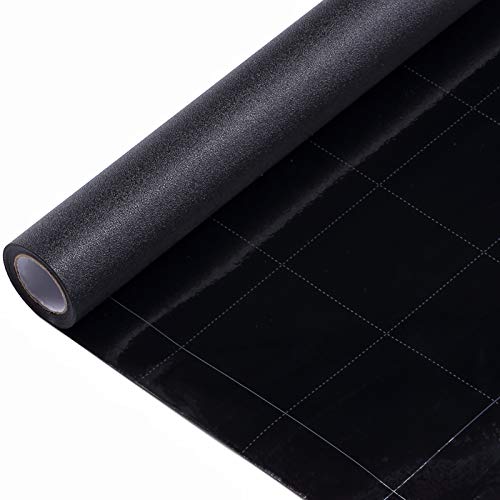
This black film is wider than the other film rolls at 17.7 inches and is designed for reusable, glue-free coverage. It measures 17.7 by 78.7 inches; installation calls for soapy water and removal of the backing liner. The maker says it blocks at least 99% of daylight and provides two-way privacy. This is a film, not a paper covering, and its blackout effect depends on covering the glass. Buyers seeking a light-filtering or decorative look should choose a different style.
Bottom line: Pick this if reusable, black glass film suits your room.
Haton Lattice Static-Cling Privacy Film
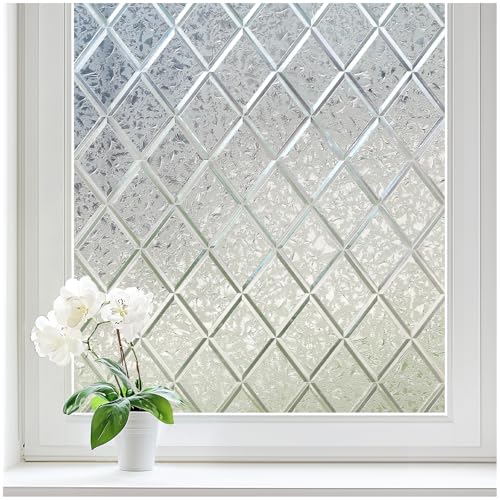
This patterned clear film differs from plain blackout shades and frosted film by adding a lattice and floral glass-like design. The roll is 17.5 by 78.7 inches and attaches with water using static-cling, so it can be repositioned and removed without adhesive residue, according to the maker. It is intended to obscure outside views while retaining soft natural light. That balance makes it better for street-facing rooms than for bedrooms where darkness is the priority; its semi-privacy effect is not the same as blackout coverage.
Bottom line: Choose this for a decorative look with daylight and some privacy.
Choose between paper shades and window film
Choose a shade when you want a separate covering over the pane; choose film when you want coverage attached directly to glass. A shade can be raised or lowered only if its design includes a lift mechanism; the paper shade here is described as cordless, but a lift method is not given. Black film and blackout shades suit rooms where reducing daylight is the goal, while frosted or patterned film suits privacy with daylight. For a rental or temporary change, removable static-cling film avoids adhesive; adhesive-backed shades avoid drilling but attach to the window or frame. Measure first, then match the covering to the desired light and privacy rather than choosing by color alone.
Measure window glass before cutting
Measure the visible glass width and height for film, and measure the intended mounting area for a shade. A 17.5-inch-wide roll cannot cover a wider pane in one continuous piece; plan the seams and overlap only if the product instructions allow it. For a shade, compare its 24-inch width with the opening and account for any frame or trim that affects attachment. Use a steel tape measure and record each window separately, since adjacent windows can differ. Cut slightly conservatively and test the fit before trimming more; a cut that is too short leaves a light gap. For blackout coverage, edge gaps matter because even a narrow uncovered strip can admit visible light.
Install film on suitable glass
Static-cling film is applied to glass with water, while an adhesive shade uses its tape to attach to a surface. Clean glass is important because dust or trapped debris can show under a film and interfere with a smooth fit; use a lint-free cloth after washing. Apply film gradually and smooth out water and bubbles rather than trapping them under the sheet. Confirm glass compatibility before applying any dark film: strong solar absorption can stress some insulated or coated windows, and one film maker specifically warns against double-pane glass. Avoid assuming that every tint is appropriate for every glazing type. For a blackout result, cover the glass completely and keep edge gaps as small as practical.
Match privacy film to daylight needs
Frosted and patterned films trade a clear view for privacy while still allowing light through; black films prioritize light blocking and concealment. Privacy is not automatically the same at every hour: a translucent film may look different when it is brighter inside than outside, while an opaque-looking dark film reduces daylight. Decide whether the priority is preserving a bright room, obscuring views, or darkening a sleeping space. A useful rule is to choose frosted or decorative film for a room that should stay bright, and a blackout covering when sleep or darkness is the main need. Test a small offcut in the room at daytime and nighttime before covering a large pane.
Frequently Asked Questions
Can paper shades be cut to fit a window?
Yes, the paper shade option is described as cut-to-size. Measure the opening and trim gradually, since removing too much material can leave a visible gap.
Does static-cling film need glue to stay on glass?
No, static-cling films attach without glue; water is used during installation. Clean, smooth glass helps achieve a smooth application.
Will frosted window film make a room dark?
Frosted film is intended to soften views while allowing light through, rather than block daylight like black blackout film. Choose it when privacy matters more than darkness.
Can blackout film go on double-pane windows?
One of the blackout film makers cautions against applying its film to double-pane windows because cracking may occur. Check compatibility for the specific film and glazing before installation.
How much film is needed for a window?
Compare the pane’s width and height with the roll dimensions before cutting. A single 17.5-inch-wide roll will not cover glass wider than 17.5 inches in one piece.