
1 HP Submersible Pump: 5 Types Compared by Use

For routine basement protection, WAYNE CDU1000 1 HP Sump Pump stands out for its automatic float switch and cast-iron-and-stainless-steel construction; choose a well pump or portable transfer pump instead when the job requires deep water delivery or occasional draining.
A 1 hp submersible pump operates underwater, but well, sump, and utility models are built for different discharge setups and duty needs.
We earn a commission if you buy through links on this page. As an Amazon Associate I earn from qualifying purchases. Products are compared on manufacturer specifications, not hands-on testing.
- Best overall: WAYNE CDU1000 1 HP Sump Pump – Its integrated vertical float switch provides automatic sump operation, and it is rated for up to 6,100 GPH.
- Best for deep wells: 1 HP 230V Deep Well Pump – This 230V, 4-inch well pump is rated for 33 GPM and 207 feet of head.
- Best for pool covers: Acopair 1 HP Automatic Cover Pump – Its automatic switch starts above 2.17 inches and stops below 3/4 inch.
- Best for portable transfer: Flowbase 1 HP 5,000 GPH Sump Pump – It is rated for up to 5,000 GPH and includes adapters for common hose sizes.
| Product | Best for | Pump type | Rated flow | Maximum lift or head | Shop |
|---|---|---|---|---|---|
| WAYNE CDU1000 1 HP Sump Pump | Basement sump pits | Sump pump | 6,100 GPH | — | Check Price on Amazon |
| 1 HP 230V Deep Well Pump | Deep well supply | Deep well pump | 1,980 GPH (33 GPM) | 207 ft head | Check Price on Amazon |
| Acopair 1 HP Automatic Cover Pump | Pool cover drainage | Automatic cover pump | 5,000 GPH | — | Check Price on Amazon |
| Flowbase 1 HP 5,000 GPH Sump Pump | Portable water transfer | Portable utility pump | 5,000 GPH | 30 ft | Check Price on Amazon |
| AQUASTRONG 1 HP Sump Pump | Low-level draining | Portable sump pump | 4,500 GPH | 30 ft | Check Price on Amazon |
1 HP Submersible Pumps Compared
Match the pump style and discharge arrangement to the job before comparing flow ratings.
WAYNE CDU1000 1 HP Sump Pump
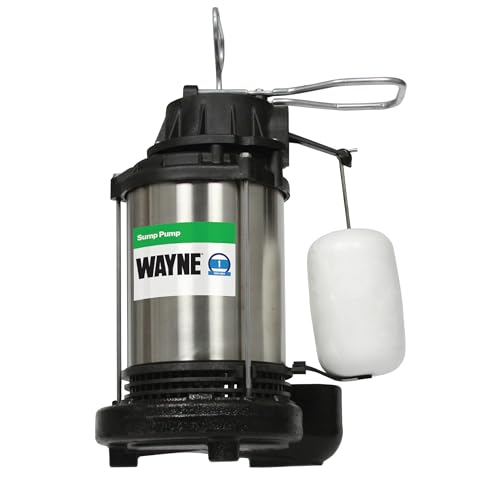
For a fixed basement sump, this model differs from the portable transfer pumps by combining a vertical float switch with cast iron and stainless steel construction. The maker rates it at up to 6,100 GPH and says its top-suction design reduces air lock and clogging from debris near the pit bottom. The compact float arrangement is intended for narrow sump pits. Its limitation is its sump-focused setup: choose a portable pump for moving water from a pool or other shallow area rather than relying on a sump installation.
Bottom line: Choose this for automatic operation in a basement sump pit.
1 HP 230V Deep Well Pump
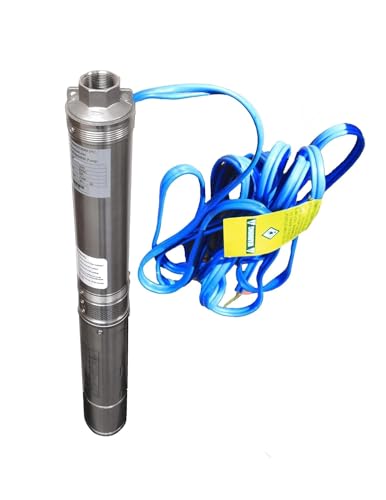
This is the only deep well design in the group, with a 4-inch stainless-steel body rather than a broad-base sump or utility form. The maker specifies 33 GPM, 207 feet of head, and 230V operation; it has a built-in capacitor start and does not require a control box. Its long, narrow 32-inch body is intended for a well casing, not for scooping water from a basement floor. The key limitation is voltage: use it only where the available supply matches its 220/230V requirement.
Bottom line: Choose this when the job is lifting well water and 230V power is available.
Acopair 1 HP Automatic Cover Pump
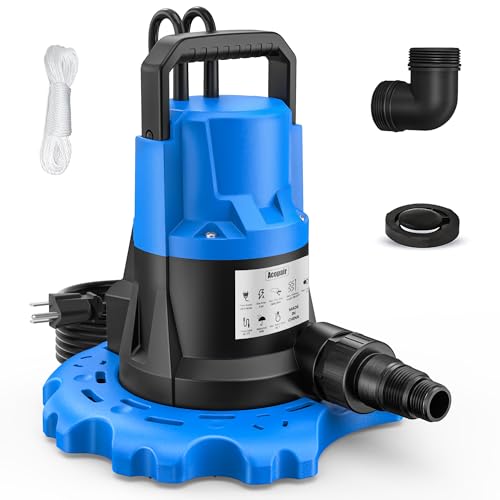
For unattended surface-water removal, this cover pump is distinguished by its automatic sensing switch. The maker says it turns on above 2.17 inches of water and switches off below 3/4 inch after a 30-second run time; its maximum flow rating is 5,000 GPH. That automatic threshold makes it a different choice from pumps that require someone to plug them in and monitor the water. Its limitation is the minimum switching depth: buyers who need removal below 3/4 inch should choose a model with a lower stated drawdown level.
Bottom line: Choose this for automatic drainage when its switch thresholds suit the water depth.
Flowbase 1 HP 5,000 GPH Sump Pump
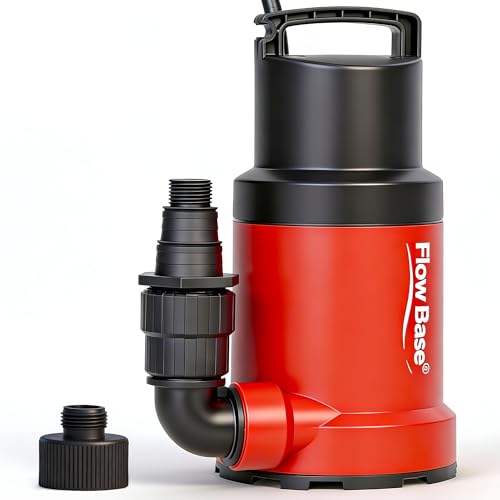
This portable utility pump pairs a 5,000 GPH maximum rating with a 30-foot lift, making it distinct from the deep well pump and automatic sump models. The maker says its bottom suction removes water down to 1/5 inch and includes a mesh bag to filter sediment and solids. Included adapters accommodate 3/4-inch, 1-inch, and 1-1/4-inch connections. The limitation is that its maximum flow is a rating, not a promise at every lift height; longer or narrower discharge hoses can reduce delivered flow.
Bottom line: Choose this for portable draining where its adapters fit the discharge hose.
AQUASTRONG 1 HP Sump Pump

Compared with the other portable pump, this model has a lower stated drawdown point of 1/5 inch and a specified solids-handling limit of 1/5 inch. The maker rates it at 4,500 GPH at 5 feet and says it can lift water up to 30 feet. A 1-1/4-inch NPT discharge, elbow adapter, snap-coupling adapter, and 10-foot power cord support several setup options. Its limitation is the lower flow rating than the 5,000 GPH portable option, which matters when draining a large volume quickly.
Bottom line: Choose this when low-level drawdown and its included discharge adapters matter most.
How to Choose a 1 HP Submersible Pump
Choose by pump type, head, and control method rather than horsepower alone. A 1 hp rating describes motor power, not the flow a pump will deliver at every height. The GPH or GPM figure applies under particular conditions, and flow falls as the pump works against greater vertical lift and discharge resistance. Measure the vertical rise from the water surface to the discharge point, then account for hose length, diameter, bends, and fittings. A practical rule: if the lift approaches the pump’s maximum, do not assume it will still deliver its maximum flow; compare the needed flow at that head. Automatic floats or sensors suit unattended sump or cover drainage, while a plug-in portable pump needs monitoring.
Submersible Pump Types and Their Jobs
Use a deep well pump for lifting water through a narrow well casing; use a sump pump for a pit that collects groundwater; use a portable utility pump for temporary transfer. Well pumps are long and narrow, while sump and utility pumps sit at the water source and connect to a discharge hose or pipe. The pump type determines the installation, voltage, controls, and appropriate discharge connection. This comparison table is a quick way to match the job to the basic design.
| Job | Suitable type | Check before setup |
|---|---|---|
| Well water supply | Deep well pump | Casing fit and power voltage |
| Automatic pit drainage | Sump pump | Pit space and switch clearance |
| Temporary surface drainage | Portable utility or cover pump | Switch depth and hose connection |
Do not substitute a portable pump for a well pump merely because the horsepower matches; their shapes and installation needs are different.
Flow, Lift, and Discharge Hose Sizing
Compare flow ratings only alongside the lift condition: a maximum flow and a maximum head are different operating limits. Head is the vertical distance the pump must raise water, while hose friction and fittings add resistance even when the outlet is not much higher than the water. Use the largest compatible discharge hose practical for the job; a narrow hose, long run, or several sharp bends can cut the delivered flow. Verify the pump’s discharge thread and adapter sizes against the hose before installation. For well pumps, casing diameter is a separate fit constraint; for sump pumps, check that the float can move freely inside the pit.
Electrical and Water-Removal Safety
Match the pump’s voltage to the supply before connecting it; a 230V pump must not be treated as a 120V appliance. Keep plugs and connections out of standing water, and use a ground-fault circuit interrupter (GFCI)-protected outlet for equipment used near water. Never lift or retrieve a submerged pump by its power cord, and unplug it before clearing debris or changing connections. Automatic switches still need adequate clearance to move and can cycle as water rises and falls. During basement flooding, do not enter water that could contact energized wiring; shut off power from a dry, safe location or call an electrician.
Frequently Asked Questions
Does a 1 hp pump always move the same amount of water?
No; delivered flow depends on lift and discharge resistance, not horsepower alone. A longer or narrower hose and extra fittings can lower flow even when the pump motor is unchanged.
How do I measure the lift a pump needs?
Measure vertically from the water surface to the hose outlet, not along the hose. Add resistance from hose length and bends when selecting capacity, because a pump near its maximum head will not provide its maximum flow.
Can a sump pump drain a deep well?
No; a sump pump is designed to sit in a pit, while a deep well pump is a long, narrow unit made to fit down a well casing. Check the casing diameter and electrical supply before choosing a well pump.
What voltage does a submersible pump need?
Use the voltage specified for the exact pump and match it to the available supply. For example, a 220/230V well pump requires compatible 220/230V power, and all pump connections should be protected from water exposure.
How low can a submersible pump remove water?
The drawdown depth differs by model and by whether the pump has automatic sensing. One portable model here specifies removal to 1/5 inch, while the automatic cover pump’s switch stops below 3/4 inch; choose based on the remaining water depth that matters for the job.