
Concrete Molds for Walkways: 5 Styles Compared

For a walkway mold set with multiple shapes, the four-piece irregular mold set stands out because each mold can form nine stone shapes. Choose Square Walkway Mold 2-Pack instead if you want a pair of square forms, or Walk Path Maker Nested Square if a long, narrow geometric pattern better suits the path.
Walkway molds are reusable forms that shape poured concrete into pavers; plan the path layout before casting, since mold size and pattern determine how each section meets the next.
We earn a commission if you buy through links on this page. As an Amazon Associate I earn from qualifying purchases. Products are compared on manufacturer specifications, not hands-on testing.
- Best overall: Pathmate Irregular 4-Pack – Four molds outline nine irregular stone shapes apiece for a varied walkway layout.
- Best for flagstone variety: Betonex 6-Piece Flagstone Set – The six-mold set has six different textures and covers 0.37 square meters.
- Best for geometric paths: Walk Path Maker Nested Square – The handled form creates a 23.6-by-11.8-inch nested-square pattern.
| Product | Best for | Set count | Mold size | Material | Shop |
|---|---|---|---|---|---|
| Pathmate Irregular 4-Pack | Varied stone shapes | 4 molds | 13.8 × 13.8 × 1.4 in | PP plastic | Check Price on Amazon |
| Betonex 6-Piece Flagstone Set | Textured flagstone | 6 molds | Area: 0.37 m² total | ABS plastic, 1.9–2 mm | Check Price on Amazon |
| Walk Path Maker Nested Square | Geometric walkway | 1 mold | 23.6 × 11.8 × 0.8 in | Metal | Check Price on Amazon |
| Square Walkway Mold 2-Pack | Square pavers | 2 molds | 15.7 × 15.7 × 1.4 in | Plastic | Check Price on Amazon |
| Big Size Walk Maker | Larger single casts | 1 mold | 16.9 × 16.9 × 1.6 in | Plastic | Check Price on Amazon |
Concrete molds for walkways compared
Compare the cast shape, mold dimensions and material to match the form to your planned path.
Pathmate Irregular 4-Pack

The four-piece set is the only option here described as outlining nine different stone shapes, making it suited to a less uniform path. Each mold measures about 13.8 inches square and 1.4 inches deep, and the PP forms can be rinsed with water for reuse. The maker says no special tools or professional skills are needed. This set suits a yard where a more irregular stone effect matters; its smaller individual footprint means more placements than with a single larger mold.
Bottom line: Choose this set when varied stone outlines matter more than fewer, larger placements.
Betonex 6-Piece Flagstone Set
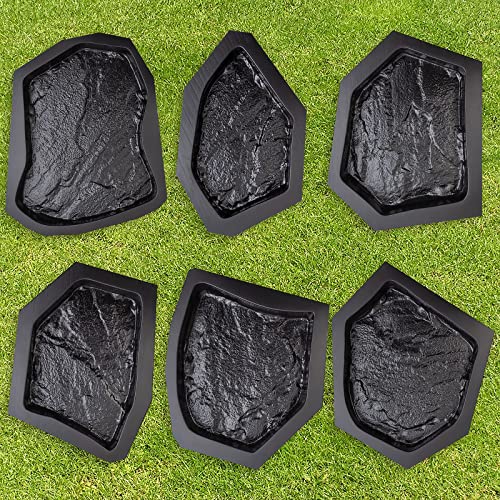
The six-piece flagstone set offers six different textures, unlike the other forms’ stated geometric or irregular patterns. Its combined area is 0.37 square meters, and the ABS plastic is 1.9–2 millimeters thick. The maker says the reusable forms can produce more than 50 tiles. This set fits a project that benefits from texture variety across multiple cast pieces; the total area is given for the set, not as the size of one mold, so plan the layout around the actual individual shapes.
Bottom line: Pick this set for multiple flagstone textures and a six-form casting set.
Walk Path Maker Nested Square

The long, shallow shape and nested-square loop pattern make this form distinct from the square and flagstone molds. It measures 23.6 by 11.8 inches and is 0.8 inch deep; handles are intended to aid demolding. The maker describes it as reusable for paths, patios and terraces. It suits a modern, repeated geometric look, but the 0.8-inch depth is shallower than the 1.4- to 1.6-inch depths given for several other options, so consider whether that thickness works for your intended paving use.
Bottom line: Choose it for a long rectangular cast with a nested-square design.
Square Walkway Mold 2-Pack

The two square forms provide matching 15.7-inch cast shapes, unlike the irregular multi-shape and textured sets. Each mold is 1.4 inches deep, and the maker describes the forms as reusable. The method calls for a cement-and-sand mix at a 1:1 ratio, coating the inside with release agent or oil, then watering the cast after demolding during curing. This is a straightforward fit for a regular square layout, but it offers less shape variety than the irregular or six-texture sets.
Bottom line: Pick this pair for a consistent square-paver pattern.
Big Size Walk Maker

The largest square footprint among these single forms is 16.9 inches per side, with a 1.6-inch depth. The plastic board is described as reusable after cleaning with water, and its cast pattern is intended to resemble blocks of stone. That makes it a fit when a larger square section is preferable to the 13.8- or 15.7-inch square molds.
Bottom line: Choose it when you want a larger square cast and block-like pattern.
How to choose walkway concrete molds
Start with the path pattern and the mold’s internal footprint, then estimate how many placements the route needs. A narrow run can work with a rectangular form, while a square or irregular mold gives a different joint rhythm; dry-layout the forms on the ground before mixing so turns and edges do not leave awkward gaps. Mold depth sets the thickness of each cast, but a deeper form alone does not establish whether the finished paver is suitable for foot traffic or other loads. For a route with frequent curves, favor a pattern that can be rotated or rearranged rather than one fixed long rectangle.
Concrete pavers are heavy: a 1.4-inch-thick slab weighs roughly 18 pounds per square foot, depending on the mix. Plan lifting and curing space before filling molds, and avoid casting where runoff or freezing can disturb fresh concrete.
Walkway mold sizes and layout
Measure the walkway width and turning points before selecting a mold; the forms here range from 11.8 inches wide to square footprints of 16.9 inches. A useful rule is to choose a mold narrower than the path at a tight bend, because a broad rectangular cast can overhang the planned route. Mark a sample pattern with the actual mold dimensions, including the gaps you intend between pavers, then check that the layout leaves room for edging and planting. Mold dimensions are not necessarily the finished stone dimensions if the cavity tapers or has uneven edges.
For pedestrian paths, compact the base evenly before placing concrete; a common base is 4 to 6 inches of compacted crushed stone, with more depth often needed in soft or frost-prone ground. Keep the walking surface consistent and avoid abrupt height differences that can catch a toe.
| Need | Form style | What to compare |
|---|---|---|
| Varied stone outline | Irregular multi-shape set | Shapes per mold and footprint |
| Repeated geometry | Square or rectangular form | Cast dimensions and depth |
| Texture variation | Multi-texture flagstone set | Individual shape and total coverage |
Concrete mix and mold release
A consistent concrete mix fills detailed cavities more reliably than a dry, crumbly batch; add water gradually and stop when the mix holds together without pooling water. Excess water can weaken cured concrete, while a very stiff mix may leave voids around textured corners. One mold’s method specifies a 1:1 cement-and-sand ratio and an interior coating of release agent or oil, but that ratio should not be assumed for every mold or concrete product. Use a suitable concrete mix for the intended paver and apply release material sparingly so it does not puddle in the pattern.
Remove the mold only once the cast holds its shape; early lifting can slump edges, while waiting too long can make separation harder.
Curing and walkway safety
Keep fresh pavers damp and protected from direct drying, especially during the first several days; concrete commonly needs about 7 days to gain substantial strength and around 28 days for design strength under standard curing conditions. Temperature and mix affect timing, so do not judge readiness only by the surface. The instructions for one mold call for watering maintenance for about 24 hours before removing the form, but that should not be confused with complete curing.
Wear gloves and eye protection when handling wet concrete: cement is caustic and can cause skin burns. Keep the walkway closed until the casts are firm and the route is stable, and use compacted, level bedding to reduce rocking pavers and trip edges.
Frequently Asked Questions
How thick should concrete walkway pavers be?
About 2 inches is a common thickness for individual pedestrian pavers, while the molds here specify depths from 0.8 to 1.6 inches. Base support and intended loads matter too, so verify suitability where the path will carry more than foot traffic.
How long should concrete pavers cure before use?
Concrete commonly needs about 7 days to gain substantial strength and around 28 days to reach design strength under standard curing conditions. Keep new casts damp and sheltered from rapid drying, and allow more time in cool weather.
Do walkway concrete molds need release oil?
Release agent or oil can help a cast separate cleanly, and one supplied method specifically recommends coating its mold interior. Apply a thin, even layer rather than letting oil pool, which can mark the concrete surface.
How much base do concrete walkway pavers need?
A common pedestrian-path base is 4 to 6 inches of compacted crushed stone. Soft soil, poor drainage or frost-prone conditions can call for a deeper base, so assess the ground before setting the path.
Can I reuse a concrete walkway mold?
Reusable plastic and ABS forms can be cleaned with water and used for repeated casts, as the makers describe for several options here. Let concrete residue soften rather than scraping aggressively, which can damage thin pattern edges.