
Motorcycle Tow Hitch Dolly: 3 Carrier Types Compared

ECOTRIC 800-lb Motorcycle Tow Dolly is the closest match for most shoppers seeking a motorcycle tow hitch dolly because it fits a 2-inch receiver, accommodates tires up to 4-3/8 inches wide and has an 800-pound capacity. Choose Black Widow 400-lb Aluminum Hitch Carrier instead if you want a roll-on carrier that supports the motorcycle rather than a tow dolly.
A hitch dolly secures a motorcycle’s front wheel while towing; verify receiver and vehicle limits as well as the bike’s permitted towing method before choosing.
We earn a commission if you buy through links on this page. As an Amazon Associate I earn from qualifying purchases. Products are compared on manufacturer specifications, not hands-on testing.
- Best overall: ECOTRIC 800-lb Motorcycle Tow Dolly – An adjustable front-wheel mount with an 800-pound capacity and a 4-3/8-inch tire-width limit.
- Best for adjustable fit: 800-lb Adjustable Motorcycle Tow Dolly – Its crank handle adjusts for different front-wheel sizes, with the same 800-pound capacity and tire-width limit.
- Best for roll-on loading: Black Widow 400-lb Aluminum Hitch Carrier – A ramp loads the bike onto an aluminum carrier rated for 400 pounds.
| Product | Best for | Capacity | Tire width | Shop |
|---|---|---|---|---|
| ECOTRIC 800-lb Motorcycle Tow Dolly | Broad wheel adjustment | 800 lb | Up to 4-3/8 in. | Check Price on Amazon |
| 800-lb Adjustable Motorcycle Tow Dolly | Crank adjustment | 800 lb | Up to 4-3/8 in. | Check Price on Amazon |
| Black Widow 400-lb Aluminum Hitch Carrier | Ramp loading | 400 lb | — | Check Price on Amazon |
Motorcycle Tow Hitch Dolly Options
Compare the two front-wheel tow dollies with a distinct ramp-style hitch carrier before deciding how you want the motorcycle transported.
ECOTRIC 800-lb Motorcycle Tow Dolly

ECOTRIC 800-lb Motorcycle Tow Dolly stands out for combining an adjustable-height stand with a tire-width limit. The steel mount fits a 2-inch hitch receiver, supports up to 800 pounds and includes locking straps to secure the front wheel. Its crank handle raises or lowers the stand to suit different front-wheel sizes. This is a match for a motorcycle or scooter whose front tire is no wider than 4-3/8 inches and whose loaded weight is within the capacity. The width limit is restrictive for wider tires, and the vehicle and receiver must also be rated for the load.
Bottom line: Choose this if the front tire is within the width limit and you want height adjustment.
800-lb Adjustable Motorcycle Tow Dolly
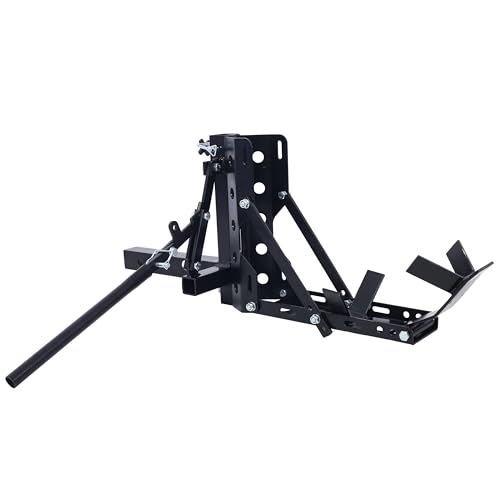
800-lb Adjustable Motorcycle Tow Dolly offers the same 800-pound capacity and 4-3/8-inch maximum tire width as ECOTRIC 800-lb Motorcycle Tow Dolly, with a crank handle for adjusting to different front-wheel sizes. The included locking straps secure the front wheel, and the mount is designed for a 2-inch receiver. It suits buyers prioritizing adjustable stand height for varying wheel sizes within that tire-width limit. The maker does not distinguish its steel construction or color, so avoid choosing it on those assumptions; confirm the exact stand adjustment range and vehicle compatibility before towing.
Bottom line: Pick this if crank adjustment is central to your fit decision and your wheel meets the width limit.
Black Widow 400-lb Aluminum Hitch Carrier

Black Widow 400-lb Aluminum Hitch Carrier is a hitch carrier, not a front-wheel tow dolly: the motorcycle rolls up a ramp onto the carrier instead of being towed with a wheel on the ground. Its aluminum construction supports up to 400 pounds and fits Class III or IV 2-inch receivers. The ramp can be installed on either side and folds flat for storage; an anti-rattle device is included, while tie-down straps are sold separately. This option suits a bike within its capacity when roll-on loading is preferred.
Bottom line: Choose this for ramp-based loading when the bike is within the 400-pound limit.
How to choose a motorcycle tow hitch dolly
Start with the bike’s loaded weight, front-tire width and the towing vehicle’s receiver rating. The two tow dollies here are designed for 2-inch receivers, support up to 800 pounds and accept tires up to 4-3/8 inches wide. A carrier’s capacity is not a substitute for the vehicle’s receiver or tongue-weight rating; use the lowest applicable limit. If the bike exceeds 4-3/8 inches in front-tire width, neither dolly’s fit covers it. Choose a ramp carrier only if you want the bike supported on the carrier rather than towed with its rear wheel rolling on the road.
Measure the bike as loaded, including accessories, and confirm the hitch and motorcycle maker permit the intended arrangement before travel.
Motorcycle tow dolly versus hitch carrier
A tow dolly and a hitch carrier transport a motorcycle differently, so choose by wheel position and loading method. A front-wheel dolly clamps the front wheel while the rear wheel remains on the road; a ramp carrier supports the bike on the hitch-mounted platform. The two dolly options in this group specify an 800-pound maximum, while the ramp carrier specifies 400 pounds. This table summarizes the type distinction and capacity; it does not establish fit for a particular bike or vehicle.
| Type | How the bike is carried | Capacity in this group |
|---|---|---|
| Front-wheel tow dolly | Front wheel secured; rear wheel on road | Up to 800 lb |
| Ramp hitch carrier | Bike rolls onto and rides on platform | Up to 400 lb |
Use the dolly only when the motorcycle’s manual allows the rear wheel to roll during towing. When it does not, a carrier that supports the whole motorcycle may be the better type, subject to its weight and fit limits.
Check tire fit, receiver size and load limits
Measure the widest point of the front tire before selecting a dolly; the maximum for both tow dollies is 4-3/8 inches. A 2-inch receiver is a separate requirement, not proof that the vehicle can carry the load. Receiver capacity and tongue-weight limits can differ by vehicle and hitch, and the loaded motorcycle plus carrier or dolly hardware must stay within the applicable limits. For the ramp carrier, the 400-pound maximum is the relevant stated load ceiling, and straps are sold separately. Check strap compatibility and the tie-down points before travel, and confirm the actual hitch rating on the vehicle and receiver.
Safe towing and loading basics
Before towing, confirm the motorcycle maker permits rear-wheel-down towing; some motorcycles have drivetrain or lubrication constraints that make this method unsuitable. Keep the bike secured at the dolly’s front-wheel restraint and use the straps as directed, while checking that no controls or cables are pinched. For a ramp carrier, the bike must be within the 400-pound limit and secured with suitable tie-downs; the included anti-rattle device does not replace those restraints. Load on stable, level ground and keep people clear of the ramp and bike’s fall path. Recheck restraints after a short distance and at stops, and stop if the motorcycle shifts or a strap loosens.
Frequently Asked Questions
Can a motorcycle tow dolly fit a wide front tire?
The two tow dollies here specify a maximum front-tire width of 4-3/8 inches. Measure the tire at its widest point; wider tires fall outside that stated fit.
Does a 2-inch receiver guarantee the hitch can carry the bike?
No. Receiver opening size does not establish load capacity; check the vehicle and hitch ratings and stay within the lowest applicable limit.
Can every motorcycle be towed with its rear wheel down?
No. Some motorcycles have drivetrain or lubrication requirements that rule out rear-wheel-down towing, so confirm the towing method in the motorcycle manual before using a dolly.
Are tie-down straps included with a ramp carrier?
The Black Widow carrier’s tie-down straps are sold separately. Its anti-rattle device is included, but it does not secure the motorcycle in place of tie-downs.
How much weight can the tow dollies hold?
Both tow dolly options specify a maximum capacity of 800 pounds. Count the motorcycle’s loaded weight and also respect the vehicle and receiver limits.