
Mitchell 300 Spinning Reel: Sizes and Models Compared

For most anglers seeking a Mitchell 300 spinning reel, Mitchell 300 Spinning Reel is the closest match because it pairs 180 yards of 12-pound line capacity with a multi-disk drag. Choose Mitchell 308 Spinning Reel instead if your setup calls for 130 yards of 8-pound line; the PRO model has a distinct hybrid carbon-fiber drag.
We earn a commission if you buy through links on this page. As an Amazon Associate I earn from qualifying purchases. Products are compared on manufacturer specifications, not hands-on testing.
- Best overall: Mitchell 300 Spinning Reel – Its 180-yard/12-pound capacity and multi-disk drag suit a broad range of general spinning setups.
- Best for lighter line: Mitchell 308 Spinning Reel – The 308 spool is sized for 130 yards of 8-pound line.
| Product | Best for | Line capacity | Weight | Shop |
|---|---|---|---|---|
| Mitchell 300 Spinning Reel | General spinning setups | 180 yd / 12 lb | 0.79 lb | Check Price on Amazon |
| Mitchell 300-C Reel | Compact 300 capacity | 180 yd / 12 lb | 0.44 lb | Check Price on Amazon |
| Mitchell 308 Spinning Reel | Eight-pound line | 130 yd / 8 lb | 0.70 lb | Check Price on Amazon |
Mitchell 300 spinning reels
Compare the capacity and drag differences before matching a reel to your rod and line.
Mitchell 300 Spinning Reel
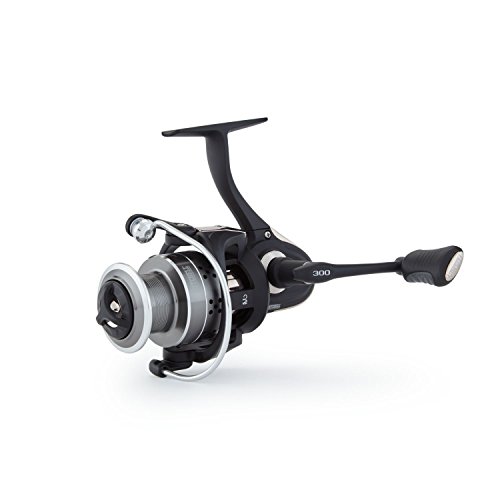
The 300 combines a 180-yard capacity at 12-pound test with a multi-disk drag, making it the most broadly specified option in this group. Its body and rotor use advanced polymer, while the spool and handle are aluminum; the reel has eight bearings and instant anti-reverse. The maker says its Bail Halo strengthens the rotor. This configuration suits anglers who want a higher-capacity spool than the 308 version. The capacity is the key limitation for lighter-line setups that specifically need an 8-pound spool.
Bottom line: Choose this for a general setup built around 12-pound line.
Mitchell 300-C Reel

The 300-C has the same 180-yard/12-pound line capacity and multi-disk drag as the standard 300, but its weight is lower at 0.44 pound. It also uses an advanced polymer body and aluminum spool and handle, with eight bearings and instant anti-reverse. That makes its weight the main distinction for anglers comparing these two 300-size options. Its capacity remains the same as the standard model, so choosing it does not provide a smaller line-capacity match for an 8-pound setup.
Bottom line: Pick this if lower listed reel weight is your priority.
Mitchell 308 Spinning Reel

The 308 is the only option here with a 130-yard capacity at 8-pound test, making its smaller line capacity the clear fit distinction. It retains the shared 300-series features of eight bearings, instant anti-reverse, an advanced polymer body, aluminum spool and handle, and multi-disk drag. The maker says the Bail Halo adds strength. This reel fits anglers planning around lighter 8-pound line. Its capacity is lower than the 180-yard/12-pound models, so it is less suitable when a longer spool of heavier line is needed.
Bottom line: Pick this for a setup planned around 8-pound line.
How to choose a Mitchell 300 spinning reel
Start with line capacity, then decide whether drag construction or reel weight matters more. A spool marked 180 yards at 12-pound test is a different match from one marked 130 yards at 8-pound test; match the reel to the line you intend to fill it with, rather than treating the model number as a capacity rating. The 300PRO is differentiated by its hybrid carbon-fiber drag, while the other three models list multi-disk drag. Within the 180-yard group, compare listed reel weights if weight is important to your rod balance. Rod power, lure weight and target fish should also guide line choice; a mismatch can make casting and fish control harder.
| Need | Capacity cue | Drag cue |
|---|---|---|
| 12-pound line | 180 yd | Multi-disk |
| 8-pound line | 130 yd | Multi-disk |
| Carbon-fiber drag | Confirm capacity | Hybrid carbon fiber |
What reel line capacity means
Line capacity tells you how much line of a given test fits on a spool, and capacity changes with line diameter as well as pound test. Monofilament, fluorocarbon and braided line of the same test can have different diameters, so the printed yardage is not a universal braid capacity. As a practical rule, choose a reel with at least the planned amount of line plus reserve for casting and fish runs; if your setup requires 150 yards of 12-pound monofilament, a 130-yard capacity is a mismatch. Avoid packing line to the spool lip: leave a small gap to reduce loose coils and line spilling during casts.
How spinning reel drag and anti-reverse work
A spinning reel drag releases line under tension, helping prevent a hard-running fish from breaking line; set it below the line’s breaking strength rather than locking it down. A common starting point is about one-quarter to one-third of the line’s rated strength, then adjust for knots, rod action and the fish. Instant anti-reverse prevents backward handle movement, while drag controls line release; they perform different jobs. The multi-disk designs and the PRO’s hybrid carbon-fiber drag are not interchangeable descriptions, so prioritize the drag type if you have a specific preference. Check drag periodically for smooth release and rinse reels after saltwater use.
Match the reel to rod and line
Balance matters more than a model label: mount the reel on the rod and check that the outfit feels stable when held at the grip. Use the rod’s line and lure ratings as limits, since a reel capacity does not establish what the rod can safely cast. A 12-pound capacity model is a stronger fit when your plan specifically calls for that line size; choose the 8-pound-capacity 308 when that is your target. Do not assume the 300PRO shares another model’s spool capacity. Confirm its spool capacity against your intended line before ordering, then fill the spool evenly to prevent line lay problems.
Frequently Asked Questions
How much line does a Mitchell 300 hold?
Two 300 models here hold 180 yards of 12-pound line, while the 308 holds 130 yards of 8-pound line. Actual capacity changes with line material and diameter, so use the capacity matched to the line type you plan to spool.
Can I use braided line on a Mitchell 300?
Braided line can be used on spinning reels, but the yardage for monofilament test does not translate directly to braid. Braid is thinner for a given strength, so spool capacity can be higher; use backing or a braid-ready spool surface to prevent slippage.
How should I set spinning reel drag?
A common starting point is one-quarter to one-third of the line’s rated breaking strength. Reduce that setting for weak knots or a light rod, and check it with a scale rather than relying only on hand feel.
What is the purpose of instant anti-reverse?
Instant anti-reverse limits backward handle movement so the reel engages without a noticeable reverse turn. It does not set line tension; the drag handles line release under load.
Does the 300PRO use the same drag as the standard 300?
No; the 300PRO is identified with a hybrid carbon-fiber drag, while the other models here use a multi-disk drag. Choose based on the drag construction you prefer, and confirm the PRO spool capacity for your line plan.