
Noise Cancelling for Dogs: 4 Ear Covers Compared

For noise cancelling for dogs, SONOZER Dog Ear Muffs, Medium is the clearest choice for people seeking shell-style earmuffs, with a maker-claimed 35 dB reduction rating. Choose a fabric wrap instead if you want a soft, stretchy cover rather than rigid ear cups.
Dog ear covers can reduce sound exposure, but they do not make loud environments safe; moving a dog away from the noise remains important.
We earn a commission if you buy through links on this page. As an Amazon Associate I earn from qualifying purchases. Products are compared on manufacturer specifications, not hands-on testing.
- Best overall: SONOZER Dog Ear Muffs, Medium – Shell-style earmuffs with a maker-claimed 35 dB noise reduction rating.
- Best for a 30 dB rating: Dog Ear Muffs, Bell Design, Medium – Shell-style earmuffs with a maker-claimed 30 dB NRR.
- Best for grooming: Happy Hoodie Original, Medium/Large – A stretchy compression band made as a grooming tool.
| Product | Best for | Design | Size | Shop |
|---|---|---|---|---|
| SONOZER Dog Ear Muffs, Medium | Rated earmuffs | Shell-style earmuffs | Medium | Check Price on Amazon |
| Dog Ear Muffs, Bell Design, Medium | Bell design | Shell-style earmuffs | Medium | Check Price on Amazon |
| Happy Hoodie Original, Medium/Large | Grooming sessions | Stretchy compression band | Medium/Large; 13–18 in. head girth | Check Price on Amazon |
| Dog Ear Cover, Grey, Small | Small fabric wrap | Breathable fabric wrap | Small; 10–15 in. head circle | Check Price on Amazon |
Noise cancelling for dogs
Compare fabric wraps and shell-style earmuffs by design, fit, and noise-reduction claims.
SONOZER Dog Ear Muffs, Medium

These shell-style earmuffs are the only option here with a 35 dB noise-reduction claim. The maker describes high-density sound-absorbing cotton and an ABS shell, with intended uses that include fireworks, thunder, travel, and grooming. Choose this style if you want ear cups rather than a fabric band. A numeric claim does not establish how much noise a particular dog will experience through a shifting or poorly fitted seal, so check that the cups stay in place without pressing uncomfortably.
Bottom line: Choose these if you want shell-style earmuffs and value the 35 dB claim.
Dog Ear Muffs, Bell Design, Medium

The bell accent distinguishes these shell-style earmuffs, which carry a 30 dB NRR claim. The maker names fireworks, thunder, and vacuum noise as use cases, making them an option for buyers seeking rigid ear cups with a lower numeric claim than SONOZER Dog Ear Muffs, Medium. The size is medium, but a label alone cannot confirm a secure fit on every dog. Check the head circumference range before ordering, and remove the earmuffs if the dog shows distress or the cups shift.
Bottom line: Choose these if the bell accent appeals and a 30 dB claim suits your needs.
Happy Hoodie Original, Medium/Large
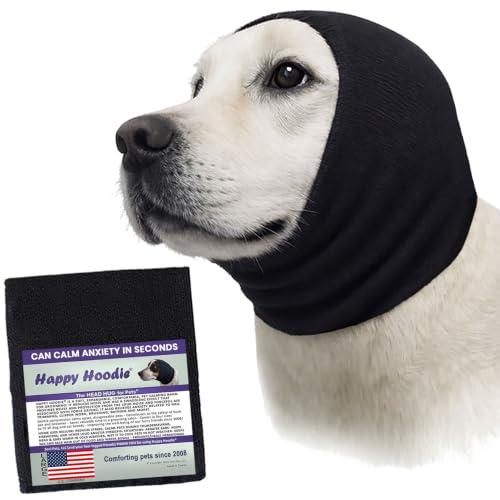
Unlike the shell-style options, this is a stretchy compression band made as a grooming tool. The maker says to place the ears down over the ear canals and secure them with the band for noise reduction; the medium/large size fits a 13–18 inch head girth. It suits grooming routines and buyers who prefer fabric over ear cups. No numeric attenuation rating is provided, so choose another style if comparing by a decibel figure is essential.
Bottom line: Choose this for a stretchy grooming band when a numeric rating is not essential.
Dog Ear Cover, Grey, Small

This breathable fabric wrap offers a 10–15 inch head-circle range and is the smaller-size alternative to the compression band in Happy Hoodie Original, Medium/Large and shell-style earmuffs. The maker says it is intended to mute storm, fireworks, and grooming-tool noise. The design can also keep long ears out of food and water bowls. Because it is a soft wrap rather than a rigid cup, choose another style if you specifically want shell-style ear protection or a numeric noise rating.
Bottom line: Choose this if your dog fits the small circumference range and you want a fabric wrap.
How to choose noise cancelling for dogs
Choose by design first: shell-style earmuffs cover the ears with cups, while fabric wraps use a stretchy band or hood. A maker-claimed decibel figure can help compare product claims, but it cannot promise the same reduction on every dog because fit and movement affect coverage. For shell-style earmuffs, prioritize cups that stay centered over both ears without pinching; for wraps, ensure the fabric covers the ears without restricting breathing or movement. Noise covers do not make close exposure to fireworks, machinery, or other loud sounds safe. If the dog remains distressed or the cover shifts, move to a quieter place rather than relying on the accessory alone.
Dog ear cover sizing and fit
Measure around the head as the product specifies, then compare that number with its circumference range: the fabric options here give ranges of 10–15 inches and 13–18 inches. Those ranges overlap, so use the actual measurement rather than assuming that a small, medium, or large label means the same thing across designs. A secure fit should cover both ears and remain in place when the dog moves, without pressing hard or restricting normal jaw movement. A dog that paws repeatedly at the cover, shakes it loose, or appears uncomfortable needs a break and a fit reassessment. For the medium earmuffs, confirm the suitable circumference before ordering.
Fabric wraps versus dog earmuffs
Fabric wraps are soft and flexible; shell-style earmuffs have ear cups and may provide a numeric noise claim. Those are different designs, not interchangeable ratings: the two fabric options do not carry a decibel figure here, while the two earmuff models make 35 dB and 30 dB claims. The table compares the available design and fit data; it does not establish that one dog will receive a particular reduction.
| Design | Available fit data | Noise claim |
|---|---|---|
| Stretchy fabric band | 13–18 in. head girth | No numeric rating |
| Fabric ear wrap | 10–15 in. head circle | No numeric rating |
| Shell-style earmuffs | Medium; confirm fit | Maker claims of 30 or 35 dB |
Whichever style you choose, practice putting it on in a quiet setting and supervise the dog while it is worn. A cover that moves off the ears cannot provide consistent coverage.
Using dog noise covers safely
Use an ear cover as one part of noise management, not as a reason to keep a dog beside a loud source. Distance and an interior room with closed windows can reduce exposure during storms or fireworks, while a cover may offer additional sound buffering. Introduce the cover briefly in a calm setting and reward relaxed behavior; stop if the dog struggles, overheats, or cannot settle. Never leave a dog unattended in a cover that could slip or catch. During grooming, keep the dog supervised and ensure the cover does not interfere with breathing, vision, or safe handling.
Frequently Asked Questions
Do dog earmuffs block all loud noise?
No, earmuffs do not block all sound or guarantee a safe exposure level. Move the dog away from loud sources such as fireworks or machinery, even when using a cover.
How should I measure a dog for an ear wrap?
Use a soft tape measure around the head in the position the manufacturer specifies, then match the measurement to that model’s range. The fabric wraps here give ranges of 10–15 inches and 13–18 inches, so measure rather than relying on size labels.
Can a dog wear ear protection all day?
Do not assume a cover is suitable for all-day wear; supervise the dog and remove it if discomfort, distress, or overheating appears. Frequent checks are especially important if the cover shifts or the dog paws at it.
Should dogs wear ear covers during grooming?
A cover may be used during grooming if it fits securely and does not interfere with breathing or safe handling. Keep the dog supervised, and pause if it struggles or the cover moves away from the ears.