
Best Wading Staff for Fly Fishing: 4 Models Compared

The QualyQualy suits the most anglers because its height adjusts from 47 to 56 inches, letting you set reach to your stance and water depth. Choose a different staff if a lighter packed setup or a shorter folded length matters more than adjustable reach.
A wading staff is a support pole used to probe the riverbed and steady your steps; the right choice depends on fit, footing and how you carry it between crossings.
We earn a commission if you buy through links on this page. As an Amazon Associate I earn from qualifying purchases. Products are compared on manufacturer specifications, not hands-on testing.
- Best overall: QualyQualy Adjustable Hybrid Staff – Its 47–56-inch adjustment range accommodates different reach preferences.
- Best for compact carry: Aventik 55-Inch 7075 Aluminum Staff – It folds to 12 inches and uses 7075 aluminum.
- Best for lightweight aluminum: Troutbound 55.5-Inch Aluminum Staff – Its 6061 aluminum construction weighs 0.685625.
| Product | Best for | Extended length | Folded length | Construction | Shop |
|---|---|---|---|---|---|
| QualyQualy Adjustable Hybrid Staff | Adjustable reach | 47–56 in | — | Carbon fiber / T7075 aluminum | Check Price on Amazon |
| Aventik 55-Inch 7075 Aluminum Staff | Compact packing | 55 in | 12 in | 7075 aluminum | Check Price on Amazon |
| Troutbound 55.5-Inch Aluminum Staff | 6061 aluminum | 55.5 in | 15.5 in | 6061 aluminum | Check Price on Amazon |
| Hammers 52-Inch Collapsible Staff | Contoured grip | 52 in | 12 in | Aluminum alloy | Check Price on Amazon |
Wading Staffs for Fly Fishing
Compare reach, packed size and construction to choose a staff that suits your height and typical river access.
QualyQualy Adjustable Hybrid Staff

The 47–56-inch adjustment range is the key difference here, giving anglers more flexibility to match staff reach to their height and stance. The hybrid body pairs carbon-fiber upper sections with T7075 aluminum lower sections, and the staff has a cork grip, tungsten tip, braided steel core and PVC sleeve. The maker says its dual-lock system combines a flip lock with a spring-loaded button. This option suits anglers who want adjustable reach and a hybrid build; its 47-inch minimum may still be too long for a compact carry preference.
Bottom line: Pick this if adjustable reach matters more than the shortest packed size.
Aventik 55-Inch 7075 Aluminum Staff

The 12-inch folded length makes this the most compact carry choice among the staffs with a folded length. Its four sections extend to 55 inches, with an EVA handle and tungsten tip. The maker says its coated elastic cord supports one-handed assembly and that the aluminum is corrosion resistant. The staff suits anglers who prioritize pack space and want a fixed 55-inch reach. Its length is not adjustable, so anglers who need a shorter or longer reach should choose an adjustable model instead.
Bottom line: Choose this when minimizing folded length is the priority.
Troutbound 55.5-Inch Aluminum Staff
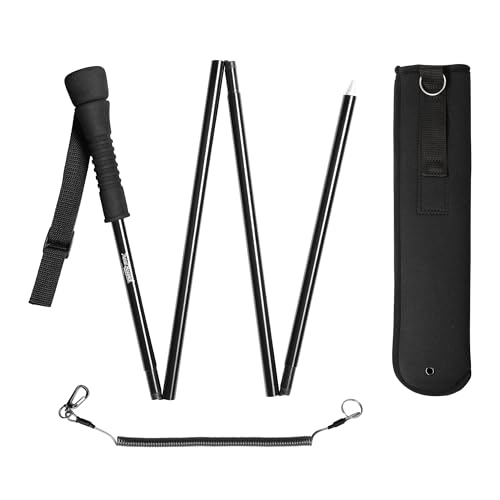
The 6061 aluminum build sets this staff apart from the 7075 aluminum and hybrid options. It extends to 55.5 inches and folds to 15.5 inches, with an included clip-on lanyard for carrying. Its rugged tip wedges between rocks or sinks into soft bottoms. This is a fit for anglers who want a conventional aluminum staff with a lanyard and a little more reach than a 55-inch model. The fixed length offers less flexibility than an adjustable staff.
Bottom line: Pick this for a fixed 55.5-inch reach and 6061 aluminum construction.
Hammers 52-Inch Collapsible Staff
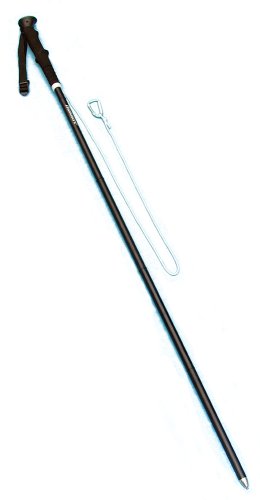
The contoured EVA grip and wrist strap distinguish this 52-inch staff, which uses 3/4-inch aluminum-alloy tubing. Its bungee-corded sections fold to 12 inches, and the product features identify a carbide-steel tip. The maker says the staff opens with one hand when needed. This option suits anglers who prefer a contoured grip and wrist strap with a compact folded profile. Its 52-inch fixed reach is shorter than the 55- and 55.5-inch staffs, so compare reach against your height and wading stance before choosing.
Bottom line: Choose this if the contoured grip and wrist strap suit your carry and handling preferences.
How to Choose a Wading Staff for Fly Fishing
Choose a staff by matching reach to your height and the water you wade, then consider packed length and tip. A longer staff can reach farther ahead, while a shorter one is easier to maneuver in tight brush or shallow crossings. Adjustable staffs accommodate different stances, but add a locking mechanism that must be fully engaged before leaning on the pole. Fixed-length designs avoid that adjustment step. A metal tip can bite into a rocky or soft riverbed; carbide and tungsten are hard tip materials, but neither makes every surface secure. Wading staffs are aids, not substitutes for stable footing, a cautious pace or turning back when current is beyond your comfort. If you expect to rely heavily on the staff, make sure its grip and length let you keep your arm comfortably bent.
Staff Length and Riverbed Fit
Start with a staff that reaches the riverbed without forcing you to hunch or lock your elbow. Reach needs change with your height, water depth and whether you probe ahead from upstream or downstream; try the staff in your usual stance where possible. A fixed 52-inch staff gives less reach than 55- or 55.5-inch options, while a 47–56-inch adjustable design can be set to suit the crossing. Longer is not automatically safer: a staff that is cumbersome to reposition can hinder careful steps. On uneven bottoms, probe each placement before shifting weight, and avoid placing the tip where a fast current can trap it between rocks. Treat any maker-described stability claim as a design feature, not a guarantee against slipping.
Folded Size and Staff Materials
Folded size matters when a staff rides in a pack or hangs from a lanyard between crossings. A folded length of 12 inches is easier to stow than 15.5 inches, but the difference may matter less if you carry the staff in hand. Aluminum offers a familiar rigid-tube construction; the models here use 6061, 7075 or an aluminum alloy. One option combines carbon-fiber upper sections with aluminum lower sections. Saltwater exposure calls for rinsing and drying metal gear after use, even when a maker describes a material as corrosion resistant. Before a trip, check that sections extend fully and any locks or joints are secure. Do not assume a folded staff will stay attached to a pack unless its carry setup is secured.
Safe Wading Staff Technique
Use a staff as a third point of contact, not as a fixed anchor in strong current. Plant it upstream and move one foot at a time only after checking the bottom; keep a wider stance and avoid crossing your feet. A staff tip wedged between rocks can become difficult to free if the current loads it, so do not lean hard on a stuck pole. Wading boots with felt or rubber soles behave differently across algae-covered rock, gravel and mud; no single sole is ideal on every riverbed. Wear a properly fitted wading belt with chest waders, and avoid water deep enough to compromise your balance or fill the waders. If footing becomes uncertain, retreat to shallower water rather than relying on the staff to hold you.
Frequently Asked Questions
How long should a fly-fishing wading staff be?
Choose a length that reaches the bottom from your normal stance while letting you keep a slight bend in your elbow. Water depth and arm reach change the fit, so an adjustable staff is useful when one fixed length feels too short or cumbersome.
Should I use a wading staff in fast water?
A staff can add a third contact point, but it cannot make unsafe current safe. Probe ahead, move one foot at a time, and turn back if the current pushes your legs or makes each step uncertain.
Which wading staff tip works on rocks?
Carbide and tungsten are hard tip materials used for contact with rocky bottoms, but placement still matters. Test each plant before shifting weight, and avoid leaning on a tip wedged between rocks in moving water.
How do I maintain a wading staff after saltwater use?
Rinse salt from the staff with fresh water and dry it before storage. Check joints, locks, cord and tip before the next trip, since grit or corrosion can interfere with assembly.
Is a folding wading staff secure enough to lean on?
A folding staff should be fully extended and every section or lock engaged before you put weight on it. Do not use a pole with a loose joint, and treat a staff as balance support rather than a load-bearing anchor.