
Singer Stitch Quick: Portable Mending Compared

For a portable sewing machine that can be used handheld or on a tabletop, choose SINGER Stitch Quick+; its two-thread stitching suits fabric repairs, while the other options focus on tagging, buttons, or a different mini-machine design. Choose a button fastener or stitch gun instead when you need a quick fastening rather than a sewn seam.
We earn a commission if you buy through links on this page. As an Amazon Associate I earn from qualifying purchases. Products are compared on manufacturer specifications, not hands-on testing.
- Best overall: SINGER Stitch Quick+ – Two-thread stitching and handheld or tabletop use make it the closest fit for portable fabric mending.
- Best for a simple start: Handheld Mini Sewing Machine – Its one-button start and battery or USB power address basic repair needs.
- Best for button swaps: SINGER Button Fast with 60 Fasteners – It attaches single-, two-, and four-hole buttons without sewing.
| Product | Best for | Use | Power or stitch method | Size | Shop |
|---|---|---|---|---|---|
| SINGER Stitch Quick+ | Portable fabric mending | Fabric mending | Cordless, two-thread stitching | 9.7 × 4.1 × 6 in. | Check Price on Amazon |
| Handheld Mini Sewing Machine | Simple quick repairs | Fabric mending and crafts | Battery or USB power; one-button start | 3.36 × 1.98 × 2.25 in. | Check Price on Amazon |
| Handheld Stitch Gun | Temporary fabric holds | Quick fabric fastening | Fine needle and fasteners | — | Check Price on Amazon |
| SINGER Button Fast with 60 Fasteners | Small button repairs | Button replacement | Press trigger and fasteners | 5 × 4 × 1 in. | Check Price on Amazon |
| SINGER Button Fast Bundle | Button repair supplies | Button replacement | Press trigger and fasteners | 8 × 1.97 × 0.04 in. | Check Price on Amazon |
Singer Stitch Quick and quick mending tools
Match the tool to the repair: sewn seams, removable tags, or replacement buttons call for different mechanisms.
SINGER Stitch Quick+
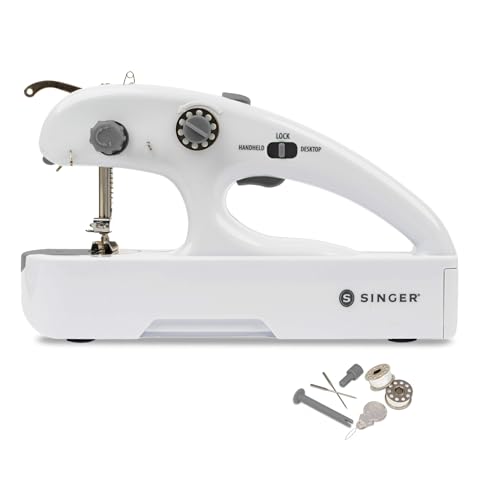
Unlike the button and tagging tools here, SINGER Stitch Quick+ is a cordless sewing machine with handheld and tabletop modes. Its two-thread stitching is intended for clothing repairs, alterations, and creative projects, and a toggle selects handheld, desktop, or lock mode. At 9.7 inches long, 4.1 inches wide, and 6 inches high, it is compact for storage or travel. The limitation is that it is a small mending machine, not a full-size sewing setup; people handling long seams or larger projects should consider whether its portable format suits the work.
Bottom line: Pick it for portable sewn repairs when you want both handheld and tabletop operation.
Handheld Mini Sewing Machine

For a compact machine with a one-button start, Handheld Mini Sewing Machine offers a different option from the Stitch Quick+ and its handheld/tabletop toggle. The features describe sewing clothing, curtains, patches, and craft projects, with battery or USB power. Its dimensions are 3.36 inches long, 1.98 inches wide, and 2.25 inches high. This can suit someone prioritizing a small form factor and a simple start; the features do not give a stitch-count or fabric-thickness limit, so confirm those requirements if you plan to work on thick layers.
Bottom line: Choose it for a small machine and straightforward controls for basic repairs.
Handheld Stitch Gun

Unlike a sewing machine, Handheld Stitch Gun uses a fine needle and fasteners to hold fabric, making it a quick-fix tool rather than a conventional stitched seam. The package includes six needles plus 1,000 black and 1,000 white fasteners; the uses include hems, patches, denim, curtains, and quilts. Its fasteners are removable, which can help with temporary positioning or urgent fixes. Choose another tool for a permanent sewn seam, since a fastening gun does not make the two-thread locked stitch described for SINGER Stitch Quick+.
Bottom line: Pick it for fast, removable fabric fastening rather than sewn seams.
SINGER Button Fast with 60 Fasteners
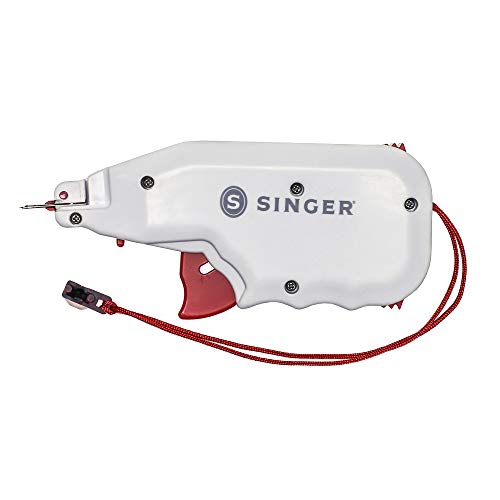
For a button repair rather than general fabric sewing, SINGER Button Fast with 60 Fasteners attaches single-, two-, and four-hole buttons with a press-trigger tool and fasteners. It includes 60 fasteners and 12 buttons, making this the smaller button-focused set compared with SINGER Button Fast Bundle. A tethered needle cap covers the needle when the tool is not in use. This tool does not sew a torn seam or hem; choose it when replacing a compatible button is the specific job, and keep the cap in place during storage.
Bottom line: Choose it for replacing buttons without sewing a seam.
SINGER Button Fast Bundle

For button repairs that need more included fasteners and buttons, SINGER Button Fast Bundle bundles the Button Fast tool with three replacement fastener packs, 36 buttons, and 360 tacks. Like SINGER Button Fast with 60 Fasteners, it attaches single-, two-, and four-hole buttons without stitching and has a tethered needle cap for covering the needle. The larger supply makes it better suited to repeated button replacement than to varied mending. It will not create stitched hems or close fabric seams, so a sewing machine is the more appropriate tool for those jobs.
Bottom line: Pick it for repeated no-sew button replacements with extra supplies.
How to choose a quick clothing repair tool
Choose by the repair itself: a sewing machine makes stitches, while a fastener tool attaches a button or temporarily holds fabric. A sewn seam is the better match for a tear or hem that needs connected stitches; a button tool is designed for attaching compatible buttons. A stitch gun uses a needle and fasteners, so it is a different kind of hold from sewing. For repairs spanning more than a few inches, or for layered fabric, check that the machine can feed and handle the material before starting. If your only goal is replacing a button, a sewing machine adds an unnecessary step; if you need an actual seam, a button fastener cannot substitute for one.
How to sew hems and seams with a mini machine
Use a test scrap before sewing the garment, especially when working with knit fabric or multiple layers. Common garment seams use a 5/8-inch seam allowance, but the needed allowance depends on the pattern and edge finish; a quick repair does not automatically need that much. Pin or clip the fabric layers so they do not shift, and keep fingers clear of the needle path. Thick denim hems can stack several layers at the seam crossing, which may exceed a small machine’s practical capacity. Work slowly over bulky spots rather than pulling fabric through, since pulling can skew the seam or strain the needle.
How button fasteners differ from sewing
No-sew button tools secure buttons with a fastener passed through fabric, while ordinary sewing attaches buttons with thread. Match the fastener tool’s button compatibility to the button’s hole pattern: the Button Fast options here list single-, two-, and four-hole buttons. Stitch-gun fasteners serve another purpose and are removable, so they should not be treated as permanent sewing. Keep any exposed needle capped when the tool is stored, and use it away from children because a fine needle can puncture skin. For a button that carries heavy strain, such as on a tight waistband, inspect the attachment before wearing the garment.
Quick repair tool by job
This comparison helps separate seam work from button replacement and temporary holds. Select the function first, then check the fabric thickness and repair location: a tool designed to fasten a button cannot repair a torn seam, and a sewing machine is unnecessary for a button-only replacement.
| Repair need | Tool type | What to confirm |
|---|---|---|
| Torn seam or sewn hem | Portable sewing machine | Fabric and layer capacity |
| Replace a button | No-sew button fastener | Button hole pattern |
| Quick removable fabric hold | Stitch gun | Fastener suitability for fabric |
Frequently Asked Questions
Can a handheld sewing machine sew denim?
A handheld machine may manage light denim, but stacked hems are much thicker than a single layer and can strain a small needle and feed mechanism. Test on a scrap of the same layer count before sewing the garment.
How do two-thread stitches differ from fasteners?
Two-thread stitching forms a sewn seam from thread, while a stitch gun inserts a separate fastener through fabric. Use stitches when you need a sewn seam and a removable fastener when a temporary hold is the goal.
Are no-sew button fasteners suitable for every button?
The Button Fast tools here are specified for single-, two-, and four-hole buttons. Check that the button’s hole pattern is compatible, and inspect the attachment before wearing a button under heavy strain.
How can I avoid puckered fabric when mending?
Keep the fabric flat and aligned, and test the machine on a matching scrap before the garment. Puckering is more likely when layers shift or stretchy fabric is pulled while stitching.
What safety steps matter with a handheld mending tool?
Keep fingers clear of the needle path and cover exposed needles when storing tools with caps. A fine needle can puncture skin, so keep the tools and loose fasteners away from young children.