
Best Glue for Inflatable Raft Repair: 4 Options Compared

For most PVC inflatable rafts, Seamax 2-Part PVC Marine Adhesive Kit is the strongest match because it is a two-part marine adhesive made for PVC inflatable boats and rafts. Choose a different option if your raft is Hypalon, or if you only need to seal a minor puncture without a separate patch.
We earn a commission if you buy through links on this page. As an Amazon Associate I earn from qualifying purchases. Products are compared on manufacturer specifications, not hands-on testing.
- Best overall: Seamax 2-Part PVC Marine Adhesive Kit – A two-part marine adhesive kit made for PVC inflatable boats and rafts.
- Best for Hypalon: Seamax 2-Part Hypalon Marine Adhesive Kit – A two-part adhesive specifically designed for Hypalon fabric.
- Best for minor damage: AquaPro Liquid Patch – Liquid patch seals minor punctures and cuts without a separate stick-on patch.
| Product | Best for | Compatible material | Repair type | Shop |
|---|---|---|---|---|
| Seamax 2-Part PVC Marine Adhesive Kit | PVC raft repairs | PVC | Two-part adhesive | Check Price on Amazon |
| Seamax 2-Part Hypalon Marine Adhesive Kit | Hypalon raft repairs | Hypalon | Two-part adhesive | Check Price on Amazon |
| AquaPro Liquid Patch | Minor punctures | Inflatable gear | Liquid patch; mesh for larger tears | Check Price on Amazon |
| Heavy Duty PVC Boat Repair Kit | Larger PVC patches | PVC | Adhesive and PVC patches | Check Price on Amazon |
Glue for Inflatable Raft Repair
Match the adhesive to your raft’s fabric, then choose a repair format suited to the damage.
Seamax 2-Part PVC Marine Adhesive Kit

For PVC raft repairs, this 280 g two-part marine adhesive kit is the most direct fit among these options. It is made for PVC inflatable boats, rafts, dinghies, kayaks, and SUPs, and includes application tools. The two-part format suits buyers looking for an adhesive rather than a liquid patch that seals small damage on its own. Its main limitation is material compatibility: choose a Hypalon-specific adhesive for a Hypalon raft, and confirm your raft’s fabric before starting a repair.
Bottom line: Choose this for a PVC raft when you want a two-part marine adhesive kit.
Seamax 2-Part Hypalon Marine Adhesive Kit

For Hypalon fabric, this 280 g two-part marine adhesive is the material-specific choice; it also includes a selection of repair material colors. The product is intended for Hypalon inflatable boats, rafts, dinghies, SUPs, towables, and other Hypalon watercraft. That fabric-specific purpose separates it from the PVC adhesives here. Its limitation is equally important: it is not the right pick for a PVC raft, so identify the raft material before choosing an adhesive.
Bottom line: Choose this when your raft is made from Hypalon fabric.
AquaPro Liquid Patch
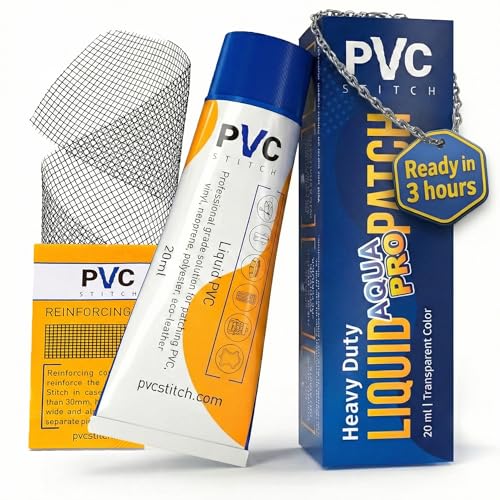
For a minor puncture or cut, this liquid patch seals damage without requiring a separate stick-on patch. The manufacturer says minor repairs are ready in 3 hours, with 12 hours needed for full strength on high-pressure gear. For tears or split seams over 1.2 inches, the kit calls for reinforcing mesh; apply the liquid patch over the mesh openings. This is a different repair format from two-part adhesive kits, and it is not the choice for Hypalon-specific bonding.
Bottom line: Choose this for a minor puncture when a liquid seal is suitable.
Heavy Duty PVC Boat Repair Kit

For a wider PVC repair, this kit pairs adhesive with oversized 10 × 15 cm patches, giving it a patch-based approach rather than a liquid-only seal. It is intended for PVC inflatable boats, rafts, kayaks, paddle boards, and other PVC inflatables, and includes tools and gloves. The kit includes two 30 ml adhesive containers. The limitation is material: the compatibility is PVC, so choose a Hypalon-specific adhesive if that is your raft’s fabric.
Bottom line: Choose this for a PVC raft repair where a large patch is useful.
How to choose raft repair glue by fabric
Choose adhesive by raft fabric first: PVC and Hypalon (also called CSM) use different bonding systems, and a glue intended for one should not be assumed to bond the other. PVC is common on recreational inflatables; Hypalon is a synthetic rubber-coated fabric used on some boats. Check the raft’s manual, manufacturer label, or repair information to identify the material before buying. For PVC, select a PVC-compatible marine adhesive or patch kit; for Hypalon, select an adhesive made for Hypalon. If the material cannot be identified, confirm it with the raft maker before applying glue. A correctly matched adhesive matters more than choosing between a liquid patch and a two-part kit.
Choose a repair method by damage size
Small punctures and broad tears call for different repair formats. A liquid patch can seal minor punctures or cuts without a separate patch; for a tear or split seam over 1.2 inches, the AquaPro instructions call for reinforcing mesh. A fabric patch is generally the more appropriate format for larger damage because it bridges the damaged area, but the adhesive and patch must suit the raft material. Clean, dry, and deflate the repair area before applying adhesive; trapped air, water, or grime can interfere with bonding. Do not treat a damaged seam, valve, or structural panel as a routine pinhole repair: those locations may need a specialist repair assessment.
This guide matches damage types to repair formats.
| Damage or need | Repair format | Key condition |
|---|---|---|
| Minor puncture or cut | Liquid patch | Use only on compatible fabric |
| Larger tear | Patch or mesh reinforcement | Extend reinforcement beyond damage |
| Unknown raft fabric | Do not apply adhesive yet | Identify PVC or Hypalon first |
Prepare an inflatable raft repair surface
Deflate the raft and work on a clean, dry surface; applying adhesive to a wet or pressurized area can undermine the repair. For a patch repair, round the corners rather than leaving sharp edges, which can catch and peel during flexing. Keep the patch centered over the damaged area and avoid stretching the fabric while bonding it. Two-part adhesives require the components to be combined as directed, while liquid patches are applied as a coating; their working and cure times differ. The AquaPro product gives 3 hours for minor repairs and 12 hours for full strength on high-pressure gear. Keep a repaired raft out of service until the adhesive’s required cure period has passed.
Raft repair mistakes that can weaken a bond
The most consequential mistake is using PVC adhesive on Hypalon, or the reverse; check the fabric before opening a kit. Another is launching before full cure: surface dryness does not necessarily mean the bond has reached working strength, and high-pressure gear may require longer. Keep glue away from flames and use it in a ventilated workspace, since marine adhesives may contain flammable solvents. Avoid applying a patch over dirt, water, or a seam crease. After repair, inflate gradually and check for escaping air with soapy water; bubbles indicate leakage. If the damage is extensive or involves a load-bearing seam, have a qualified raft repairer assess it rather than relying on a small patch.
Frequently Asked Questions
How can I tell whether my raft is PVC or Hypalon?
Check the raft’s material label or owner’s manual, since color alone is not a reliable identification method. PVC and Hypalon require compatible adhesives, so confirm the fabric with the manufacturer if the label is unavailable.
How long should raft repair glue cure before use?
Cure time depends on the adhesive and repair conditions. AquaPro says minor repairs are ready in 3 hours, but high-pressure gear needs 12 hours for full strength; follow the selected adhesive’s cure time before inflating or using the raft.
Can liquid patch repair a large raft tear?
AquaPro calls for reinforcing mesh on tears or split seams over 1.2 inches. Larger or structural damage may need a properly sized fabric patch or professional repair rather than a surface-only seal.
Should an inflatable raft be inflated during repair?
Deflate the raft before applying adhesive so the surface is not under pressure while the bond forms. Keep it deflated through the adhesive’s specified cure period, then inflate gradually and check for leaks before use.
How do I check whether a raft repair is leaking?
After the adhesive has fully cured, inflate the raft gradually and brush soapy water over the repaired area. Growing bubbles indicate escaping air; do not use the raft until the leak is corrected.