
Ultra-Filtered Milk Brands: 4 Bottles Compared

For a larger lactose-free carton with a 50% more protein claim, start with Fairlife Fat Free Ultra-Filtered Milk; choose another option if you prefer organic milk, a different package size or single-serve bottles. Ultra-filtered milk passes through filters that concentrate some milk components while reducing others.
We earn a commission if you buy through links on this page. As an Amazon Associate I earn from qualifying purchases. Products are compared on manufacturer specifications, not hands-on testing.
- Best overall: Fairlife Fat Free Ultra-Filtered Milk – A 52-ounce fat-free carton with a maker-claimed 50% more protein and 50% less sugar than regular milk.
- Best organic option: Organic Valley Organic Protein Plus Fat Free – A 48-ounce organic, pasture-raised, fat-free milk with 13 grams of protein per serving.
- Best for larger packs: Darigold FIT 2% Ultra-Filtered Milk – A 12-pack of 14-ounce bottles with 2% milk and a maker-claimed 25 grams of protein.
| Product | Best for | Package size | Protein per serving | Fat type | Shop |
|---|---|---|---|---|---|
| Fairlife Fat Free Ultra-Filtered Milk | Fat-free cartons | 52 fl oz | — | Fat-free | Check Price on Amazon |
| Fairlife Reduced Fat Milk, 14 oz Bottles | Small bottles | 14 fl oz | — | Reduced fat | Check Price on Amazon |
| Organic Valley Organic Protein Plus Fat Free | Organic milk | 48 fl oz | 13 g | Fat-free | Check Price on Amazon |
| Darigold FIT 2% Ultra-Filtered Milk | Portable 2% milk | 14 fl oz bottles, 12-pack | 25 g claimed | 2% | Check Price on Amazon |
Ultra-filtered milk brands
Compare package format, protein claims and milk type to match your usual serving and storage needs.
Fairlife Fat Free Ultra-Filtered Milk

Fairlife Fat Free Ultra-Filtered Milk is the fat-free, lactose-free carton choice, packaged in a 52-ounce bottle. The maker says its soft-filter process concentrates protein and calcium while filtering out natural sugars and lactose, and claims 50% more protein and 50% less sugar than regular milk. The maker also says the milk comes from family-owned farms and contains no artificial growth hormones. This format suits households that pour milk at home rather than relying on multipacks of small bottles. Its larger container is less convenient for carrying a single serving than the 14-ounce bottles in this comparison.
Bottom line: Pick this if you want fat-free, lactose-free milk in a larger carton.
Fairlife Reduced Fat Milk, 14 oz Bottles

Fairlife Reduced Fat Milk, 14 oz Bottles is reduced-fat Fairlife ultra-filtered milk in 14-ounce bottles, sold as a six-pack. The smaller containers suit buyers who want individual portions instead of pouring from a larger bottle. The product name identifies the milk as reduced fat, but it does not give a specific fat percentage, protein amount or sugar comparison here, so avoid assuming those figures match another Fairlife variety. The six-pack contains fewer bottles than the 12-pack from Darigold FIT. Choose this format for portioned bottles; buyers comparing nutrition numbers should check the package label for the exact variety.
Bottom line: Choose this for reduced-fat milk in a six-pack of small bottles.
Organic Valley Organic Protein Plus Fat Free
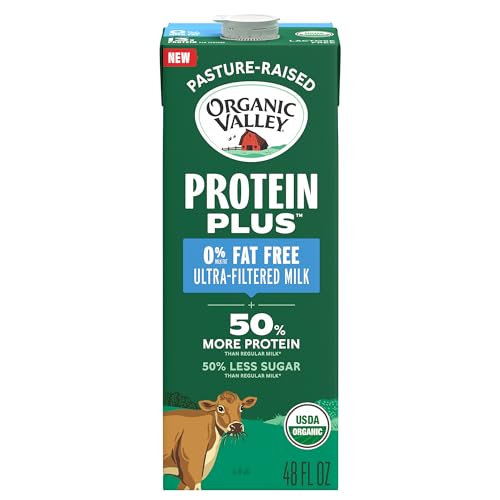
Organic Valley Organic Protein Plus Fat Free stands apart with organic, pasture-raised milk and 13 grams of protein per serving in a 48-ounce fat-free carton. The maker says it is lactose-free and has 50% more protein and 50% less sugar than regular milk. The maker also says its farms use no GMOs, antibiotics, artificial growth hormones or toxic pesticides. This option suits shoppers who prioritize organic sourcing alongside higher-protein milk. Its package is smaller than the 52-ounce carton from Fairlife. Compare nutrition labels using the same serving size before treating protein amounts as directly comparable.
Bottom line: Pick this if organic sourcing is a priority alongside protein.
Darigold FIT 2% Ultra-Filtered Milk

Darigold FIT 2% Ultra-Filtered Milk comes in a 12-pack of 14-ounce bottles, giving it more individual bottles than the Fairlife six-pack. The product name claims 25 grams of protein, while the maker separately says 14 grams per serving and 40% less sugar than regular milk. Because those protein figures differ, check the package nutrition label and serving size before comparing them. The maker says the bottles can be stored at room temperature before opening and refrigerated after opening. This format fits buyers who want portioned, lactose-free 2% milk, but is less suited to households that prefer pouring from a carton.
Bottom line: Choose this for 2% milk in a larger multipack of single-serve bottles.
How to choose ultra-filtered milk
Choose first by milk type, then compare nutrition using the same serving size. Regular cow’s milk provides about 8 grams of protein per 8-ounce cup; products that give protein per serving can only be compared fairly when their serving volumes match. Fat-free, reduced-fat and 2% are different choices, so match the label to your preference rather than treating filtration as a fat-level indicator. For this group, cartons hold 48 or 52 ounces, while single-serve bottles hold 14 ounces. If you want individual portions, choose a bottle format; for pouring at home, a carton avoids handling multiple containers. Check the package’s protein and sugar figures per serving before deciding between products with different serving sizes.
What ultra-filtration changes in milk
Ultra-filtration uses a membrane to separate components by size, allowing manufacturers to concentrate some milk components and reduce others. The exact nutrition result depends on the product and its formulation, so “ultra-filtered” alone does not guarantee a particular protein or sugar figure. Lactose-free milk is typically made by adding lactase, the enzyme that breaks lactose into simpler sugars; the resulting milk may taste sweeter even without added sugar. Read the ingredient and nutrition panels if lactose avoidance or sugar content matters to you. These products include maker claims about filtration and nutrition, but compare the actual grams per serving rather than relying on a percentage claim without its reference serving.
Cartons and single-serve bottles compared
Cartons suit home pouring, while smaller bottles make portions easier to separate. A 14-ounce bottle is larger than an 8-ounce cup, so one bottle may contain more than one standard cup; use the label’s serving count for accurate nutrition tracking. Use this format guide to narrow the choice by routine, then compare milk type and label values.
| Format | Typical use | Decision rule |
|---|---|---|
| 48–52 oz carton | Pouring at home | Choose when a larger container fits your routine |
| 14 oz bottle | Individual portions | Choose when ready-portioned containers matter |
Package volume is not a protein serving size. For a nutrition comparison, use grams of protein and sugar per the same number of ounces, converting the label values if serving sizes differ.
How to compare protein and sugar claims
Protein and sugar comparisons are most useful when their serving bases match. A claim such as “50% more protein” needs the regular-milk comparison and serving basis to be meaningful; check the nutrition facts for grams per serving on each package. One cup is 8 fluid ounces, which gives a common basis for conversion when labels use different serving volumes. This is especially important for bottles: the container can hold more than one cup, so bottle totals are not automatically per-serving values. Also distinguish natural milk sugars from added sugars in the nutrition panel. If one product gives conflicting protein figures, use the package label’s serving size and protein line before choosing.
Frequently Asked Questions
How much protein is in a cup of regular milk?
An 8-ounce cup of cow’s milk typically has about 8 grams of protein. Compare ultra-filtered products per 8 ounces when their label serving sizes differ.
Does lactose-free milk have less sugar?
Not necessarily: lactose-free milk may still show similar total sugars because lactase breaks lactose into simpler sugars rather than removing them. Compare total sugars per serving on the nutrition label.
Is ultra-filtered milk the same as UHT milk?
No. Ultra-filtration is a membrane process that separates milk components, while UHT is a heat treatment used for shelf stability. A product can use one process without the other.
How long can opened milk sit out?
Keep opened milk refrigerated and do not leave it at room temperature for more than 2 hours; reduce that limit to 1 hour when the room is above 90°F. Refrigeration slows bacterial growth but does not make milk safe indefinitely.
Can I compare protein per bottle directly?
Only when the bottles contain the same amount and each value refers to the whole bottle. A 14-ounce container can exceed a standard 8-ounce cup, so compare protein per ounce or convert each label to an 8-ounce basis.