
Popcorn Ceiling Removal Tool With Vacuum: 4 Compared

The ONEMANA drywall sander suits most buyers seeking a popcorn ceiling removal tool with vacuum because it pairs a 5.4-foot extendable pole with direct drive and connections for shop vacs. Choose another model if you need a longer listed reach, a wider speed range, or more included sanding discs.
We earn a commission if you buy through links on this page. As an Amazon Associate I earn from qualifying purchases. Products are compared on manufacturer specifications, not hands-on testing.
- Best overall: ONEMANA 820W Drywall Sander – The 5.4-foot pole, direct-drive motor, and shop-vac adapters support overhead sanding and flexible dust collection.
- Best for longer reach: 8-Amp Drywall Sander, 3.9–5.5 ft – Its extension range reaches 5.5 feet, the longest here.
- Best for higher speed: Promtex 1000W Drywall Sander – Its 800–2,200 RPM range reaches the highest top speed among these models.
| Product | Best for | Speed range | Extendable reach | Included discs | Shop |
|---|---|---|---|---|---|
| ONEMANA 820W Drywall Sander | Shop-vac flexibility | 600–1,900 RPM | 5.4 ft | 12 | Check Price on Amazon |
| 8-Amp Drywall Sander, 3.9–5.5 ft | Maximum pole reach | 800–1,800 RPM | 3.9–5.5 ft | 12 | Check Price on Amazon |
| Promtex 1000W Drywall Sander | Higher top speed | 800–2,200 RPM | — | 15 | Check Price on Amazon |
| KUPERIA 8.5-Amp Drywall Sander | Grid-sanding option | 800–1,800 RPM | — | 12 | Check Price on Amazon |
Popcorn Ceiling Removal Tools With Vacuum
Compare the reach, speed range, and sanding supplies to find a model suited to your ceiling and work setup.
ONEMANA 820W Drywall Sander

The ONEMANA differs with a direct-drive motor and adapters for connecting a shop vacuum, rather than relying only on its built-in dust collection. Its 820W motor has six speeds from 600 to 1,900 RPM, and the 5.4-foot pole reaches overhead surfaces. The head pivots in two directions, and a removable edge chassis is intended for corners. The maker claims up to 95% dust collection with the built-in system; actual capture depends on technique and setup. This is a useful fit for buyers who want external-vacuum options, but the reach is slightly shorter than the longest model here.
Bottom line: Choose this if you want a pivoting head and the option to connect a shop vacuum.
8-Amp Drywall Sander, 3.9–5.5 ft
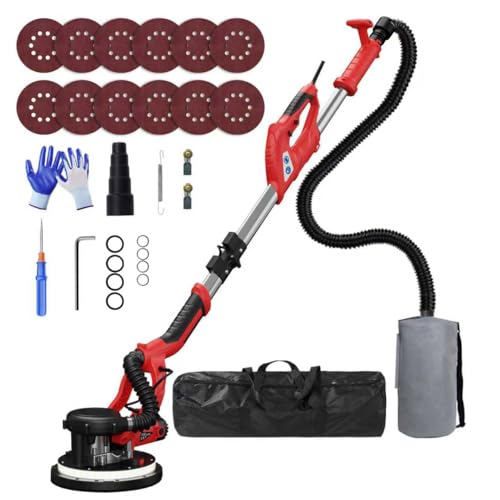
The 8-amp model has the longest extension range here, reaching 5.5 feet from a 3.9-foot collapsed length. Its seven speed settings cover 800 to 1,800 RPM, and the 10-hole disc design works with a built-in vacuum system. The package includes 12 sanding discs, while the sander itself weighs 8.59 pounds; the combined sander, rod, hose, and collection bag weigh 10 pounds. Those figures help buyers weighing storage and overhead handling. Its top speed is lower than the 2,200-RPM model, so it is less suited to someone prioritizing the broadest high-speed range.
Bottom line: Pick this for the longest extension and compact storage.
Promtex 1000W Drywall Sander

The Promtex stands out with a 2,200-RPM top speed and 15 included sanding discs, more than the other models with a disc count. Its 1000W motor has six speed settings from 800 to 2,200 RPM, and its six-hole disc design works with a built-in vacuum system. The maker claims dust suction up to 98.5%; that is a maker performance claim rather than a guarantee for every sanding setup. This model suits buyers who want a higher maximum speed and a larger disc supply. The maker gives no pole length, so buyers who need a specific overhead reach should confirm that measurement before ordering.
Bottom line: Choose this for the highest top speed and 15 included discs.
KUPERIA 8.5-Amp Drywall Sander

The KUPERIA includes both six basic sanding sheets and six grid sandpapers, giving it a different abrasive mix from the other models. Its 8.5-amp motor runs at seven variable speeds from 800 to 1,800 RPM, and a dual-channel built-in vacuum system is designed to reduce sanding dust. The maker claims 97%–99% dust-vacuum efficiency when operated properly, with the sanding disc kept parallel to the surface. That alignment requirement matters for overhead work. Choose this model if grid abrasives are useful for your job; its maker does not give a pole length, which matters if you need a particular reach.
Bottom line: Pick this if you want grid sanding sheets alongside basic abrasives.
How to choose a popcorn ceiling sander
Start with pole reach, then match speed range and dust control to the surface. These models span 600 to 2,200 RPM, so a higher top speed is not automatically the best fit for delicate or uneven texture; begin low and increase only as needed. For overhead sanding, choose an extension long enough to reach the work without overextending your stance. A built-in vacuum can reduce airborne debris, but capture claims are not a substitute for containment. Popcorn texture may contain asbestos in older homes; do not sand or disturb a ceiling until it has been assessed if its age or composition is uncertain. For ceilings confirmed asbestos-free, wear eye protection and a properly fitted respirator, and isolate the work area.
Dust collection and safe ceiling preparation
Built-in vacuum systems rely on a close, parallel sanding head to keep dust near the disc; gaps at edges and corners can let debris escape. Before sanding, remove furniture or cover it, seal doorways and HVAC registers, and use plastic sheeting to contain dust. A shop vacuum with a HEPA filter is appropriate for fine renovation dust, but connection compatibility matters; only one listed model includes adapters with 35mm and 47mm fittings. Avoid dry sanding if the ceiling may contain asbestos, because disturbance can release hazardous fibers. Keep bystanders out of the work area, use eye protection and a suitable respirator, and clean with a HEPA vacuum rather than sweeping dust into the air.
Compare built-in vacuums and external vacuum options
A built-in collector keeps the tool self-contained, while an adapter-equipped sander can connect to a separate shop vacuum. Dust-capture percentages are maker claims and should not be treated as guaranteed results; disc alignment, surface condition, and vacuum setup affect capture. Use this comparison to match the setup to the job.
| Setup | Useful when | Trade-off |
|---|---|---|
| Built-in collection | You want one connected sander and collector | Capture depends on head contact and technique |
| Shop-vac adapter | You want to use a separate vacuum | Check hose fit and vacuum filtration |
For a dusty ceiling project, containment and filtration matter as much as the tool’s suction claim. Empty collection bags or canisters outdoors in a controlled way, and avoid allowing settled dust to spread to adjoining rooms.
Speed, abrasives, and sanding technique
Start sanding at a low speed and test a small area before increasing RPM; aggressive settings can cut through the skim layer and expose drywall paper. Keep the head moving with light, even pressure, and avoid lingering in one spot. The models here use six-hole or 10-hole disc designs, so use discs made for the specific pad pattern and diameter. Grid abrasives and standard paper differ in construction, but neither removes the need to check the ceiling condition first. Sand only enough to smooth the surface for the next finish; excessive removal creates gouges and more dust. Work with a stable stance rather than reaching past the pole’s comfortable control range.
Frequently Asked Questions
Can I sand a popcorn ceiling that may contain asbestos?
No—do not sand or disturb a ceiling that may contain asbestos. Have a qualified professional assess suspect material before renovation, since sanding can release fibers into the air.
What respirator should I use for drywall sanding dust?
Use a properly fitted N95 or better particulate respirator for ordinary drywall sanding, along with eye protection. Suspected asbestos requires assessment and controls beyond routine DIY dust protection.
How do I keep a ceiling sander from leaking dust?
Keep the sanding head flat and parallel to the ceiling so the vacuum opening stays close to the surface. Seal nearby doorways and vents, and use a HEPA-filtered vacuum for cleanup.
What grit should I use on popcorn ceiling texture?
A 120-grit abrasive is a common starting point for smoothing drywall compound, while 150- to 220-grit paper is used for lighter finishing. Test a small area first because the existing finish and texture affect how quickly the surface cuts.
Should I use a drywall sander at full speed?
No, begin at a low speed and raise it only if the abrasive is not cutting effectively. Keep the head moving with light pressure to limit gouges and damage to the drywall face.