
Screen Door Spring Replacement: 5 Options Compared

For a true screen door spring replacement, 15-Inch Screen Door Extension Springs, 2-Pack is the direct match: it supplies two 15-inch extension springs for screen doors. Choose one of the closers instead only if you need a complete pneumatic closing mechanism rather than a replacement extension spring.
We earn a commission if you buy through links on this page. As an Amazon Associate I earn from qualifying purchases. Products are compared on manufacturer specifications, not hands-on testing.
- Best overall: 15-Inch Screen Door Extension Springs, 2-Pack – A pair of 15-inch zinc-plated extension springs is made for screen-door replacement.
- Best for heavy doors: Wright Products Heavy-Duty Pneumatic Closer – Pneumatic closer is designed for medium-to-heavy out-swinging storm or security doors.
- Best for hold-open: Touch ‘n Hold Smooth Closer, Single Kit – Touch-button hold-open and automatic release suit medium and lightweight storm or screen doors.
| Product | Best for | Type | Length | Material | Shop |
|---|---|---|---|---|---|
| 15-Inch Screen Door Extension Springs, 2-Pack | Spring replacement | Extension spring pair | 15 in | Zinc-plated steel | Check Price on Amazon |
| Wright Products Heavy-Duty Pneumatic Closer | Heavy storm doors | Pneumatic closer | 12.25 in unextended | — | Check Price on Amazon |
| Touch ‘n Hold Smooth Closer, Single Kit | Touch-button hold-open | Standard-duty closer | — | — | Check Price on Amazon |
| BoXtreamify Adjustable Pneumatic Door Closer | Adjustable closing | Pneumatic closer | — | — | Check Price on Amazon |
| Screen and Storm Door Closer, White | Rust-resistant closer | Telescopic closer | 11.7 in overall | Industrial-grade steel | Check Price on Amazon |
Screen Door Spring Replacement Options
Match the part to the mechanism: extension springs replace a spring, while closers control the door’s closing motion.
15-Inch Screen Door Extension Springs, 2-Pack

Unlike the other options, this is a pair of extension springs rather than a complete door closer. Each spring measures 15 inches at rest and 1/3 inch across; the product is intended for standard, radius-corner, and fold-down tent camper screen doors. Zinc-plated steel provides corrosion resistance for indoor or outdoor use. Choose this set when the existing setup uses a stretched spring and the replacement length and attachment points match. The main limitation is fit: a spring length alone cannot confirm that its hooks or tension suit every screen-door frame, so verify those before ordering.
Bottom line: Pick this pair when your door uses a 15-inch extension spring and the mounting points match.
Wright Products Heavy-Duty Pneumatic Closer

Unlike a loose replacement spring, this Wright Products unit is a pneumatic closer for medium-to-heavy out-swinging storm or security doors. It measures 12-1/4 inches between center holes when unextended, with a 10-1/2-inch tube and 1-1/2-inch diameter. The maker describes adjustable closing speed or force via a thumbscrew and an integrated hold-open washer. Consider it when a complete closer assembly needs replacement, not when only an extension spring has failed. Its door range is heavier than standard lightweight screen doors, so it is not the direct match for every screen-door repair.
Bottom line: Choose this complete closer for a medium-to-heavy out-swinging storm or security door.
Touch ‘n Hold Smooth Closer, Single Kit

Unlike a replacement extension spring, this standard-duty closer adds a touch-button hold-open feature for medium and lightweight storm or screen doors. The maker says a tap holds the door at the desired position and a nudge farther open releases it; it also describes smooth closing intended to reduce bounce. It is presented as a replacement for several common door brands, but compatibility still depends on the existing closer arrangement. Choose it when you want a closer with hands-free hold-open rather than a spring alone. Its weight class makes it a poor fit for a heavy security door.
Bottom line: Pick this when a medium or lightweight door needs a closer with touch-button hold-open.
BoXtreamify Adjustable Pneumatic Door Closer
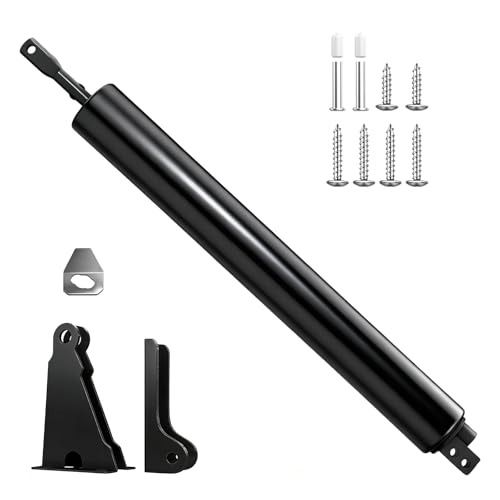
Unlike the extension-spring set, this is a pneumatic closer for outward-opening storm, screen, wood, or metal doors described as lightweight to standard. The maker says its closing strength is adjustable and lists installation hardware, plus a seasonal latching adjustment for switching between glass or screen. That makes it relevant when replacing the full closer assembly or changing its closing action. It is not the right part for a spring-only repair, and the specifications do not give an installed hole-to-hole measurement; confirm that measurement against your existing closer before choosing it.
Bottom line: Choose this adjustable closer when your door is lightweight to standard and the mounting span matches.
Screen and Storm Door Closer, White

Unlike the 15-inch spring pair, this is a telescopic closer designed for screen and storm doors. Its dimensions are 11.7 inches long by 2.9 inches high by 1.9 inches wide, and its rod is industrial-grade steel with an anti-rust finish. The maker says the design is intended to resist bending and moisture-related rust, and describes a million opening-and-closing cycles. Choose it for replacement of a complete closer, not a loose extension spring. The dimensions given are overall dimensions rather than mounting-hole spacing, so confirm the existing bracket layout before fitting it.
Bottom line: Choose this complete closer when its bracket layout matches your screen or storm door.
How to identify the spring or closer you need
First identify whether the failed part is an exposed extension spring or a closer cylinder attached to brackets. Extension springs stretch as the door opens and pull it back; pneumatic closers use an internal spring and air resistance to control closing. Replacing a spring with a closer changes the mechanism and may require different mounting points. Before removing hardware, photograph the attachment points and measure the spring at rest or the closer between mounting centers. For a direct spring match, compare both length and hook shape; a 15-inch spring is useful only when its ends and tension suit the original setup.
Door swing matters too: pneumatic closers in this group are described for outward-opening doors, while spring compatibility varies by frame. Keep the door supported during removal so released spring tension cannot snap the hardware back.
Screen door spring sizing and mounting fit
A replacement spring must match the original spring’s relaxed length, end style, and attachment distance. The direct spring option measures 15 inches at rest and about 1/3 inch in diameter, but those measurements do not establish a universal standard across every screen-door design. Measure from end to end with the old spring relaxed, then compare how its hooks attach to the frame and door. If the mounting gap is substantially different, the replacement may be too loose when closed or overstretched when open.
For closers, measure mounting-hole centers rather than the case’s overall length. For example, a closer with a 12-1/4-inch unextended center-to-center measurement needs room for that geometry; verify door and jamb bracket positions before selecting a complete unit. Do not stretch a spring to compensate for a mismatch.
Extension springs and pneumatic closers compared
Extension springs and pneumatic closers solve different repair problems: a spring provides return force, while a closer controls the full closing motion. Use the table to identify the assembly type that matches the failed component, then verify dimensions and door weight class.
| Repair need | Part type | Fit cue |
|---|---|---|
| Replace an exposed spring | Extension spring | Match relaxed length and end shape |
| Replace a closer assembly | Pneumatic closer | Match center-hole span and door class |
| Add a hold-open function | Closer with hold-open | Check door weight range and release style |
Standard-duty closers are intended for lighter doors, while heavy-duty models target heavier storm or security doors. A spring-only repair will not add adjustable damping or a hold-open control.
Safe spring replacement and closer adjustment
Control the door before detaching a spring or closer: spring tension and a moving door can pinch fingers or pull hardware loose. Keep children and pets away from the work area, support the open door, and use eye protection when releasing a stretched spring. Replace damaged brackets or screws rather than reusing bent mounting hardware. For a closer, adjust speed in small increments and check that the door latches without slamming; changing adjustment cannot correct a loose bracket or a mismatched closer.
Check the spring and fasteners periodically for corrosion, distortion, and looseness, especially on exposed doors. Replace a spring that is stretched, kinked, or visibly rusted instead of trying to reshape it. If the door binds before closing, correct the hinge or frame alignment before increasing spring tension.
Frequently Asked Questions
How do I measure a screen door spring for replacement?
Measure the old spring from end to end while it is relaxed, then compare its hook shape and mounting gap. A 15-inch spring is not a fit unless the attachment points and tension also match.
Can I replace a screen door spring with a door closer?
Not as a like-for-like spring repair: a pneumatic closer is a complete assembly that controls closing motion. Use one only if replacing the closer system and its mounting geometry and door-weight class match.
Why does my screen door slam after spring replacement?
A slamming door can indicate excessive return force, poor alignment, or a missing or failed closer that dampens motion. Check that the door swings freely and that the spring matches the original before changing tension.
How often should I inspect screen door springs?
Inspect exposed springs and their fasteners at least once a year, and more often where rain or salt air can corrode metal. Replace a visibly kinked, stretched, or rust-damaged spring rather than bending it back.