
Best Tea Towels for Embroidery: 4 Cotton Picks

Aunti Em’s 27-by-27-Inch Flour Sack Towels is the best tea towel choice for most embroidery projects because it combines a plain, hemmed cotton surface with a 13-towel pack. Choose a smaller pack or a different working size if your project needs a compact blank or you want fewer towels to prep.
Flour sack towels are lightweight, plain-weave cotton cloths used for kitchen drying and crafts; their open, even surface can make counted stitching easier to place.
We earn a commission if you buy through links on this page. As an Amazon Associate I earn from qualifying purchases. Products are compared on manufacturer specifications, not hands-on testing.
- Best overall: Aunti Em’s 27-by-27-Inch Flour Sack Towels – Its plain, hemmed cotton towels come in a 13-pack for multiple projects.
- Best for smaller designs: WHITEWRAP 18-by-28-Inch Towels – The 18-by-28-inch size offers a narrower blank than square options.
- Best for square projects: Simpli-Magic 24-by-24-Inch Flour Sack Towels – The 24-by-24-inch towels provide a square working area in a 12-pack.
- Best for a small batch: LITO 18-by-28-Inch Flour Sack Towels – The 3-pack of 18-by-28-inch towels suits buyers who need fewer blanks.
| Product | Best for | Size | Pack count | Fabric weight / thread count | Shop |
|---|---|---|---|---|---|
| Aunti Em’s 27-by-27-Inch Flour Sack Towels | multi-project sets | 27 × 27 in | 13 towels | — | Check Price on Amazon |
| WHITEWRAP 18-by-28-Inch Towels | narrow designs | 18 × 28 in | 12 towels | 160 GSM / 130 thread count | Check Price on Amazon |
| Simpli-Magic 24-by-24-Inch Flour Sack Towels | square designs | 24 × 24 in | 12 towels | — | Check Price on Amazon |
| LITO 18-by-28-Inch Flour Sack Towels | small batches | 18 × 28 in | 3 towels | 160 GSM / 130 thread count | Check Price on Amazon |
Tea Towels for Embroidery Compared
Compare the working area and pack size first, then choose the fabric blank that suits your stitch design.
Aunti Em’s 27-by-27-Inch Flour Sack Towels
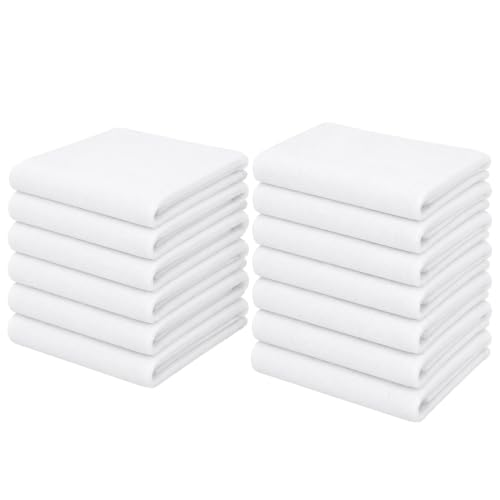
Aunti Em’s 27-by-27-Inch Flour Sack Towels stands out for its 13-towel pack and 27-by-27-inch square format. The towels are white, 100% ring-spun cotton, and have hemmed edges; the plain fabric is intended for hand stitching, cross-stitch, and monograms as well as kitchen drying. The larger square gives a design more room than the 18-by-28-inch choices here. It suits stitchers planning several projects or matching gifts. One limitation is the larger pack: buyers who only need a few blanks may prefer a smaller set.
Bottom line: Pick this set for multiple square embroidery projects or matching gifts.
WHITEWRAP 18-by-28-Inch Towels

WHITEWRAP 18-by-28-Inch Towels pairs a 12-towel set with an 18-by-28-inch rectangular shape, giving it a narrower work area than the square options. The maker specifies 100% ring-spun cotton, 160 GSM fabric, and a 130 thread count, and identifies the towels for embroidery and crafts as well as kitchen tasks. The format suits lettering or a design arranged along a long edge. Its narrower width can constrain broad motifs, so measure the stitched area before settling on a pattern.
Bottom line: Choose this set for narrow motifs on rectangular towels.
Simpli-Magic 24-by-24-Inch Flour Sack Towels

Simpli-Magic 24-by-24-Inch Flour Sack Towels offers a 24-by-24-inch square, a useful middle ground between the 27-inch square set and the rectangular blanks. The 12 towels are 100% cotton, with a diagonally knitted fabric and professionally hemmed edges. The maker describes them as lint-free and quick drying, and names embroidery and needlework among their uses. The square shape can suit centered motifs and gives a consistent format across a dozen pieces. Buyers who want a smooth, plain-weave surface for counted work should note that this fabric is described as knitted rather than plain weave.
Bottom line: Pick this pack for repeat embroidery on a medium square towel.
LITO 18-by-28-Inch Flour Sack Towels

LITO 18-by-28-Inch Flour Sack Towels is the smallest pack among these choices, with three 18-by-28-inch white towels for a short run of projects. The maker specifies 100% ring-spun cotton, 160 GSM, and a 130 thread count, and identifies embroidery and crafts as intended uses. The rectangle works for long lettering or a narrow motif, while the modest count limits how many matching towels you can make from one set. Choose a larger pack if you need a coordinated group of gifts or want spare blanks for practice.
Bottom line: Choose this three-pack for a few rectangular embroidery projects.
How to Choose an Embroidery Tea Towel
Choose by design dimensions and fabric construction, not just pack count. Flour sack towels are usually lightweight cotton with a plain weave; the visible grid can help position counted stitches, while a printed or textured surface can make alignment harder. A 4-inch-wide motif needs more than 4 inches of usable cloth because hooping and finishing take space; leave about 2 inches of margin on each side as a planning allowance. For cross-stitch, count the weave before treating each fabric intersection as a stitch point, since a towel’s thread structure may differ from counted embroidery fabric. If the motif needs an exact grid, test a small area before stitching the full design.
Size and Placement for Tea Towel Embroidery
Measure the usable area after accounting for hems and the intended fold or hanging position. A 18-by-28-inch towel has less width than a 24-by-24-inch square, so a wide motif is generally easier to place on a square blank; a long word or border can fit a rectangle. Keep stitching away from the hem seam and leave enough unstitched cloth for the towel’s normal fold. For a centered design, fold the towel in half lengthwise and widthwise to find the center, then mark lightly with a removable fabric marker. Confirm the mark comes out on a scrap or hidden corner before using it on the finished towel.
Hoops, Stabilizer, and Stitching
Use an embroidery hoop large enough to hold the full motif without forcing the fabric, and keep the cloth taut rather than stretched. Lightweight cotton can pucker under dense stitching, so a lightweight tear-away or wash-away stabilizer behind the design can support the fabric; choose based on the stitch density and whether the backing should remain. For counted work, avoid pulling stitches tight enough to distort the weave. A small test motif is useful when changing thread, needle, or stabilizer because the same towel surface can behave differently under dense fill versus simple lettering. Remove the hoop promptly after stitching to limit hoop marks.
Prewashing and Caring for Embroidered Towels
Prewash cotton towels before stitching when the finished piece will be laundered, because cotton can shrink and sizing or finishes can affect needle movement. Wash and dry using the care routine you expect for the finished towel, then press it flat before marking the design. Machine washing can stress delicate decorative stitches; turn embroidered towels inside out or place them in a mesh laundry bag, and avoid snagging the stitched area on hooks or rough surfaces. If using a stabilizer that must dissolve, rinse until its residue is gone before drying. Keep the embroidery away from direct high heat while ironing, or press from the reverse side.
Frequently Asked Questions
Should I wash a tea towel before embroidering it?
Prewash cotton tea towels if the finished piece will be laundered, since cotton can shrink after stitching. Dry and press the towel the way you expect to care for it, then mark the design.
What needle works for cotton tea towel embroidery?
A sharp embroidery needle is a practical starting point for woven cotton, with size chosen to match the thread thickness. Test a small area first; a needle that is too large can leave visible holes in lightweight cloth.
How much space should I leave around embroidery?
Leave roughly 2 inches of unstitched margin around a design as a starting allowance for hooping and finishing. Keep stitches clear of the hem seam and any fold used to hang the towel.
Do tea towels need stabilizer for embroidery?
Lightweight cotton and dense stitching often benefit from stabilizer behind the design to reduce puckering. Tear-away suits many simple designs, while wash-away can be useful when backing should not remain; test the choice on a scrap first.
Can I use counted cross-stitch on flour sack towels?
Some flour sack towels can support counted stitching, but the weave may not form the regular grid of embroidery fabric. Count the threads in a small area and make a test motif before committing to a large pattern.