
Best Buffing Wheel for Dremel: 3 Kits Compared

The 246-piece felt-and-wool kit suits most Dremel users because it includes 1-inch and 1/2-inch wheels, assorted shapes and a 1/8-inch shank. Choose the smaller felt assortment for compact polishing tasks, or an abrasive nylon wheel set when removing rust and conditioning surfaces matters more than a soft polishing face.
We earn a commission if you buy through links on this page. As an Amazon Associate I earn from qualifying purchases. Products are compared on manufacturer specifications, not hands-on testing.
- Best overall: 246-Piece Felt and Wool Polishing Kit – Its assortment combines felt, wool, cotton and cloth wheels in two diameters, plus polish compound.
- Best for varied shapes: 100-Piece Assorted Buffing Wheel Kit – The 100-piece kit specifies multiple wheel shapes and a 1/8-inch shaft for reaching difficult areas.
- Best for surface conditioning: 100-Piece Nylon Abrasive Wheel Set – Its layered nylon abrasive wheels offer different grits for cleaning, sanding and deburring.
| Product | Best for | Count | Wheel material | Shank or diameter | Shop |
|---|---|---|---|---|---|
| 246-Piece Felt and Wool Polishing Kit | General polishing | 246 pieces | Felt, wool, cotton, cloth | 1/8-inch shank; 1/2- and 1-inch wheels | Check Price on Amazon |
| 100-Piece Assorted Buffing Wheel Kit | Detailed polishing | 100 pieces | Material not identified | 1/8-inch shaft | Check Price on Amazon |
| 100-Piece Nylon Abrasive Wheel Set | Rust removal | 100 pieces | Layered nylon abrasive | 1/8-inch shank | Check Price on Amazon |
Buffing Wheels for Dremel
Compare the wheel material and size to match the attachment to the surface and polishing task.
246-Piece Felt and Wool Polishing Kit

This kit stands out for including several wheel materials and polish compound, rather than a single style of polishing pad. It contains felt, wool, cotton and cloth wheels in 1/2-inch and 1-inch diameters, with 1/8-inch shanks. The assorted shapes are intended for uneven surfaces and tight spots, and the maker says the set works with Dremel rotary tools and other compatible tools. It suits projects that call for different contact sizes or finishes. The range of materials may be more than needed for someone who only wants a few small felt wheels.
Bottom line: Choose this set if you want multiple wheel materials and sizes for varied polishing work.
100-Piece Assorted Buffing Wheel Kit

Multiple wheel shapes are the key distinction here: this 100-piece set is aimed at reaching hard-to-polish areas on items such as watches, jewelry and metal parts. Its 1/8-inch shaft fits Dremel and generic rotary tools, according to the maker, and the assortment is promoted for metal, glass and brass polishing. The varied forms can suit small objects with irregular contours.
Bottom line: Pick this assortment for varied shapes when polishing small or hard-to-reach areas.
100-Piece Nylon Abrasive Wheel Set
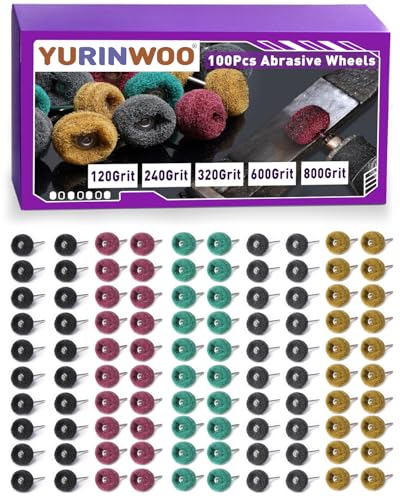
Unlike soft felt and cloth polishing wheels, this set uses thick, layered nonwoven nylon abrasive wheels in different grits. The maker describes them for surface conditioning tasks such as cleaning, sanding, dusting and deburring, as well as polishing. The 1/8-inch shank fits the rotary-tool format sought here, and the set is intended for materials including metal, wood, glass and ceramic. It is a partial match for buyers specifically seeking a buffing wheel: abrasive wheels remove or condition surface material, so they are not the best choice when a soft polishing face is the priority.
Bottom line: Choose these wheels for abrasive surface work rather than soft-finish buffing.
How to choose a Dremel buffing wheel
Choose the wheel face by the work: soft felt and cloth are polishing materials, while nonwoven abrasive wheels are for cleaning, sanding and deburring. A 1/8-inch shank is the common rotary-tool format represented by these kits, but check the collet or chuck capacity before fitting an accessory. For delicate or small surfaces, a smaller wheel offers a more controlled contact area; larger faces cover more surface per pass. Use the lightest pressure that makes progress, since pushing hard can generate heat and damage a finish. Match compound to the workpiece material, and keep abrasive accessories separate from finishing wheels to avoid transferring coarse grit.
Felt and abrasive wheels compared
Felt, wool, cotton and cloth wheels polish with a softer face, while layered nylon wheels perform more abrasive surface conditioning. The right type depends on whether the goal is a finish or material removal.
| Need | Wheel type | Useful distinction |
|---|---|---|
| Polishing contours | Assorted felt or fabric | Multiple shapes and softer faces |
| Small-area polishing | Felt wheel | Smaller diameter controls contact |
| Rust or burr conditioning | Nonwoven nylon abrasive | Different grits for surface work |
A soft polishing wheel is not a substitute for a cutting or grinding accessory when substantial stock must be removed. Conversely, abrasive grit can scratch a finish that only needs polishing.
Shank and wheel size fit
Check both the shank and wheel diameter before choosing a rotary-tool accessory. A 1/8-inch shank is listed for several kits here, but the tool must have a collet or chuck that accepts that size; a compatible shank alone does not ensure clearance around the work. The 246-piece set gives 1/2-inch and 1-inch wheel diameters, while other sets do not provide comparable wheel diameters in their fields. For tight recesses, favor a smaller wheel that can physically enter the area without its shank or body contacting nearby surfaces. Clamp the workpiece and keep the wheel clear of edges that could catch it.
Safe use and care for rotary buffing wheels
Wear eye protection and keep loose hair, clothing and jewelry away from a rotating wheel; small accessories can catch or throw debris. Use a speed within the accessory and tool limits, since no universal safe RPM applies to every wheel diameter and material. Start at a low setting, make a brief test on a hidden area, and stop if the workpiece or wheel heats noticeably. Hold small pieces securely rather than polishing them in your hand. Keep polishing compounds and abrasive grit from contaminating each other, and replace a wheel that is cracked, shedding heavily or out of round.
Frequently Asked Questions
What shank size fits a Dremel buffing wheel?
Several kits in this comparison use a 1/8-inch shank, but the tool must have a matching collet or chuck. Check the rotary tool capacity before mounting any accessory.
Are felt wheels or abrasive wheels better for polishing?
Felt, wool, cotton and cloth wheels are the polishing-oriented options here; layered nylon abrasive wheels are intended for cleaning, sanding and deburring. Use a soft face for a finish and abrasive material when surface conditioning is the goal.
Can a rotary tool buff jewelry without damage?
A small soft polishing wheel can reach jewelry contours, but test an inconspicuous spot first and keep pressure light. Stones, plating and delicate settings can be scratched or overheated by the wrong wheel or compound.
How do I choose a buffing wheel diameter?
Choose a diameter that reaches the target surface without hitting nearby edges or recess walls; smaller wheels offer more control in confined areas. One compared kit provides 1/2-inch and 1-inch diameters.