
Best Disinfectant for Shoes: 4 Options Compared

Purefypro Sports Equipment Disinfectant is the best fit for most people who want a shoe disinfectant spray because it is made for footwear and requires no rinse. Choose Clear Gear Disinfectant and Deodorizer, 32 oz if you want a larger bottle, or consider PediFix ShoeZap UV-C Shoe Sanitizer if you prefer an insert-based UV-C device instead of a spray.
Disinfectants are not interchangeable with deodorizers: a deodorizer targets smell, while disinfection depends on using a product for its labeled purpose and contact time.
We earn a commission if you buy through links on this page. As an Amazon Associate I earn from qualifying purchases. Products are compared on manufacturer specifications, not hands-on testing.
- Best overall: Purefypro Sports Equipment Disinfectant – A no-rinse spray intended for shoes and other sports equipment.
- Best for larger bottle: Clear Gear Disinfectant and Deodorizer, 32 oz – The 32-ounce water-based spray is intended for footwear and equipment.
- Best for spray-free use: PediFix ShoeZap UV-C Shoe Sanitizer – Dual UV-C inserts treat both shoes without a spray or liquid.
| Product | Best for | Format | Amount or count | Use approach | Shop |
|---|---|---|---|---|---|
| Purefypro Sports Equipment Disinfectant | No-rinse spray | Spray | 4 fl oz, 2-pack | Air dry; no rinse | Check Price on Amazon |
| Clear Gear Disinfectant and Deodorizer, 32 oz | Larger spray bottle | Spray | 32 fl oz | Spray application | Check Price on Amazon |
| PediFix ShoeZap UV-C Shoe Sanitizer | Spray-free treatment | UV-C inserts | 2 inserts | 15-minute auto shutoff | Check Price on Amazon |
| Combat Cleaner Shoe Deodorizer Spray, 3-pack | Odor-focused care | Deodorizer spray | 2.5 fl oz, 3-pack | Spray application | Check Price on Amazon |
Shoe Disinfectants and Sanitizing Alternatives
Compare sprays, a UV-C insert device, and an odor-focused spray by how each is intended to work.
Purefypro Sports Equipment Disinfectant
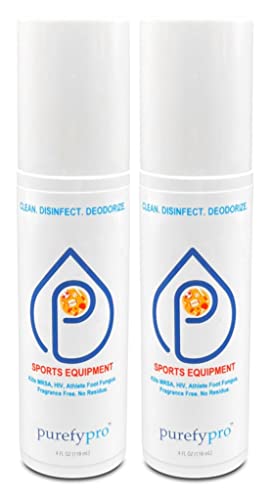
Unlike the larger spray option, this two-bottle set is a compact no-rinse formula for footwear and sports equipment. The maker says it kills specified microorganisms quickly and turns into water without synthetic fragrance or VOCs; follow the product label for the exact surface and contact-time directions. The formula is described as noncorrosive and suitable for sensitive materials such as rubber gym mats. Its small 4-ounce bottles suit a gym bag or occasional shoe care, but buyers treating many pairs may prefer a larger format.
Bottom line: Choose this for a compact, no-rinse spray intended for shoes and sports gear.
Clear Gear Disinfectant and Deodorizer, 32 oz

This is the larger-format choice, with a 32-ounce bottle rather than a pair of 4-ounce bottles. The maker says the water-based formula is EPA-registered, low-toxicity, noncorrosive, and made without bleach, alcohol, or ammonia; it is intended for footwear as well as healthcare and sports equipment. That broad equipment use may suit someone treating shoes alongside other gear.
Bottom line: Pick this when you want a larger spray for footwear and other equipment.
PediFix ShoeZap UV-C Shoe Sanitizer

Instead of a liquid disinfectant, this device uses two inserts to sanitize the inside of a pair of shoes simultaneously. The maker says its 253.7-nm UV-C bulbs run at 3 watts and the device shuts off automatically after 15 minutes; bulbs are rated for approximately 2,000 hours. It may suit buyers avoiding sprays, powders, and liquids. It is a different approach from a labeled chemical disinfectant, and UV-C requires care: use the protective bags when they fit, keep the bulbs away from eyes and skin, and do not touch hot bulbs.
Bottom line: Choose this if you want an insert-based UV-C option rather than a spray.
Combat Cleaner Shoe Deodorizer Spray, 3-pack
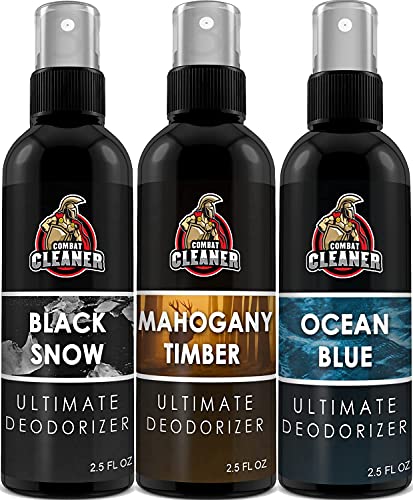
The three 2.5-ounce sprays come in Black Snow, Mahogany Timber, and Ocean Blue fragrances, and the maker says they can be used on footwear, gym bags, and lockers. It may appeal to someone whose main concern is shoe odor. Buyers seeking disinfection should choose a product labeled for that purpose instead; fragrance and odor control alone do not establish a disinfection claim.
Bottom line: Choose this for scented odor control, not as your primary disinfectant.
How to Choose a Shoe Disinfectant
Choose a product labeled for the surface and microorganism you need to address, then follow its wet contact time exactly. A disinfectant’s contact time is the period the treated surface must remain visibly wet; if it dries sooner, reapplication may be needed according to the label. For shoes, also check compatibility with the upper, lining, sole, and adhesives, since one pair can combine leather, mesh, foam, and rubber. Test a hidden area first when the label permits. If you want to avoid applying liquid inside footwear, an insert-based UV-C device is a different option, not an interchangeable spray. A useful decision rule: if the label does not include footwear or the material you plan to treat, do not assume the product is suitable.
Sprays, UV-C Devices, and Deodorizers
Sprays and UV-C inserts use different approaches, while deodorizers primarily address smell. Disinfectant sprays rely on the labeled application and contact time; UV-C devices expose surfaces to ultraviolet light, so placement and exposure matter. A shoe’s interior has seams, folds, and shaded areas that can block direct light, making proper insert positioning important. Deodorizer fragrance or odor-neutralizing claims do not by themselves establish disinfection. Use the table to match the approach to your goal, then confirm the specific label directions before treating footwear.
| Need | Approach | Key check |
|---|---|---|
| Disinfect shoes | Labeled footwear spray | Material suitability and wet contact time |
| Avoid spray or liquid | UV-C inserts | Coverage, placement, and exposure safety |
| Reduce shoe odor | Deodorizer spray | Do not assume odor control means disinfection |
Using Sprays Safely on Shoes
Use only the amount and contact time on the product label, and let the footwear dry as directed before wearing it. Spraying heavily can leave moisture in foam and linings, so start with a light, even application if the label allows it. Keep footwear away from children while it is wet, and ventilate the area when applying a spray unless the directions say otherwise. UV-C devices have a separate safety concern: ultraviolet light should not reach eyes or skin, and hot bulbs should not be handled during or just after a cycle. A 15-minute automatic shutoff does not remove the need to use protective bags or follow the device’s safety directions.
Disinfectant Contact Time and Shoe Materials
Contact time is product-specific, not a universal number for shoe sprays. Read the label for the exact wet time and permitted surface; a claim about one material or application does not automatically apply to every part of a shoe. Leather finishes, mesh, rubber, foam, and glued seams can react differently to liquid, so verify compatibility and test a discreet spot before treating the whole shoe. Do not mix cleaners or apply one product over another, since combinations can change the treatment or damage materials. If a pair is visibly soiled, remove loose dirt first when the label permits, because surface debris can interfere with contact between the product and the shoe.
Frequently Asked Questions
How long should shoe disinfectant stay wet?
Keep the treated surface visibly wet for the contact time on that product’s label. Contact times differ by formula and intended use, so do not assume a time from another spray applies.
Can disinfectant spray damage leather shoes?
It can affect some finishes, so confirm leather compatibility on the label and test a hidden area first. Leather may react differently from rubber or mesh on the same shoe.
Can I wear shoes while they are drying?
Wait until the footwear is dry if the product directions call for air drying before use. Applying more liquid than directed can leave moisture in linings and foam longer.
Are UV-C shoe inserts safe to use?
Use UV-C inserts so light cannot reach eyes or skin, and keep the device away from children. Bulbs can be hot during and after use, so let them cool before handling.
Does shoe deodorizer disinfect footwear?
Odor control alone does not establish disinfection. Choose a product labeled for footwear disinfection and follow its contact-time and material directions.