
Best Magnetic Hidden Door Locks by Fit and Function

The best magnetic hidden door lock for most access-controlled doors is Zuomeng WiFi Smart Magnetic Lock, because it combines app and remote unlocking with a 1,200-pound holding force. For concealed cabinet childproofing, choose Vmaisi Adhesive Magnetic Cabinet Locks instead; ETEKJOY RFID Cabinet Lock is a programmable RFID cabinet lock, while Electric Magnetic Lock with Z/L Bracket is a wired fail-safe access-control lock.
These products serve different purposes: a magnetic catch holds an interior door closed, while cabinet locks restrict access and powered electromagnetic locks control entry doors. Match the lock to the door material, thickness and access system before choosing.
We earn a commission if you buy through links on this page. As an Amazon Associate I earn from qualifying purchases. Products are compared on manufacturer specifications, not hands-on testing.
- Best overall: Zuomeng WiFi Smart Magnetic Lock – Offers app, remote and exit-button unlocking with four control modes.
- Best for concealed childproofing: Vmaisi Adhesive Magnetic Cabinet Locks – The 12 adhesive magnetic locks install inside cabinets or drawers.
- Best for wired access control: Electric Magnetic Lock with Z/L Bracket – Includes Z and L brackets and unlocks when power is off.
| Product | Best for | Intended fit | Access method | Holding force | Shop |
|---|---|---|---|---|---|
| Zuomeng WiFi Smart Magnetic Lock | Smart door access | Door access system | App, remote, exit button | 1,200 lb | Check Price on Amazon |
| ETEKJOY RFID Cabinet Lock | RFID cabinet access | Wood doors under 1 in. thick | 13.56 MHz IC cards | — | Check Price on Amazon |
| Vmaisi Adhesive Magnetic Cabinet Locks | Childproof cabinets | Cabinets and drawers | Magnetic key | — | Check Price on Amazon |
| Electric Magnetic Lock with Z/L Bracket | Fail-safe entry | Access-control doors | 12V DC power | 1,200 lb | Check Price on Amazon |
| Precision Lock PLS24 PRO XHD Catch | Quiet interior doors | Doors over 1.18 in. thick | Concealed magnetic catch | — | Check Price on Amazon |
Magnetic hidden door locks
Choose by door type and access method first; these products are not interchangeable.
Zuomeng WiFi Smart Magnetic Lock

For a powered entry setup with remote access, Zuomeng WiFi Smart Magnetic Lock supports app, wireless-remote and exit-button unlocking, with optional compatibility for an external keypad. Its four modes include instant, lock, switch and timer operation; instant mode can relock after 0, 5 or 10 seconds. The maker claims a 1,200-pound holding force. Choose it when remote control matters more than a simple concealed catch. The kit’s control options require a suitable powered installation, and the keypad is not included, so this is not a standalone cabinet child-safety latch.
Bottom line: Pick this for remotely controlled entry when its powered installation suits your door.
ETEKJOY RFID Cabinet Lock

Unlike the powered door locks, ETEKJOY RFID Cabinet Lock is a hidden RFID lock for wooden cabinets, drawers and boxes, using programmable 13.56 MHz IC cards. It fits swing or sliding doors under 1 inch thick, and cards can be added, deleted or reset; one card can operate multiple locks. It is a fit for controlled cabinet access rather than a full-size entry-door system. Buyers need to program cards themselves before use, and metal doors are excluded, so confirm that the door is wood and within the thickness limit.
Bottom line: Choose this for a wooden cabinet that needs programmable card access.
Vmaisi Adhesive Magnetic Cabinet Locks

For concealed childproofing rather than electronic entry, Vmaisi Adhesive Magnetic Cabinet Locks supplies 12 adhesive magnetic locks and two keys for cabinets and drawers. The locks install inside, keeping the mechanism out of sight from the outside, and are intended for use in rooms such as kitchens, bathrooms and pantries. This multipack suits households securing several storage spots with one magnetic-key approach. It does not work with metal cabinets, and it is not an RFID or powered access-control lock; check cabinet material and alignment before choosing it.
Bottom line: Pick this for several nonmetal cabinets or drawers that need hidden childproof latches.
Electric Magnetic Lock with Z/L Bracket

For a conventional wired access-control installation, Electric Magnetic Lock with Z/L Bracket pairs a 1,200-pound electromagnetic lock with Z and L brackets. It operates on 12V DC in NC fail-safe mode: the lock holds while powered and releases when power is off. Stainless steel construction and a voltage-spike suppressor are also specified. This suits buyers integrating a single door with an access-control system, not someone seeking a passive cabinet latch. Because it releases on power loss, plan the door’s access and egress behavior around that operating mode.
Bottom line: Choose this for a 12V access-control door where fail-safe release is required.
Precision Lock PLS24 PRO XHD Catch
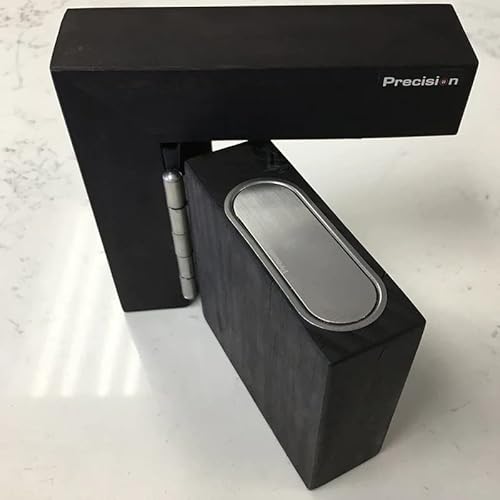
Unlike electronic magnetic locks, Precision Lock PLS24 PRO XHD Catch is a concealed magnetic catch for interior doors thicker than 1.18 inches. Its maker describes it as three times stronger than the prior version and suitable where a heavy-duty roller catch would be used; the catch is quiet and fully concealed when the door is closed. It may suit a thick door that needs a low-noise holding catch, not secure entry control. The maker warns that the magnets can snap together forcefully and throw off sharp chips, so handle them with caution during installation.
Bottom line: Pick this for a thick interior door needing a quiet concealed catch, not a security lock.
How to choose a magnetic hidden door lock
Start with what the lock must do: control entry, restrict cabinet access or simply hold an interior door closed. An electromagnetic lock needs a power supply and an access-control method; a magnetic cabinet latch or catch is a different mechanism and does not provide the same entry control. A useful rule is to choose an RFID cabinet lock only for a wooden door under 1 inch thick, and select a powered entry lock only when its power and release behavior fit the installation. Holding-force figures describe resistance to separation under specified conditions, not a guarantee against every force or installation error. Door construction, bracket alignment and mounting quality matter, so do not compare a cabinet latch and an entry lock by force alone.
| Need | Product type | Fit condition |
|---|---|---|
| Remote entry | App-controlled magnetic lock | Powered door setup |
| Cabinet card access | RFID cabinet lock | Wood under 1 inch thick |
| Child-resistant cabinet access | Magnetic cabinet latch | Nonmetal cabinet or drawer |
| Quiet door holding | Concealed magnetic catch | Door over 1.18 inches thick |
Fail-safe magnetic locks and power loss
A fail-safe electromagnetic lock releases when electrical power stops, unlike a mechanical latch that remains engaged without power. In the specified 12V NC setup, power keeps the magnet locked and loss of power unlocks it; that behavior can affect both security and emergency egress. Decide in advance how occupants can exit during an outage and how the door should behave if the power supply or access controller fails. A 1,200-pound holding-force claim is not a substitute for a complete door and access-control design. For powered locks, check local fire and building requirements for the installation and egress path before fitting a lock that affects a doorway.
Cabinet door fit and concealed lock placement
Cabinet material and thickness set hard limits for hidden locks. The RFID model fits wood doors under 1 inch thick and excludes metal; the adhesive magnetic locks also do not work with metal. Cabinet locks need room for the internal latch and the corresponding catch to meet when the door shuts, so measure the door and inspect the inside clearance before installation. Sliding and swing doors can require different latch placement even where a lock supports both. A practical threshold is the RFID lock’s 1-inch maximum: at 1 inch or thicker, do not assume that model will fit. For adhesive locks, clean, flat mounting surfaces help the paired pieces stay aligned; keep the magnetic key accessible to an adult.
Magnetic catches versus security locks
A magnetic catch holds a closed interior door; it does not replace a lock intended to control access. The concealed catch here is for doors thicker than 1.18 inches and is positioned as an alternative to a heavy-duty roller catch, with quiet operation and no visible mechanism when closed. Cabinet latches are also distinct: they restrict casual opening, while RFID cards add a controlled unlocking method for a compatible cabinet. Powered electromagnets instead rely on electrical power and a release control. Choose a catch for quiet door retention, a cabinet lock for storage access, or an electromagnetic system for entry control; using one type for another purpose can leave the door without the security or release behavior needed.
Frequently Asked Questions
What does fail-safe mean on a magnetic door lock?
Fail-safe means the electromagnetic lock releases when its power supply stops. In a 12V NC setup, the magnet holds while powered and unlocks on power loss, so consider how the doorway will be secured and exited during an outage.
Will an RFID cabinet lock fit a one-inch door?
The specified RFID cabinet lock is for wooden doors less than 1 inch thick, so a door exactly 1 inch thick is outside that stated fit. Measure the door at the installation point and account for the lock’s internal clearance.
Can magnetic cabinet locks attach to metal cabinets?
The cabinet locks described here are not suitable for metal doors or cabinets. Choose a compatible nonmetal cabinet instead, and check that the internal latch and catch can align when the door closes.
How should I handle a powerful concealed magnetic catch?
Keep the magnets from snapping together; their attraction can chip the material and throw sharp fragments. Handle the parts carefully during installation, especially when bringing the catch and mating component near each other.
Does a magnetic door lock need a separate keypad?
The app-controlled lock supports an external keypad, but the keypad is not included. That system also supports app, remote and exit-button unlocking, so choose the keypad only if that access method is needed.