
RV Refrigerator Cooling Fan: 5 Types Compared

For most RV owners seeking more air circulation inside the refrigerator, Beech Lane RV Fridge Fan stands out for its 3,000 RPM motor and easy on/off switch. Choose a rear-vent fan instead if the main concern is heat behind the refrigerator, or a fin-mounted model if you want airflow over the evaporator fins.
We earn a commission if you buy through links on this page. As an Amazon Associate I earn from qualifying purchases. Products are compared on manufacturer specifications, not hands-on testing.
- Best overall: Beech Lane RV Fridge Fan – Its 3,000 RPM motor and simple on/off switch suit buyers focused on circulating refrigerator air.
- Best for rear ventilation: Beech Lane 12V Dual Vent Fan, 5.5-inch – Two 5.5-inch fans, custom mounts for American RV side vents and remote manual/auto modes target heat behind the refrigerator.
- Best for fin mounting: 12V Three-Fan Evaporator Fin Fan – Three 2.5-inch fans clip to evaporator fins, with two speed settings and an optional remote.
| Product | Best for | Fan configuration | Power | Controls | Shop |
|---|---|---|---|---|---|
| Beech Lane RV Fridge Fan | Interior circulation | 3,000 RPM motor | — | On/off switch | Check Price on Amazon |
| Beech Lane 12V Dual Vent Fan, 5.5-inch | Rear vent cooling | Two 5.5-inch fans | 12V | Remote; manual/auto | Check Price on Amazon |
| Makevivi 12V Three-Fan Refrigerator Fan | Fin airflow | Three 12V fans | 12V | — | Check Price on Amazon |
| TITAN TTC-SC60(A) 12V Vent Fan | Long vent fit | 12V vent fan | 12V DC | Adjustable settings | Check Price on Amazon |
| 12V Three-Fan Evaporator Fin Fan | Adjustable fin airflow | Three 2.5-inch fans | 12V | Two speeds; optional remote | Check Price on Amazon |
RV refrigerator cooling fans
Choose a fan based on where you need airflow: inside the refrigerator or behind it at the exterior vent.
Beech Lane RV Fridge Fan
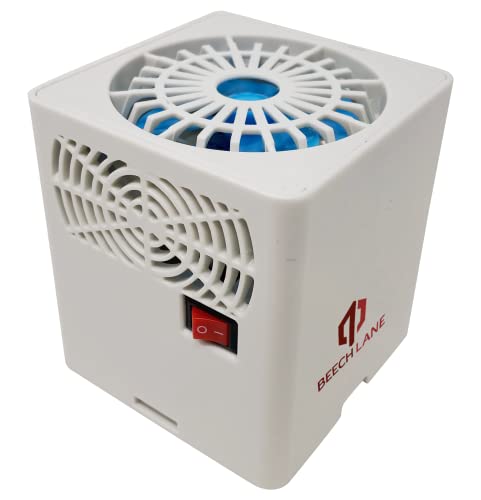
For circulating air inside the refrigerator, this Beech Lane fan pairs a 3,000 RPM motor with an easy on/off switch. The maker says its redesigned top opening is intended to increase airflow, and the fan has a lifetime manufacturer warranty. Its simple controls suit buyers who want a fan they can switch manually rather than a temperature controller or remote. The specifications do not give a mounting method or dimensions, so it may be a poor fit if you need a specific clip-on or vent-mounted design.
Bottom line: Pick it for straightforward interior circulation and manual switching.
Beech Lane 12V Dual Vent Fan, 5.5-inch
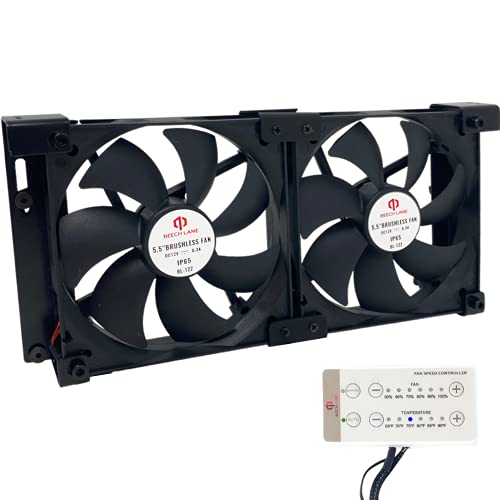
Unlike interior circulation fans, this Beech Lane model is built to move air behind the refrigerator through an RV side vent. It uses two 5.5-inch fans, custom mounting brackets for American RV side vents, temperature settings and a remote with manual and automatic modes. The maker says the waterproof fan arrangement improves cooling behind the fridge. The fan assembly is about 1 to 1.5 inches thick, so measure the available space at the vent before choosing it; it is not a substitute for a fan mounted over interior evaporator fins.
Bottom line: Choose it when rear-vent heat removal and remote controls are priorities.
Makevivi 12V Three-Fan Refrigerator Fan
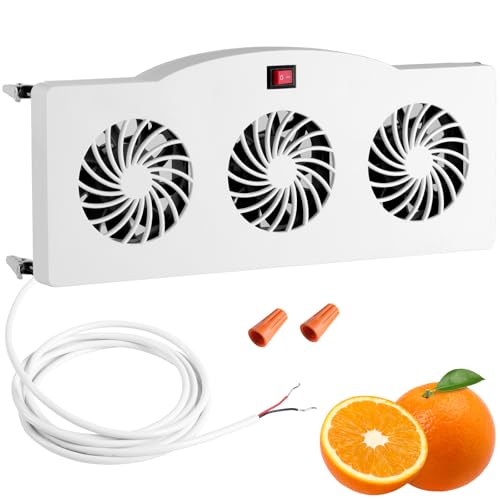
For buyers prioritizing airflow across the evaporator fins, this Makevivi fan uses three 12V fans. The maker says the airflow helps distribute cold air and reduce fin frosting, and describes operation as quiet. That makes it distinct from the side-vent assemblies, which move air behind the refrigerator rather than across its interior fins.
Bottom line: Select it for three-fan airflow over the refrigerator’s evaporator fins.
TITAN TTC-SC60(A) 12V Vent Fan

With a long 16.8-inch shape, the TITAN vent fan differs from the 5.5-inch dual-fan unit and is intended for American RV side vents. Its mounting brackets are designed for those vents, and the model includes adjustable temperature settings and IP55 waterproofing. The maker says the design is intended to reduce refrigerator temperatures. Check that the vent opening and surrounding clearance accommodate its 16.8 × 2.1 × 2.6-inch dimensions; its length makes it a less suitable pick where vent space is limited.
Bottom line: Choose it if your side vent has room for a 16.8-inch fan.
12V Three-Fan Evaporator Fin Fan

This fin-mounted model distinguishes itself with three 2.5-inch fans, two selectable speeds and four alligator clips for tool-free attachment. The maker says the airflow over the evaporator fins enhances cooling and reduces ice buildup. It can connect to the refrigerator light’s constant power or directly to the 12V supply at the refrigerator’s rear. The controls switch between about 3,000 and 4,200 RPM, plus off. Its fin-clip design is the wrong choice if you need a fan that mounts to an exterior side vent.
Bottom line: Pick it for clipped fin airflow with two speed choices.
Choose a fan by where airflow is needed
RV refrigerator fans serve two different airflow jobs: interior fans circulate air around the compartment or evaporator fins, while exterior vent fans move hot air behind the refrigerator. Absorption refrigerators rely on heat leaving the rear cooling unit, so poor ventilation behind the cabinet can hinder cooling even when the interior fan is running. If the problem is uneven cold air or fin frost, consider a fin-directed fan; if the refrigerator’s rear cavity is hot, consider a vent-mounted unit. A practical rule is to measure the vent cavity before selecting an external fan: allow at least the unit’s thickness, plus room for brackets and airflow. Do not cover the refrigerator’s exterior vents with stored gear or other obstructions.
Interior and rear-vent fans are not interchangeable: their placement determines which airflow problem they address.
Measure RV refrigerator vent clearance
Measure the clear opening and the depth behind the exterior vent before choosing a rear fan. The two-fan assembly here is about 1 to 1.5 inches thick, while the TITAN body measures 16.8 × 2.1 × 2.6 inches; compare those figures with the actual cavity and bracket space. Vent shapes and refrigerator installations vary, so a fan advertised for American RV side vents still needs to fit your specific opening. Keep a path for air to travel through the rear compartment rather than packing insulation or cargo tightly around the cooling unit. For fin-mounted interior fans, check that clips can attach securely without bending the fins, which are thin metal surfaces used to dissipate heat.
Measure both the opening and the space behind it; an opening that looks wide enough can still lack depth for a fan assembly.
Compare interior and exterior RV fan types
Interior fans and exterior vent fans target different locations, so choose by the symptom and the mounting location you need. Use this guide to narrow the type before comparing controls and dimensions.
| Need | Fan type | Placement |
|---|---|---|
| Move cold air around the compartment | Interior circulation fan | Inside refrigerator |
| Direct airflow across evaporator fins | Fin-mounted fan | At interior fins |
| Move hot air behind refrigerator | Ventilation fan | Exterior side vent |
A vent fan cannot directly clear frost from interior fins, and a small interior fan does not vent the rear cavity. Temperature controls can automate a vent fan, while manual switches or speed controls require the owner to select operation. Confirm the intended location and the available mounting space before buying.
Install and operate RV refrigerator fans safely
Keep RV refrigerator exterior vents unobstructed and follow the refrigerator maker’s specified clearances around its cooling unit. A blocked vent or poorly fitted fan can impede the airflow needed to carry heat away; do not force a fan into a narrow space or bend cooling fins to make clips fit. Disconnect 12V power before handling wiring, and protect connections from chafing against sharp metal edges. Internal fin fans should attach without crushing or distorting the fins. For any automatic temperature controller, place its sensor as directed by its manufacturer so it can respond to the intended area. After installation, verify the fan operates and that vent covers and access panels still close securely.
Frequently Asked Questions
Where should an RV refrigerator cooling fan go?
Place an interior fan inside the refrigerator or at the evaporator fins when the goal is interior circulation. A ventilation fan mounts at the exterior side vent to move air behind the refrigerator, so choose based on which area needs airflow.
Can an RV fridge fan prevent evaporator fin frost?
A fin-directed fan can move air across the fins, and some makers say their fans help reduce frost buildup. Frost may also indicate an airflow, door-seal or refrigerator issue, so a fan should not be treated as a fix for every cause.
How much space does a side vent fan need?
Measure both the vent opening and the cavity depth because fan bodies can extend into the rear compartment. One model here is about 1 to 1.5 inches thick, while another measures 16.8 × 2.1 × 2.6 inches.
Does a 12V refrigerator fan run from the RV battery?
A fan designed for 12V DC can use a compatible 12V supply, but wiring and circuit requirements depend on the installation. Disconnect power while wiring and protect leads from abrasion or contact with hot components.
Will a fan fix an RV refrigerator that is not cooling?
A fan may help when poor airflow is the issue, but it cannot correct every refrigerator fault. Check that exterior vents are clear and the refrigerator is installed within its specified clearances; persistent poor cooling needs diagnosis beyond fan selection.