
Best Crafts for 10 Year Olds: 5 Kits Compared

The Arts and Crafts Vault suits most 10-year-olds because its 2-drawer case holds supplies for varied projects. Choose a focused kit instead if the child mainly wants to make squishies or bracelets.
These kits are craft activities; the best fit depends on whether the child prefers open-ended materials, molded projects or jewelry making.
We earn a commission if you buy through links on this page. As an Amazon Associate I earn from qualifying purchases. Products are compared on manufacturer specifications, not hands-on testing.
- Best overall: Arts and Crafts Vault – Its 2-drawer case organizes a wide range of materials for different projects.
- Best for molded squishies: Make Your Own Taba Squishy Kit – Eight reusable molds give beginners several shapes to make.
- Best for bracelet patterns: DDAI Friendship Bracelet Kit – Instructions cover 16 bracelet patterns and the kit includes clasps.
- Best for bead variety: OHOME 5300 Clay Beads Kit – The kit includes 4,600 flat clay beads and 500 charms.
| Product | Best for | Project type | Key included items | Age range | Shop |
|---|---|---|---|---|---|
| Arts and Crafts Vault | Varied projects | Open-ended crafts | Pom-poms, beads, sticks, scissors | Ages 8–12 | Check Price on Amazon |
| Make Your Own Taba Squishy Kit | Molded squishies | Taba squishy making | Liquid silicone, 8 reusable molds | Ages 8–12 | Check Price on Amazon |
| DDAI Friendship Bracelet Kit | Patterned bracelets | Friendship bracelets | 16 patterns, clasps, stickers | Ages 7–12 | Check Price on Amazon |
| Dan&Darci Taba Squishy Kit | Character squishies | Character squishy making | 6-shape mold, goops, powders | Ages 8–12 | Check Price on Amazon |
| OHOME 5300 Clay Beads Kit | Bead bracelets | Clay bead jewelry | 4,600 beads, 500 charms, string | Ages 8–12 | Check Price on Amazon |
Craft Kits for 10 Year Olds
Match the kit to the kind of project the child wants to make and the supplies they will use most.
Arts and Crafts Vault
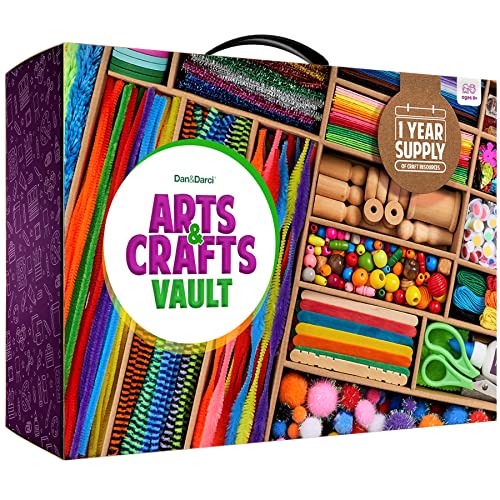
The Arts and Crafts Vault stands out for variety: its 2-drawer case holds pipe cleaners, pom-poms, wooden pieces, felt, beads, sequins, gems, googly eyes, feathers, buttons, thread, glue, glitter glue, scissors and sewing needles. That assortment can support simple jewelry, decorated shapes and other child-led projects without locking the crafter into one finished design. The maker presents it for ages 8 through 12, including 10-year-olds. Its breadth is useful for a child who likes switching activities, but it offers less focus than a kit built around one project. Supervise work with scissors and needles.
Bottom line: Pick this for a 10-year-old who enjoys choosing among different craft materials.
Make Your Own Taba Squishy Kit

The Make Your Own Taba Squishy Kit is the mold-focused option, with liquid silicone, eight reusable molds, accessories and step-by-step instructions. That makes it a better match than a general supply box for a 10-year-old who wants to create squishy toys rather than invent unrelated projects. The maker describes it as suitable for ages 8 through 12 and beginner-friendly. The molds can be reused, so the child can repeat the activity with different shapes. The kit involves liquid crafting material, so an adult should oversee preparation and cleanup and keep the supplies away from younger children.
Bottom line: Choose this when reusable molds and a guided squishy activity are the priority.
DDAI Friendship Bracelet Kit

The DDAI Friendship Bracelet Kit differentiates itself with pattern guidance: it includes instructions for 16 bracelet patterns, plus clasps and 30 stickers. A 10-year-old who likes making wearable gifts or repeating a design has a clearer project path here than with a box of assorted supplies. The maker positions it for ages 7 through 12, covering this age. The focus is a strength for bracelet fans, but it gives less variety than kits intended for multiple craft types. Small beads and jewelry parts can be choking hazards for younger children, so keep the materials out of their reach.
Bottom line: Pick this for a child who wants guided friendship-bracelet patterns.
Dan&Darci Taba Squishy Kit

The Dan&Darci Taba Squishy Kit centers on a six-character mold, unlike the eight-mold set that emphasizes reusable molds. Its shapes include a paw, capybara, koala, cookie, doughnut and bunny; the kit also includes six goop sets, five color bottles, glitter, glow-in-the-dark powder, flocking powder and mixing tools. Those character choices suit a 10-year-old who wants a defined set of cute shapes. The maker describes it for ages 8 through 12. Its single mega mold is less flexible than a kit with several separate molds, and an adult should supervise handling and mixing the craft materials.
Bottom line: Choose this for a child who wants six named character shapes in one set.
OHOME 5300 Clay Beads Kit

The OHOME Clay Beads Kit is the bead-heavy choice, with 4,600 flat polymer clay beads, 500 charms, stretchy strings, scissors and tweezers. The 6 mm beads have 2 mm holes, and the kit includes letter beads, spacers and lobster clasps for building personalized jewelry. That range is suited to a 10-year-old who enjoys choosing colors and arranging small components rather than following a fixed craft shape. The maker describes the beads as waterproof. The many small parts make sorting and cleanup important, especially in homes with toddlers; this kit is also more specialized than an assorted craft box.
Bottom line: Pick this for a child who wants many bead and charm choices for jewelry.
How to Choose a Craft Kit for a 10-Year-Old
Start with the project the child wants to repeat: open-ended supplies encourage switching between ideas, while molds and bracelet patterns guide a specific result. At age 10, many children can follow multi-step illustrated instructions, but the right level depends on patience and fine-motor comfort. For a gift meant to support several activities, choose the mixed-material box; for a child already set on jewelry or squishies, a focused kit avoids unused supplies. Check the age guidance on the package and consider how much adult help the materials require. A kit with scissors, needles, liquid materials or small beads calls for closer supervision than one using only larger, blunt craft pieces.
Bracelet Kits and Squishy Kits Compared
Bracelet kits use string, beads or patterns to make wearable projects; squishy kits use molds and craft mixtures to form small toys. Bead sizes matter: a 6 mm bead with a 2 mm hole fits the included type of string or clasp only when the components match, so verify the intended threading method before starting. For squishies, a defined shape set is easier to follow than an open-ended craft box, while reusable molds invite repeated runs. Choose bracelet making if the child enjoys color arrangement and design, and choose molds if mixing and shaping are more appealing. In either case, plan a stable work surface and keep small components contained.
| Interest | Kit style | What to consider |
|---|---|---|
| Changing projects | Mixed supplies | Many materials, more sorting |
| Wearable designs | Bracelet kit | Small beads and threading |
| Shaped toys | Squishy kit | Mold and mixing steps |
Craft Safety and Setup for Kids
Set up crafts on a clear, washable surface and portion small parts before the child begins; this reduces spills and makes counting pieces back easier. Scissors and sewing needles require adult supervision, and small beads, charms and pom-poms should be kept away from children under 3 because they can be choking hazards. For squishy-making materials, use the kit’s age guidance and keep liquid compounds and powders away from eyes and mouths. Tie or finish bracelet ends securely so jewelry does not unravel during wear. A 10-year-old may manage many steps independently, but supervision should increase when a project includes sharp tools, loose components or materials that need mixing.
Frequently Asked Questions
What crafts can a 10-year-old make at home?
A 10-year-old can make bracelets, molded squishies and decorated objects from assorted craft supplies. Match the project to the child’s interest and the adult supervision available for tools or small parts.
Are bracelet-making kits suitable for 10-year-olds?
Yes, kits marked for ages that include 10 are age-aligned, though beads and clasps are small components. Keep them away from children under 3 and supervise scissor use.
What should I put under a squishy craft project?
Use a stable, washable work surface and keep mixing tools and materials together in one area. Liquid craft mixtures and powders are easier to manage when an adult supervises the setup and cleanup.
How can a child keep craft beads organized?
Sort beads by color or shape into separate small containers before starting, then return unused pieces after the project. This is especially useful when a kit contains thousands of beads and charms.