
Best Tile Cleaning Machines Compared by Use

For most people cleaning tile floors, HHQ Orbital Floor Scrubber is the most direct fit because it is specified for deep cleaning tile and grout as well as other hard floors. Choose SENODON Tile Gap Cleaning Tool instead for cutting out hardened grout or adhesive, and choose Qimedo Q2 Electric Spin Scrubber for smaller shower, tub and tile scrubbing jobs.
We earn a commission if you buy through links on this page. As an Amazon Associate I earn from qualifying purchases. Products are compared on manufacturer specifications, not hands-on testing.
- Best overall: HHQ Orbital Floor Scrubber – Its features specifically call out deep cleaning tile and grout with an orbital scrubber.
- Best for broad floor care: 13-Inch Commercial Floor Scrubber – It has a 13-inch head and multiple pads and brushes for different floor-care tasks.
- Best for grout removal: SENODON Tile Gap Cleaning Tool – The 1,200-watt tool is designed to remove grout, cement and adhesive from tile gaps.
- Best for small-area scrubbing: Qimedo Q2 Electric Spin Scrubber – The cordless scrubber has a 50-inch handle and eight brush heads for showers, tubs and tile.
| Product | Best for | Cleaning format | Speed | Included attachments | Shop |
|---|---|---|---|---|---|
| HHQ Orbital Floor Scrubber | Tile and grout | Orbital floor scrubber | 175–1,950 RPM | 3 brushes, 2 pads | Check Price on Amazon |
| 13-Inch Commercial Floor Scrubber | Multi-surface floors | 13-inch orbital floor machine | 175–2,000 RPM | 3 brushes, 5 pads | Check Price on Amazon |
| Oreck Commercial Orbiter | All-floor care | Random-orbit floor machine | — | Brushes and pads not enumerated | Check Price on Amazon |
| Qimedo Q2 Electric Spin Scrubber | Bathrooms and tubs | Cordless spin brush | 800, 1,000, 1,500 RPM | 8 brush heads | Check Price on Amazon |
| SENODON Tile Gap Cleaning Tool | Grout and adhesive removal | Tile-gap cutting tool | 9,000 RPM | Dust bag collection | Check Price on Amazon |
Tile Cleaning Machines by Type
Match the machine to the job: broad floor scrubbing, grout removal, or targeted cleaning in wet rooms.
HHQ Orbital Floor Scrubber

For tile and grout cleaning in larger floor areas, this orbital scrubber is the most directly targeted option here. The kit includes three scrub brushes, two polishing or stripping pads, a microfiber carpet bonnet and a pad holder; its ECM motor has speed modes from 175 to 1,950 RPM and is rated at 1.5 HP (1,100 watts). It is also designed for hardwood, vinyl, concrete and other hard floors. Its 39-pound weight and floor-machine format matter if you need to clean only a shower corner or a small patch.
Bottom line: Choose this for tile and grout across floor areas, rather than a handheld-size job.
13-Inch Commercial Floor Scrubber

The 13-inch working head and broad assortment of pads make this machine suited to varied floor-care jobs, not just routine tile scrubbing. The kit includes microfiber, polishing and stripping pads, plus three brushes; its BLDC motor is rated at 1/3 HP with speed settings from 175 to 2,000 RPM. The product features describe use on stains and surfaces including carpet, concrete and wood. That breadth is useful when one machine must cover several floor types, but the feature set does not specifically call out tile or grout, so tile-focused buyers may prefer a model that does.
Bottom line: Pick it when multiple floor types and pad options matter more than a tile-specific focus.
Oreck Commercial Orbiter

The Oreck Orbiter emphasizes a random-orbit brush head, which its maker says helps avoid brush marks, swirls, sanding marks and gouges. The product is described for hard-floor tasks including scrubbing, stripping, sanding, waxing and polishing, and it can dry-clean carpets. Its format is also intended for tight areas such as bathrooms and under sinks. For a tile buyer, that makes it a versatile floor-care choice, but the features do not explicitly identify tile-and-grout deep cleaning or provide a speed range. Prioritize it for varied floor maintenance rather than grout-line work.
Bottom line: Choose this for mixed floor-care tasks and tight spaces, not specifically for grout lines.
Qimedo Q2 Electric Spin Scrubber

Unlike the upright orbital floor machines, this cordless spin scrubber is aimed at showers, tubs and tile, with a 50-inch handle and eight brush heads. Its operating modes are 800, 1,000 and 1,500 RPM, and a smart display shows remaining battery percentage and the selected mode. The 4,000 mAh battery capacity is part of its model description.
Bottom line: Pick it for targeted shower, tub and tile scrubbing instead of whole-room floor coverage.
SENODON Tile Gap Cleaning Tool
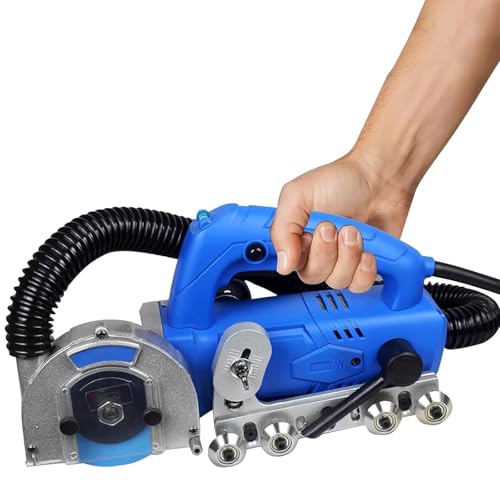
This is a grout-gap removal tool, not a general floor-washing scrubber: its 1,200-watt motor and 9,000 RPM speed are intended to cut out hardened grout, cement and adhesive. A built-in dust collection system directs debris into a dust bag, avoiding the need for an external vacuum according to its features. That makes it relevant when repairing tile joints or removing residue before regrouting. It is a poor fit for routine cleaning of tile surfaces, since the cutting action is meant for removing material from seams rather than washing dirt from floors.
Bottom line: Choose this for grout or adhesive removal from seams, not everyday tile cleaning.
How to choose a tile cleaning machine
Choose by the material you need to remove and the area you need to cover: floor scrubbers clean broad surfaces, spin brushes target smaller spots, and grout-gap cutters remove hardened joint material. Orbital machines use rotating or orbiting pads and brushes; the models here offer speeds from 175 to 2,000 RPM. A spin brush has a smaller head and longer reach for tubs and shower walls, while a 9,000-RPM cutting tool is intended for seam removal, not washing. For a full tiled room, start with a floor machine; for a shower or tub, choose a handled brush. If the job is removing old grout, use a grout-removal tool and avoid treating it like a surface scrubber.
| Job | Machine type | Why it fits |
|---|---|---|
| Large floor area | Orbital floor scrubber | Wide working head and pad or brush choices |
| Shower, tub or spot | Electric spin brush | Long handle and smaller cleaning head |
| Old grout or adhesive | Tile-gap cutter | Removes hardened joint material |
Tile and grout machine fit
Match the machine head and action to the tile area before choosing a model. A 13-inch floor head suits open floor space better than narrow shower corners; a long-handled spin brush can reach tubs and walls but covers floors more slowly. Grout lines need a brush or tool suited to their width and condition: routine dirt calls for brushing, while hardened grout removal calls for a seam cutter. Ceramic and porcelain tile surfaces can tolerate appropriate scrubbing, but softer stone such as marble can scratch from abrasive pads or aggressive brushes. With marble or other polished stone, choose a nonabrasive attachment and test an inconspicuous area first. Avoid using a grout cutter on the tile face.
Brushes, pads and cleaning action
Brush stiffness and pad abrasiveness matter as much as motor speed. Nylon brushes are commonly used for general floor scrubbing, while abrasive stripping pads can scratch polished stone, glazed tile or sealers. Start with a soft brush or nonabrasive pad on delicate finishes and move to a stiffer option only if needed. Orbital machines can accept task-specific pads and brushes, so verify the attachment is intended for the tile finish rather than assuming every included accessory is safe for every surface. Keep the machine moving to reduce concentrated wear, and test any cleaning solution on a hidden patch; acidic cleaners can etch natural stone and damage some grout sealers.
Safe tile and grout cleaning
Keep water and cleaning solution away from electrical cords, plugs and motor housings, and use a ground-fault circuit interrupter (GFCI)-protected outlet for corded equipment in wet areas. Wear eye protection when cutting grout or adhesive, because chips and dust can eject from the seam. A dust-collecting cutter still calls for a controlled work area and suitable respiratory protection when dust is present. Before cutting, confirm the blade or cutter depth will not reach the tile edge or underlayment; grout joints are often narrow, so shallow controlled passes reduce the chance of chipping. Never use a high-speed seam-removal tool for routine surface cleaning.
Frequently Asked Questions
Can an orbital floor scrubber clean tile grout?
Yes, an orbital floor scrubber with a suitable brush can scrub tile and grout without removing the joint material. For routine soil, use a nonabrasive cleaner and keep the brush moving; a seam cutter is for removing hardened grout.
What speed is suitable for cleaning tile floors?
Floor scrubbers commonly run at low hundreds to around 2,000 RPM, depending on the machine and attachment. Start at the lowest effective setting with a soft brush, especially on polished or natural stone tile.
Can I use a grout removal tool to clean tile?
No, a grout-removal cutter is designed to cut hardened material from joints, not wash the tile face. Its high speed can chip tile edges, so reserve it for seam repair and use controlled shallow passes.
Are abrasive pads safe on porcelain tile?
Abrasive pads can scratch glazed finishes or damage sealers even when the tile itself is hard. Start with a nonabrasive pad or nylon brush and test a hidden area before scrubbing the full floor.
How do I clean tile in a shower safely?
Use a handheld or long-handled brush for shower walls and corners, and keep corded equipment and electrical connections clear of standing water. GFCI protection is important for corded tools used near wet areas.