
SD Cards for Canon SX740: 3 Options Compared

For a Canon SX740, choose a full-size SD card with U3 or V30 if you plan to record 4K; SanDisk Extreme PRO 128GB pairs those ratings with 128GB capacity.
The SX740 uses SD, SDHC, and SDXC cards, so choose the card format and capacity you want, then match the speed class to your recording needs.
We earn a commission if you buy through links on this page. As an Amazon Associate I earn from qualifying purchases. Products are compared on manufacturer specifications, not hands-on testing.
- Best overall: SanDisk Extreme PRO 128GB – Its 128GB capacity and U3/V30 ratings align with 4K recording needs.
- Best for 64GB: SanDisk Extreme PRO 64GB – This 64GB card has U3 and V30 ratings for 4K capture.
| Product | Best for | Capacity | Read speed | Shop |
|---|---|---|---|---|
| SanDisk Extreme PRO 128GB | 4K video | 128GB | Up to 250MB/s | Check Price on Amazon |
| SanDisk Extreme PRO 64GB | Smaller capacity | 64GB | Up to 200MB/s | Check Price on Amazon |
| GIGASTONE 128GB SD Card | Included case | 128GB | Up to 100MB/s | Check Price on Amazon |
SD Cards for Canon SX740
Match card speed class to your video format, then choose a capacity that suits how often you offload files.
SanDisk Extreme PRO 128GB
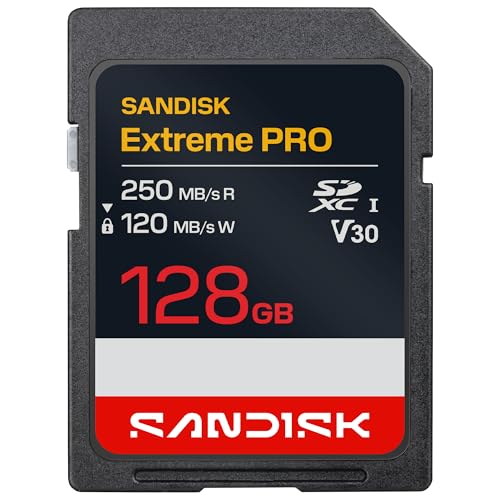
For a 128GB card with U3 and V30 ratings, SanDisk Extreme PRO 128GB is the clearest match here for Canon SX740 4K recording. The card is SDXC and full-size, and its name gives a read speed up to 250MB/s and a write speed up to 120MB/s for this capacity. Those maximums depend on the host device and conditions, so the camera may not reach them. This is a strong fit for a mix of 4K video and stills; choose a smaller capacity if you prefer to offload footage more frequently.
Bottom line: Choose this if you want 128GB and U3/V30 ratings for 4K.
SanDisk Extreme PRO 64GB

For buyers who want less capacity than SanDisk Extreme PRO 128GB, SanDisk Extreme PRO 64GB offers 64GB with U3, V30, and Class 10 ratings. That speed-class combination makes it a suitable match for 4K video capture, while the smaller capacity can make regular file transfers part of the routine. SanDisk says read speeds can reach 200MB/s with compatible devices and its QuickFlow technology; actual transfer performance depends on the reader and host. This card suits shorter shoots or more frequent offloads, but is less convenient when you want to keep many clips on the card.
Bottom line: Pick this when 64GB is enough and U3/V30 video ratings matter.
GIGASTONE 128GB SD Card

GIGASTONE 128GB SD Card is the only option here that includes a mini case, alongside 128GB capacity and a full-size SD form factor. Its product name identifies U3 and V30 ratings, which are the useful markers for a 4K-oriented choice; the maker gives a maximum transfer speed of 100MB/s. The case may help keep the card together with camera accessories, but the transfer figure is lower than the SanDisk cards’ read-speed figures. Choose it if the case and capacity appeal more than faster offload claims.
Bottom line: Choose this for 128GB plus an included mini case.
How to choose an SD card for Canon SX740
Choose the speed class first: U3 or V30 is the appropriate target for 4K recording, while U1 is intended for less demanding Full HD video. UHS Speed Class 1 corresponds to a minimum sustained write speed of 10MB/s; U3 corresponds to 30MB/s. The number on the card for peak read speed is a separate figure and does not replace the speed-class rating. For a mix of 4K video and stills, pick U3/V30 and then select capacity; for photos and Full HD only, a U1 card can be suitable. If 4K is part of your plan, avoid choosing by read speed alone.
Canon SX740 SD card format and capacity
SDHC covers capacities above 2GB through 32GB, while SDXC covers capacities above 32GB through 2TB; the 64GB and 128GB choices here are SDXC-sized capacities. Capacity affects how long you can keep files before transferring them, not the card’s recording speed. For longer trips without regular offloads, 128GB offers more room than 64GB. Format a new card in the camera before recording, and avoid removing it while the camera is writing files.
U1, U3, and V30 card ratings compared
U3 and V30 identify a higher sustained video-write class than U1, while peak transfer speed is a different measure. V30 means a minimum sustained write speed of 30MB/s; U3 has the same 30MB/s minimum class. U1 has a 10MB/s minimum. Use the class as the deciding specification for recording, not a large maximum read-speed number, which mainly relates to transferring files off the card.
The table shows what each rating means for choosing a card.
| Rating | Minimum sustained write speed | Practical fit |
|---|---|---|
| U1 | 10MB/s | Photos and Full HD video |
| U3 | 30MB/s | 4K video target |
| V30 | 30MB/s | 4K video target |
Using and caring for an SD card
Keep the camera powered on only when needed during card access, and wait for the write indicator to finish before opening the card door or removing the card. Interrupting a write can corrupt files, and a full card can stop recording at an inconvenient moment. Transfer important footage to another storage device rather than treating one card as a backup. Format the card in the camera after saving its files when preparing it for a new recording session. For 4K use, leave spare capacity rather than planning to fill every last gigabyte.
Frequently Asked Questions
Can the Canon SX740 record 4K on a U1 card?
U1 is not the suitable speed class for the SX740’s 4K recording; choose U3 or V30 instead. U1 cards are better matched to stills and Full HD video.
Does a 128GB SDXC card fit the Canon SX740?
Yes, the SX740 supports SDXC, and 128GB is within the SDXC capacity range of over 32GB through 2TB. Leave the card in the camera while it is recording or writing files.
Is read speed the same as video write speed?
No, maximum read speed generally describes how quickly files can be transferred from a card, while video speed classes describe sustained writes. For video, check for U3 or V30 rather than choosing from the read-speed number.
How often should I format an SD card in the camera?
Format a card in the camera when preparing it for a new recording session, after saving files you want to keep. Formatting erases the card, so verify that needed files are copied elsewhere first.
Can I remove the SD card while the camera is on?
Wait until the camera has finished writing and turn it off before removing the card. Removing a card during a write can corrupt files; the same caution applies when a card reader is actively transferring data.