
Best Brush for Epoxy Resin: 4 Options Compared

The Stone Coat 2-Inch Chop Brush is the best brush for epoxy resin when you need to spread material across a countertop or other broad surface: its 2-inch width is made for epoxy applications. Choose a narrower brush for small coats, or a flexible silicone tool for craft work where easy cleanup and a non-bristle tip matter more.
Epoxy brushes apply or move resin; they are not interchangeable with tools meant to remove bubbles or level a pour. Match the brush to the area and finish you want.
We earn a commission if you buy through links on this page. As an Amazon Associate I earn from qualifying purchases. Products are compared on manufacturer specifications, not hands-on testing.
- Best overall: Stone Coat 2-Inch Chop Brush – Its 2-inch angled nylon brush is specifically intended for spreading epoxy on DIY projects.
- Best for small areas: Pro Grade 3/8-Inch Acid Brushes – The 3/8-inch boar-hair brush is designed for applying surface coats in small areas.
- Best for flexible craft work: Nezyo 3-Piece Silicone Brush Set – Three silicone brush widths—1, 2, and 3 inches—offer flexible options for resin art.
- Best for UV resin crafts: 7-Piece Silicone Applicator Kit – The seven-piece silicone applicator kit is intended for epoxy art and craft use as well as other applications.
| Product | Best for | Width | Material | Count | Shop |
|---|---|---|---|---|---|
| Stone Coat 2-Inch Chop Brush | Surface spreading | 2 in | Nylon | 1 brush | Check Price on Amazon |
| Pro Grade 3/8-Inch Acid Brushes | Small-area coats | 3/8 in | Boar hair | 36 brushes | Check Price on Amazon |
| Nezyo 3-Piece Silicone Brush Set | Flexible resin art | 1, 2, 3 in | Silicone | 3 brushes | Check Price on Amazon |
| 7-Piece Silicone Applicator Kit | Small craft applications | — | TPR silicone | 7 brushes | Check Price on Amazon |
Brushes for Epoxy Resin
Choose by the area you need to coat and whether you prefer bristles or a flexible silicone head.
Stone Coat 2-Inch Chop Brush
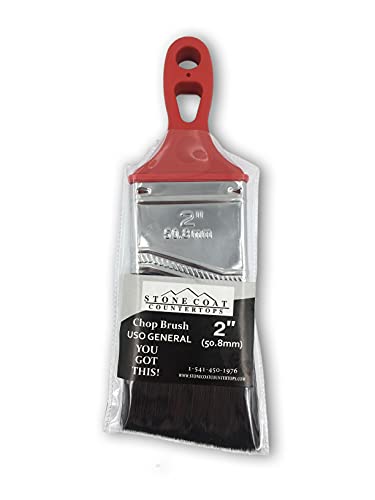
For broad epoxy coats, this 2-inch angled brush is more directly suited to spreading than the smaller touch-up and applicator options. It has nylon bristles and a flexible handle, and the maker says it is designed for epoxy applications and easy cleanup. The maker also suggests pairing it with a 1/8-inch square-notch trowel to address bubbles and inconsistencies. That pairing is a separate tool choice, not a brush feature. The limitation is its fixed 2-inch width: detailed work or narrow edges may call for a smaller applicator.
Bottom line: Choose this for spreading epoxy over larger craft or countertop areas.
Pro Grade 3/8-Inch Acid Brushes

For narrow spots and small surface coats, this 3/8-inch brush is much narrower than the 2-inch spreading brush. The set contains 36 brushes, each with a 6-inch handle, boar-hair bristles, and a metal ferrule. The maker describes the brushes as suitable for applying surface coats in small areas and for general-purpose glue, oil, paste, and craft work. The tradeoff is coverage: a small brush takes more passes on a broad surface, so it is a poor fit when you need to move resin across a large countertop efficiently.
Bottom line: Pick these for small applications where a narrow bristle brush is useful.
Nezyo 3-Piece Silicone Brush Set

For resin art that calls for flexible, shaped tools rather than conventional bristles, this set includes 1-, 2-, and 3-inch silicone brushes. The handles are plastic, and the maker says the silicone heads bend easily and are suitable for applying epoxy evenly. Multiple widths let you switch between narrower application and broader coverage without relying on a single brush size. The limitation is that the set is a different style from a traditional bristle brush; buyers who specifically want bristles for spreading a surface coat should choose a bristle option instead.
Bottom line: Choose this set for flexible silicone tools in several widths.
7-Piece Silicone Applicator Kit

For compact craft applications, this kit offers seven silicone applicators rather than a single wide brush. The heads are TPR, with PS handles and aluminum tubes; the maker identifies the set for UV resin brushes and epoxy art crafting, along with other uses. Its multiple-piece format may suit detailed or varied application tasks where a single 2-inch brush is not the only tool needed.
Bottom line: Pick this for a multi-piece silicone applicator kit for craft work.
How to Choose an Epoxy Resin Brush
Choose an epoxy brush by the area to coat and the kind of contact you want: broad surfaces call for a wider brush, while edges and small coats benefit from a narrow one. These options range from 3/8 inch to 3 inches in stated brush width, so compare widths rather than relying on labels such as craft or resin brush. Bristle brushes and silicone applicators also behave differently: bristles are a familiar choice for brushing a coat, while flexible silicone heads suit moving or shaping material in craft work. Epoxy systems have a limited working time after mixing, and that time depends on the formulation and batch size. Set out the tools before mixing, and use the resin maker’s specified working time.
Brush Width and Coverage
Use a 3/8-inch brush for small areas and a 2-inch brush for broader spreading; the wider brush covers more area per pass. A width is not a guarantee of a particular finish because resin viscosity, surface shape, and application technique also affect how material moves. For a wide flat surface, start with the broadest brush that can reach the edges you need to cover; under 1 inch wide, a brush is better suited to detail work than full-surface coverage. The silicone set spans 1, 2, and 3 inches, while the 7-piece kit does not give individual brush widths. Check the applicator dimensions before ordering if the width must fit a specific edge or detail.
| Application need | Useful width | Brush style |
|---|---|---|
| Small-area coat | 3/8 in | Narrow bristle brush |
| Broad surface spreading | 2 in | Angled nylon brush |
| Flexible craft application | 1–3 in | Silicone brush |
Bristle Brushes Versus Silicone Applicators
Bristle brushes and silicone applicators are different tools, not simply different materials for the same task. The bristle choices here use boar hair or nylon, with one intended for small coats and the other for epoxy spreading. Silicone choices have flexible heads, and the three-piece set provides defined widths for different craft tasks. Select bristles when you want a conventional brush shape; select silicone when flexibility is central to the application. Epoxy formulations differ, so do not assume a brush-cleaning method works for every resin. Confirm compatibility with the resin maker’s cleanup directions, and avoid using a tool again if cured residue would interfere with a smooth coat.
Safe Epoxy Resin Brush Use
Wear protective gloves and work with ventilation when handling uncured epoxy; skin contact can cause irritation or sensitization, and resin-specific safety directions may add precautions. Keep mixed resin off skin, and do not use a craft brush as a substitute for protective equipment. Mixing a larger batch can shorten working time because epoxy can heat up in its container; prepare only the amount and workspace your product’s instructions allow. A common mistake is to treat a brush as a bubble-removal tool: a brush spreads or moves resin, while other methods may be required for bubbles, depending on the resin and surface. Follow the resin maker’s safety and application directions.
Frequently Asked Questions
Can I use a regular paintbrush for epoxy resin?
A bristle brush can apply some epoxy coats, but choose a width and material suited to the task. These options include 3/8-inch boar-hair brushes for small areas and a 2-inch nylon brush intended for spreading epoxy.
What brush width works for epoxy countertops?
A 2-inch brush is a practical starting point for spreading epoxy over broader countertop areas. Narrow edges and details may need a smaller brush; the 3/8-inch option is intended for small-area coats.
Are silicone brushes good for resin art?
Silicone brushes can suit resin art when a flexible applicator is useful. One set offers 1-, 2-, and 3-inch widths, while another is a seven-piece kit without individual brush widths given.
How do I clean a brush after using epoxy?
Use the cleanup method specified for the particular epoxy; resin formulations differ, so one solvent or cleaning method is not universal. Check cleanup directions before mixing, and do not reuse a brush if cured residue could mar the next coat.
Do I need a separate tool to remove bubbles?
A brush spreads resin but is not necessarily a bubble-removal tool. The maker of the 2-inch brush suggests pairing it with a 1/8-inch square-notch trowel to help address bubbles and inconsistencies; use only methods compatible with your resin.